
The Project
This project invites us to design a participatory method, tool or interface that invites people to explore values beyond money. Using a food market as a research context, we examined how everyday interactions reflect social, cultural, and emotional value, and used these insights to design the experience.
Research
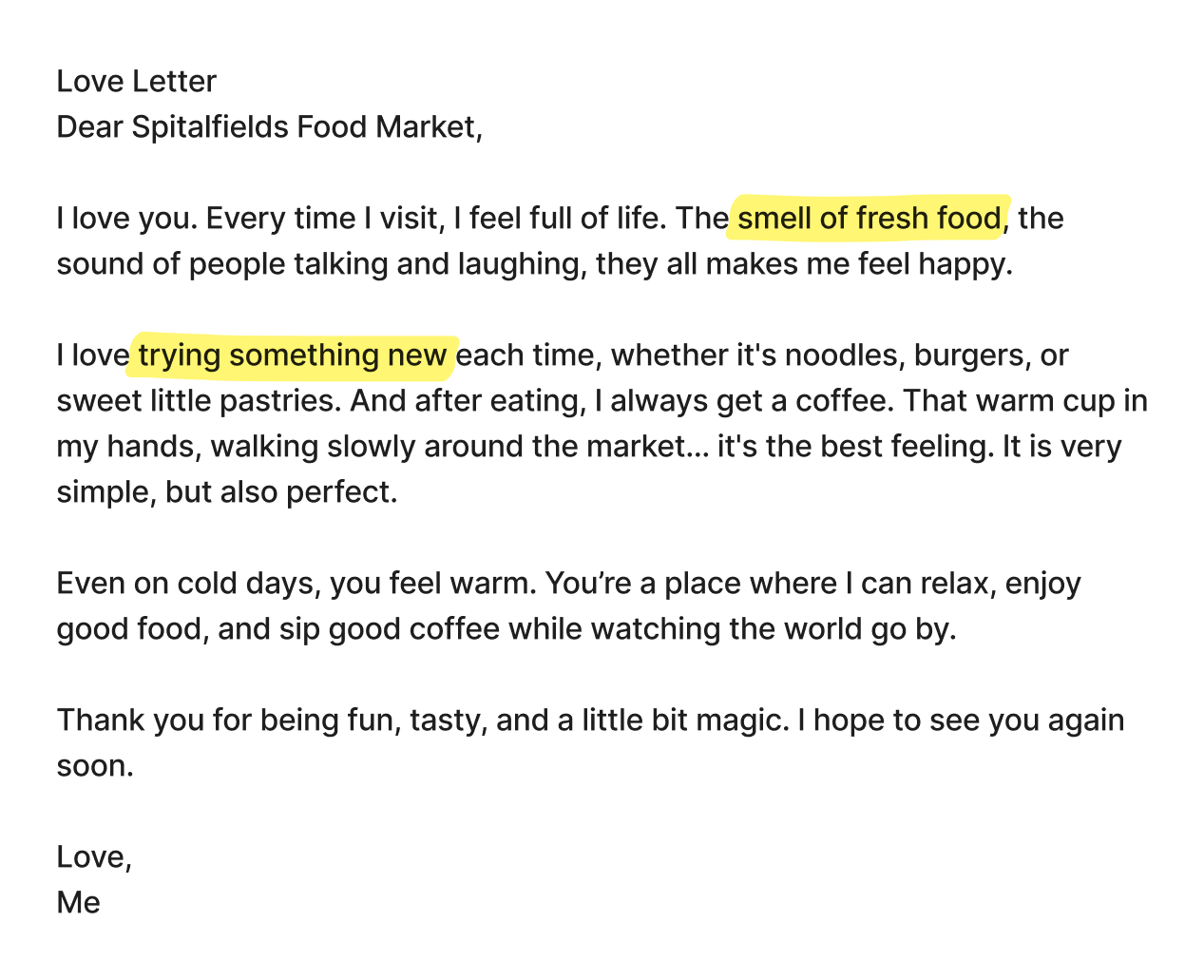
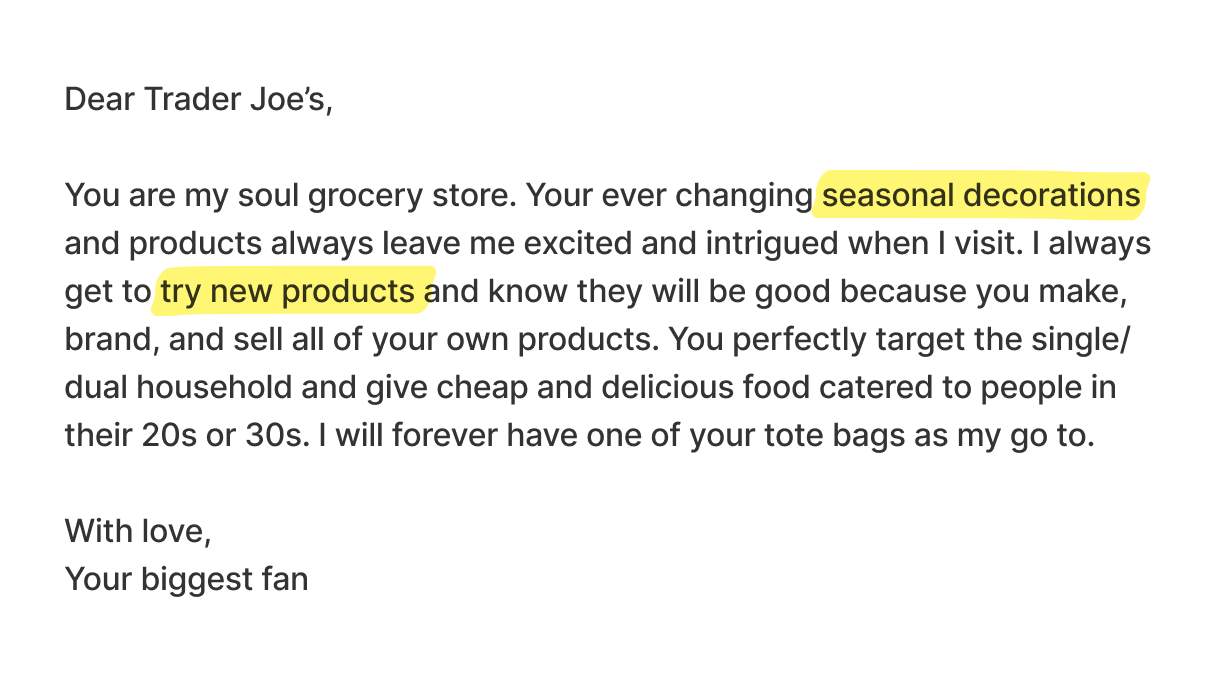
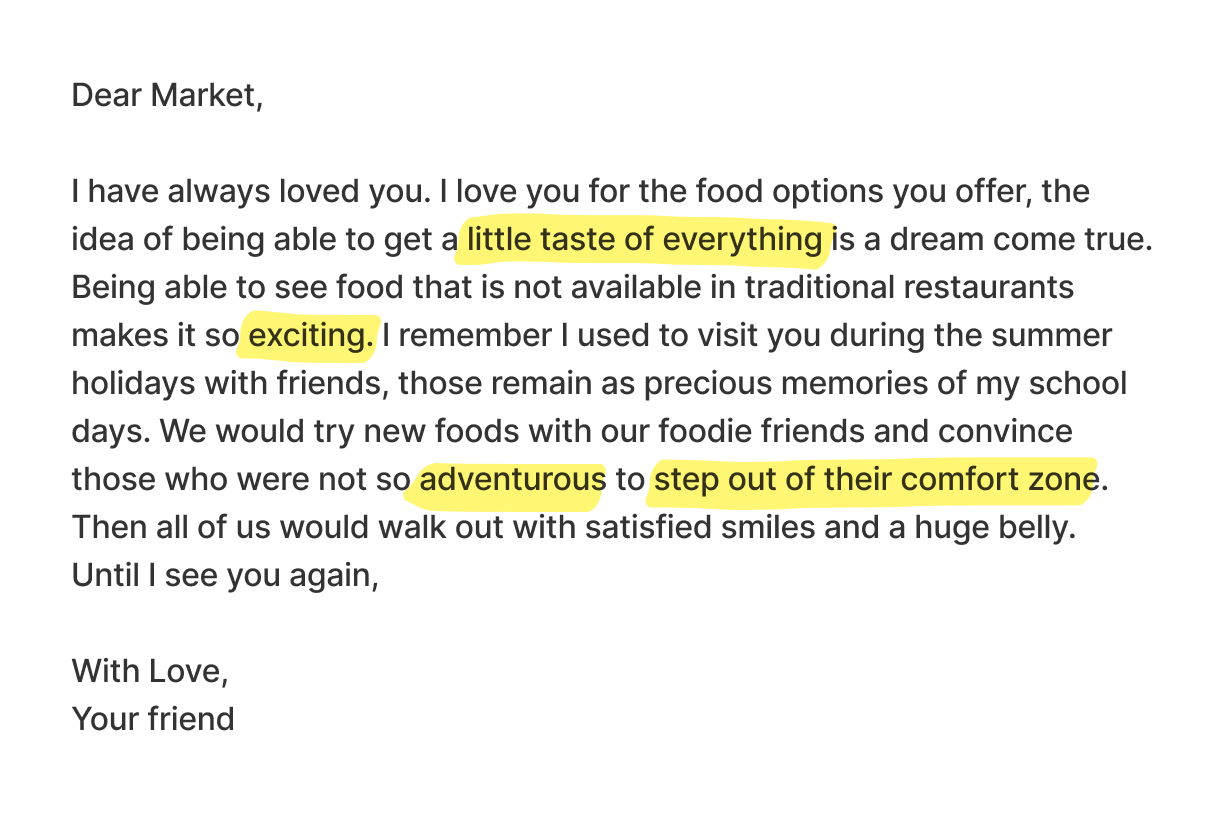
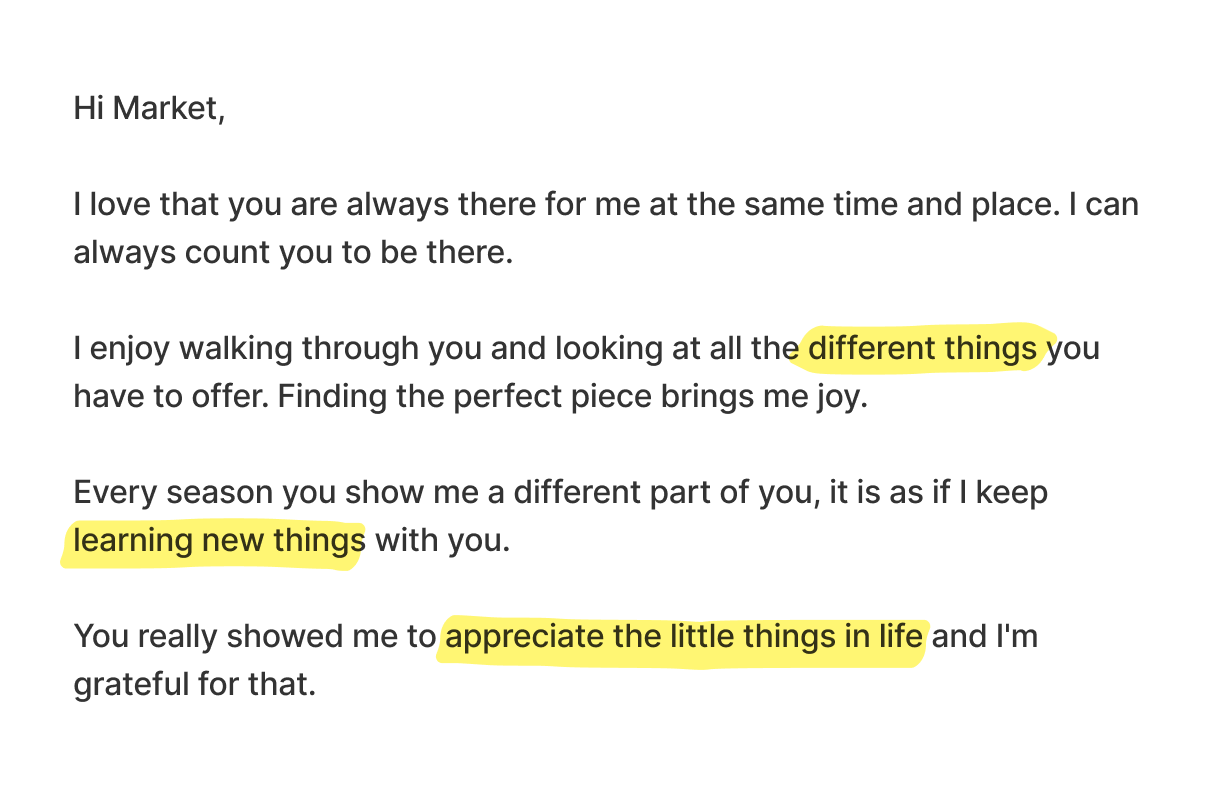
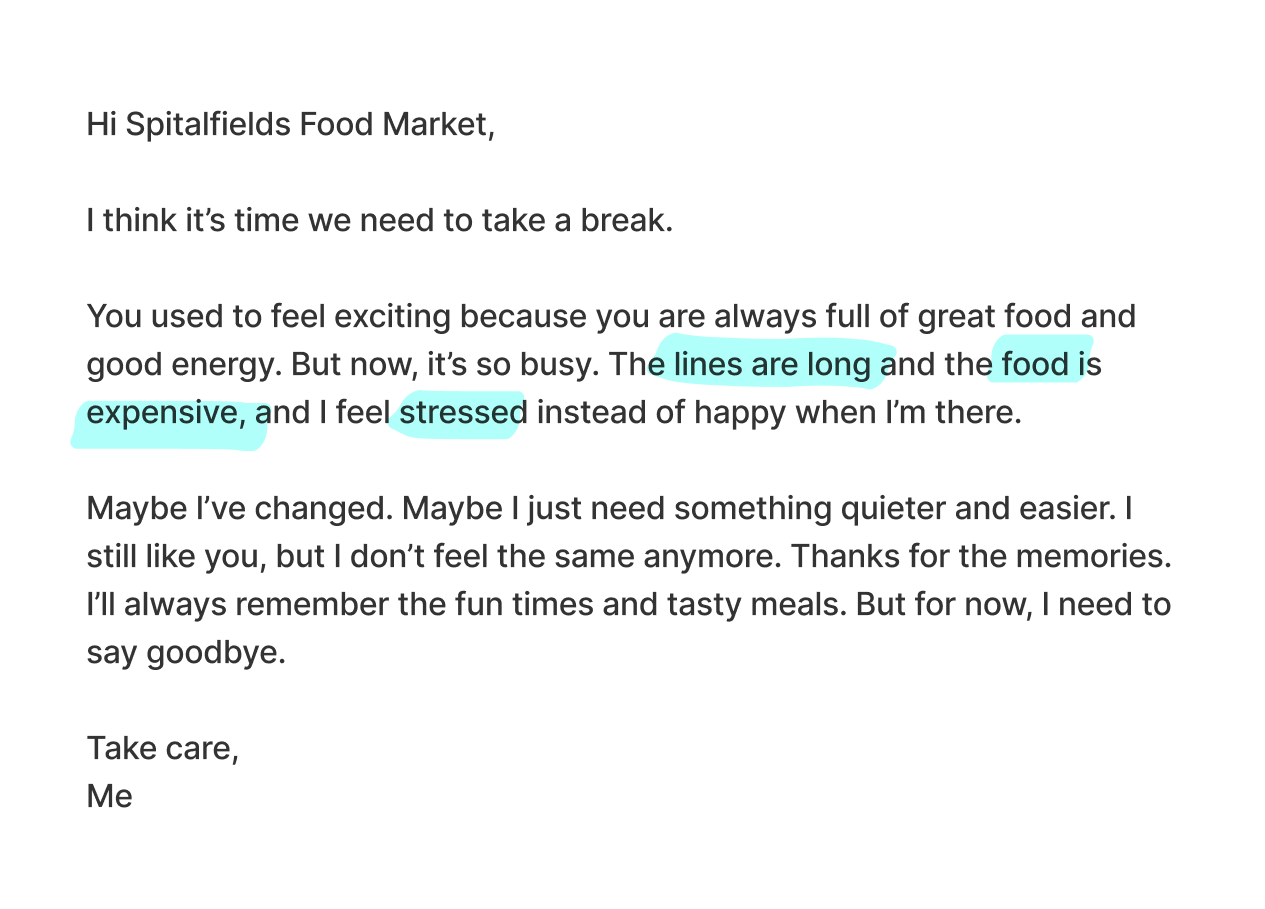
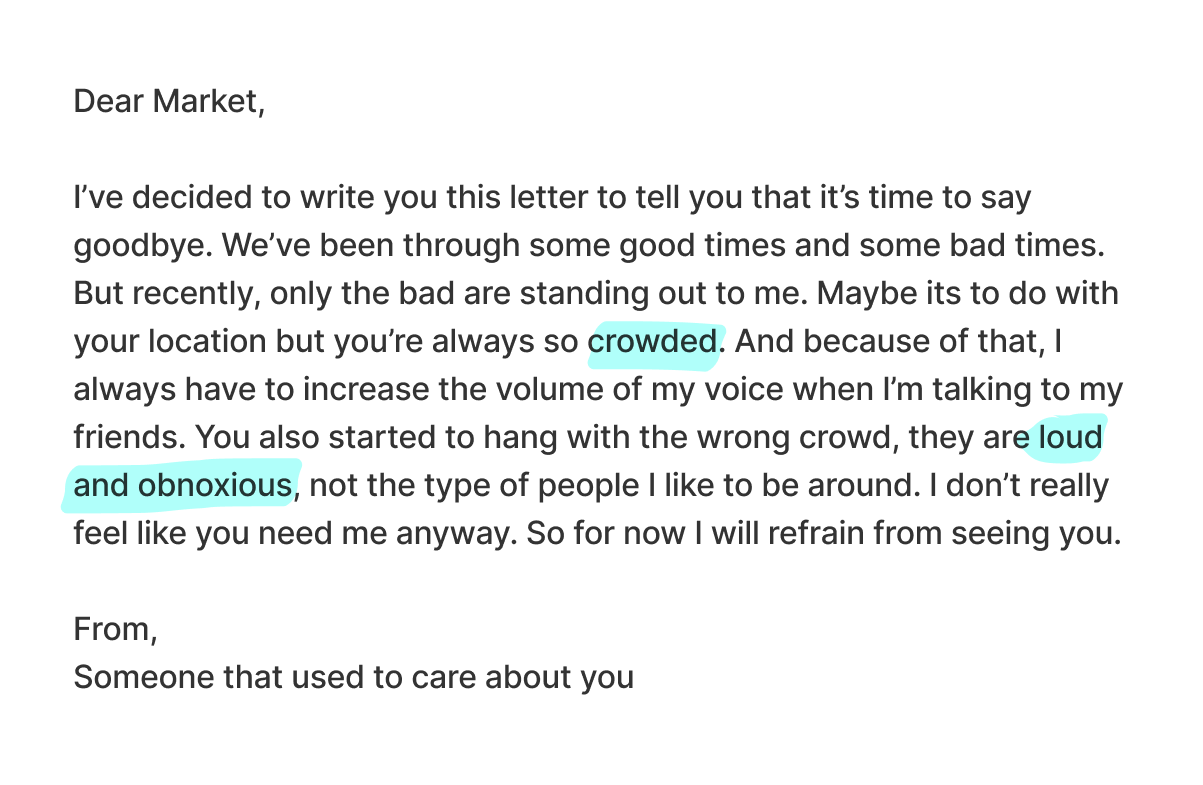
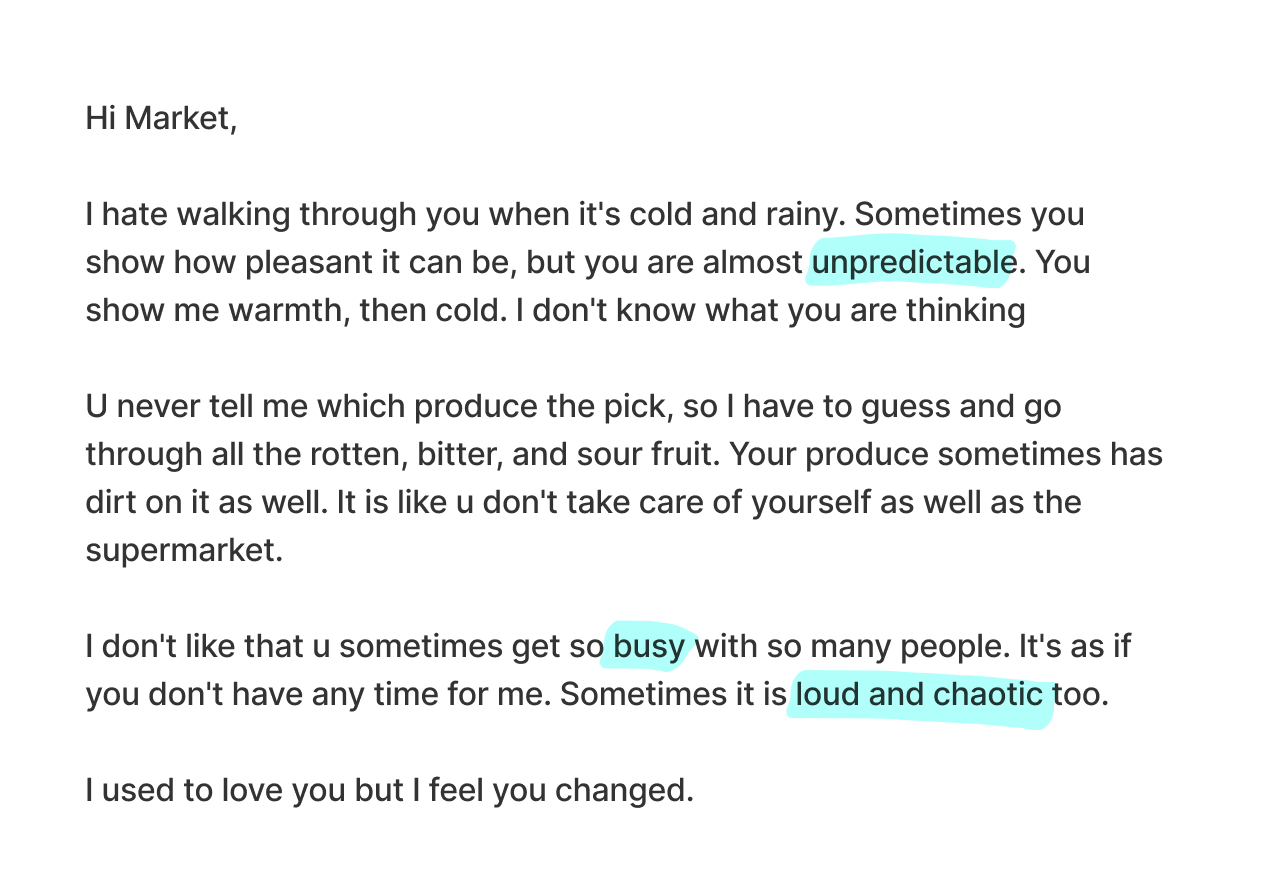
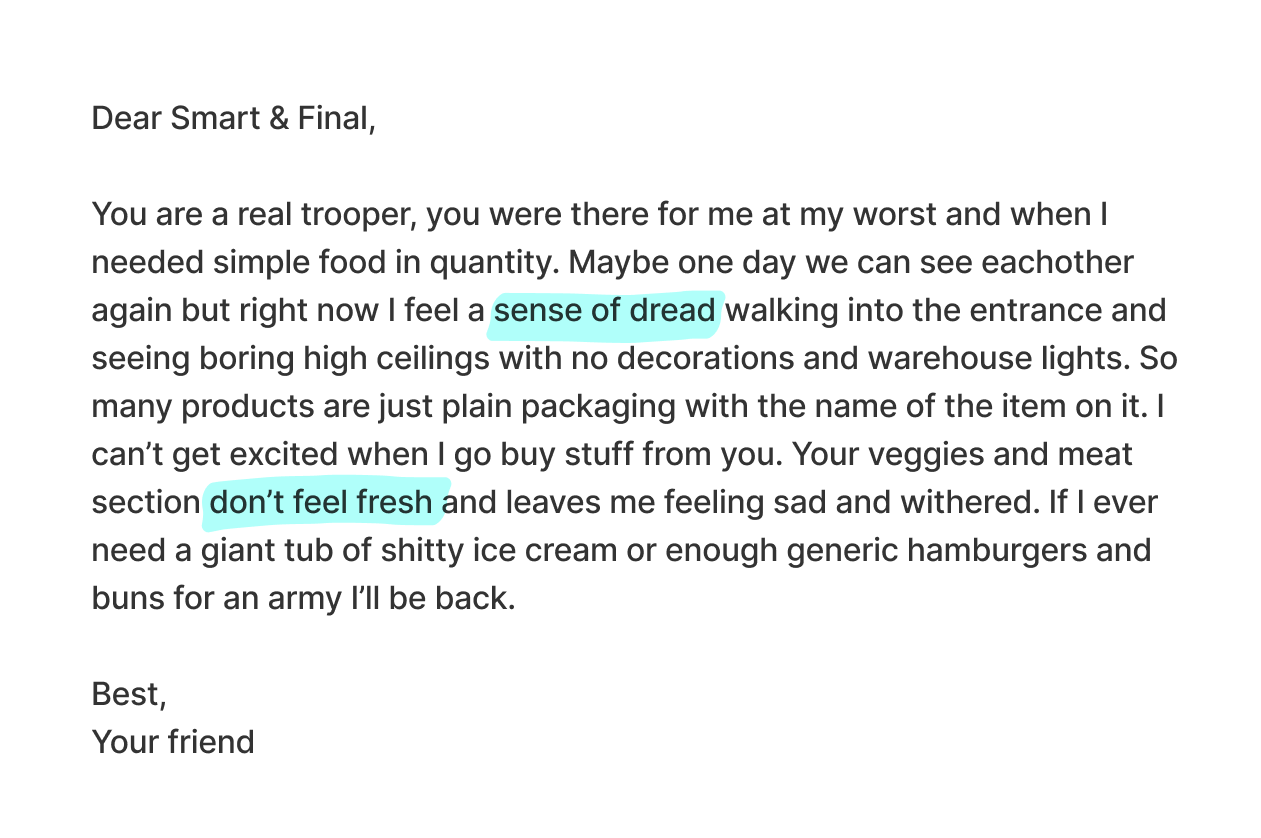
In order to gain insight on the values that people experience in the market setting, me and my group asked people around us to write love and breakup letters to markets.
From the letters, we gathered the following insights:
People being comfortable asking strangers about whether the food they are eating is good.
More likely to try new foods - brings out adventurous spirit
Trust being built
Relationship between vendors and customers
Primal: people huddled together, lining up for good food
Cozy chaos
Love Letters
Final Testing
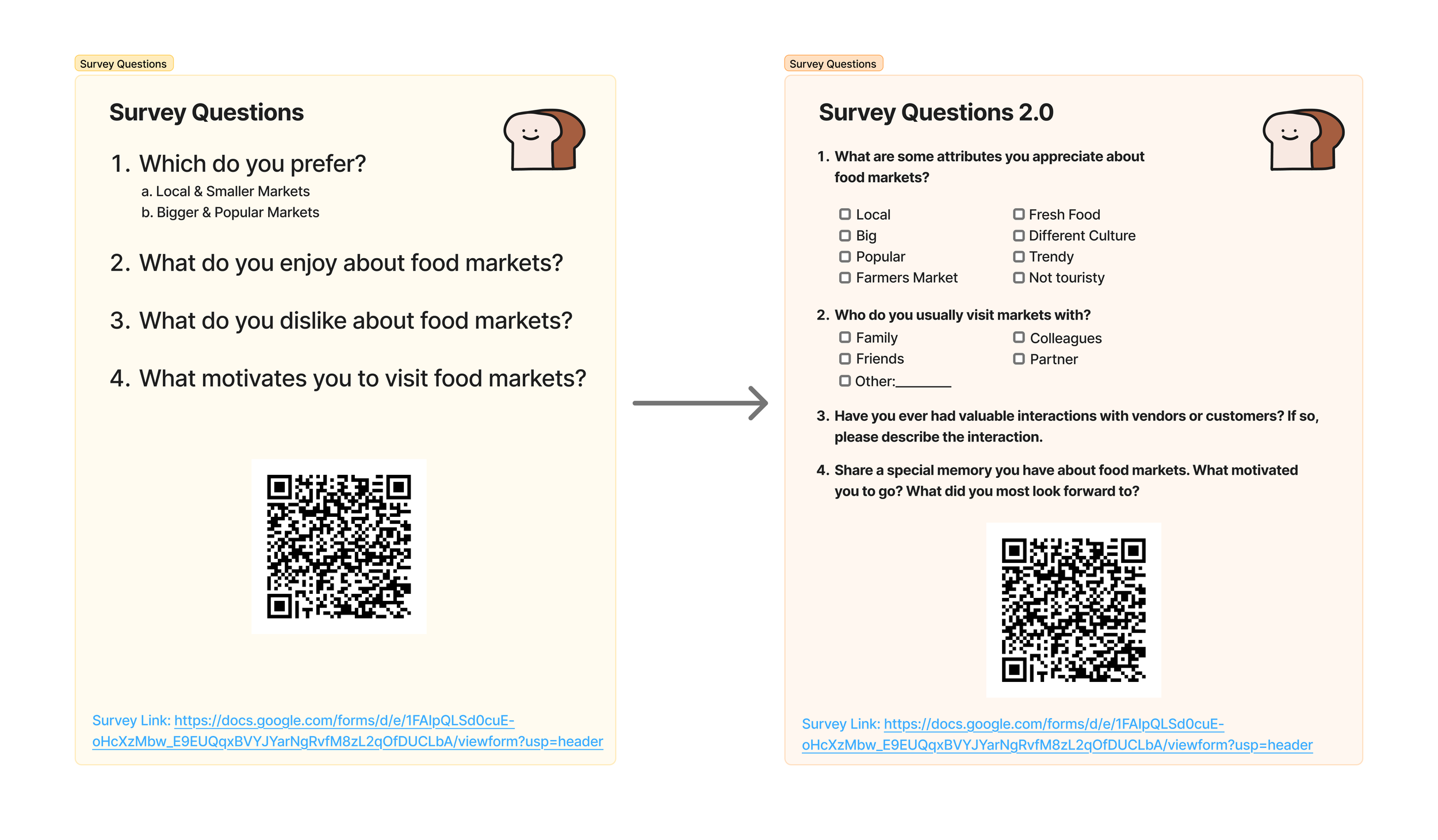
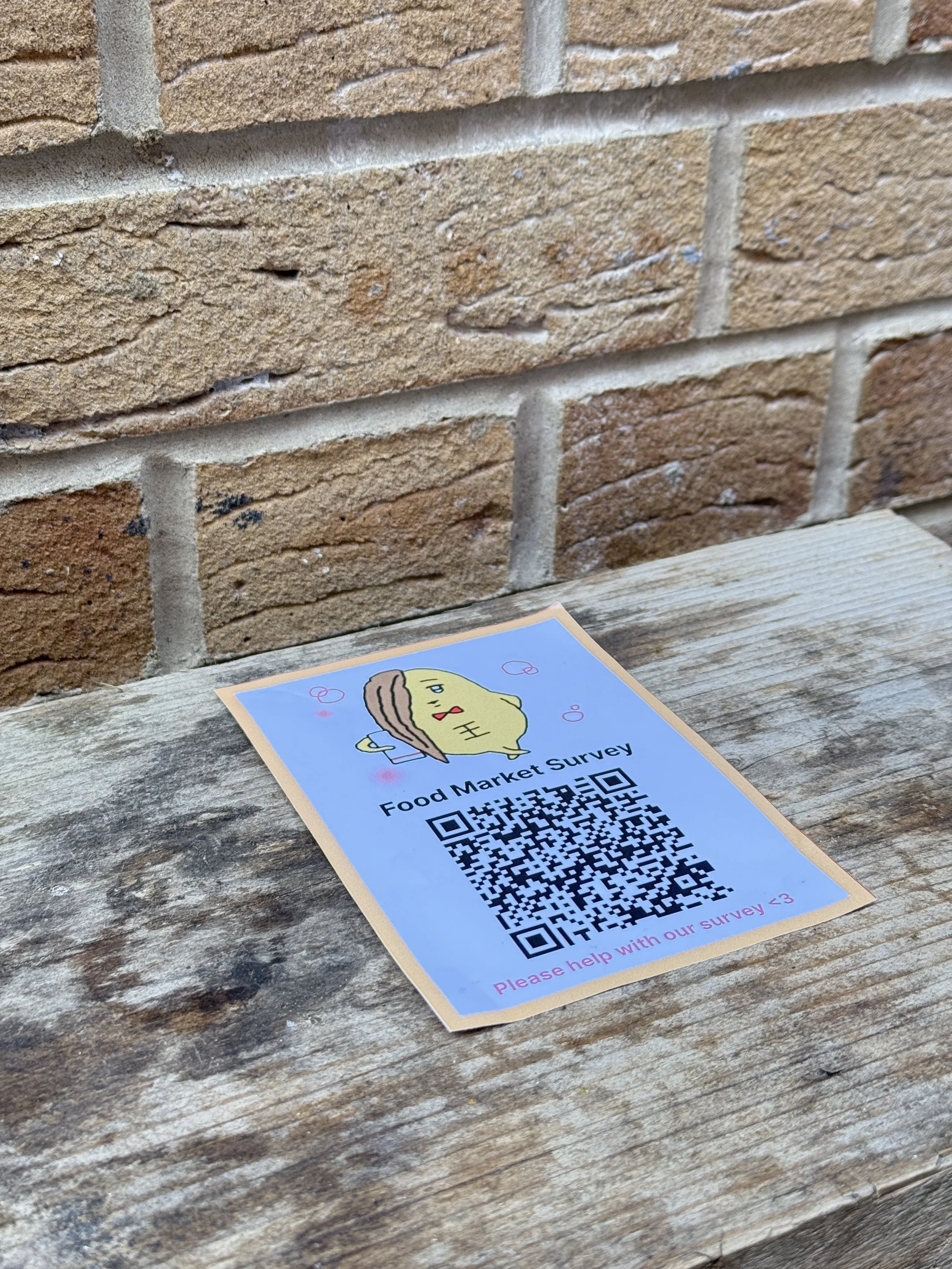
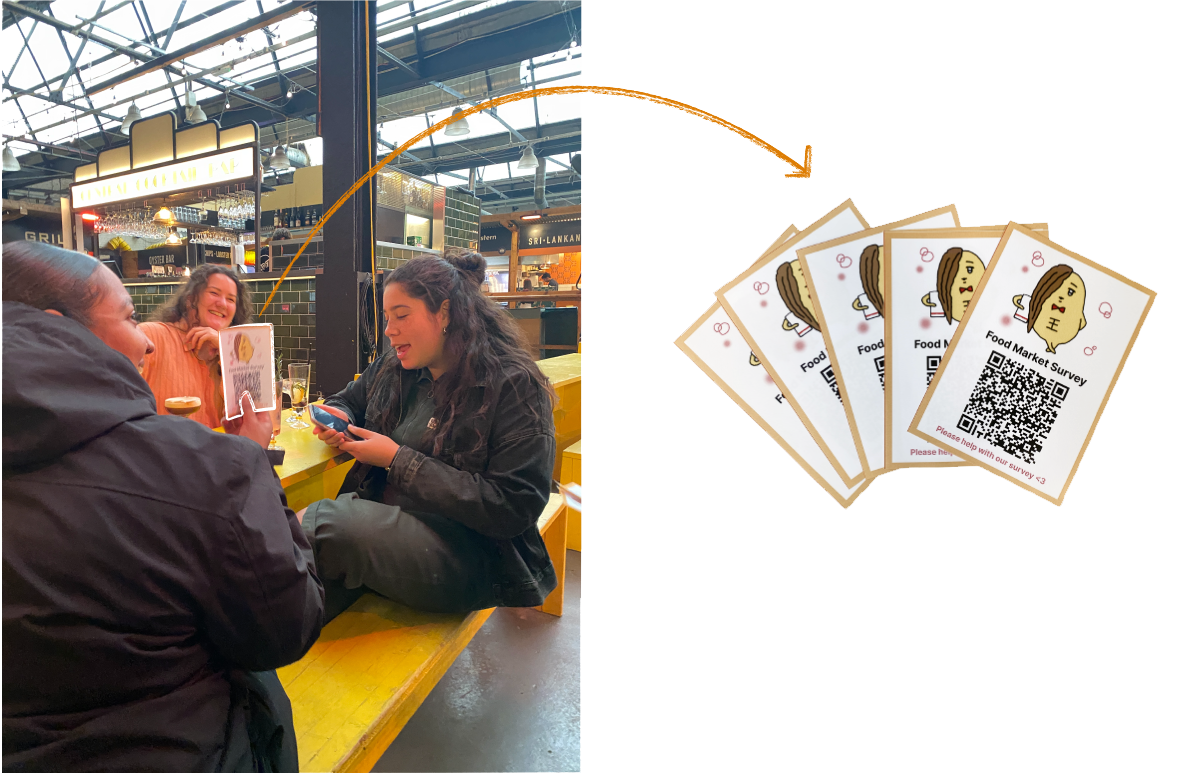
Online Survey
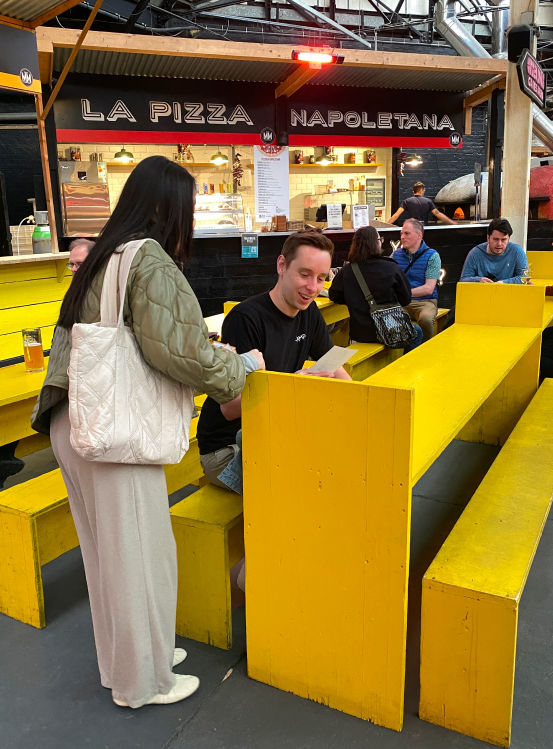
Directed Storytelling (Interviews)
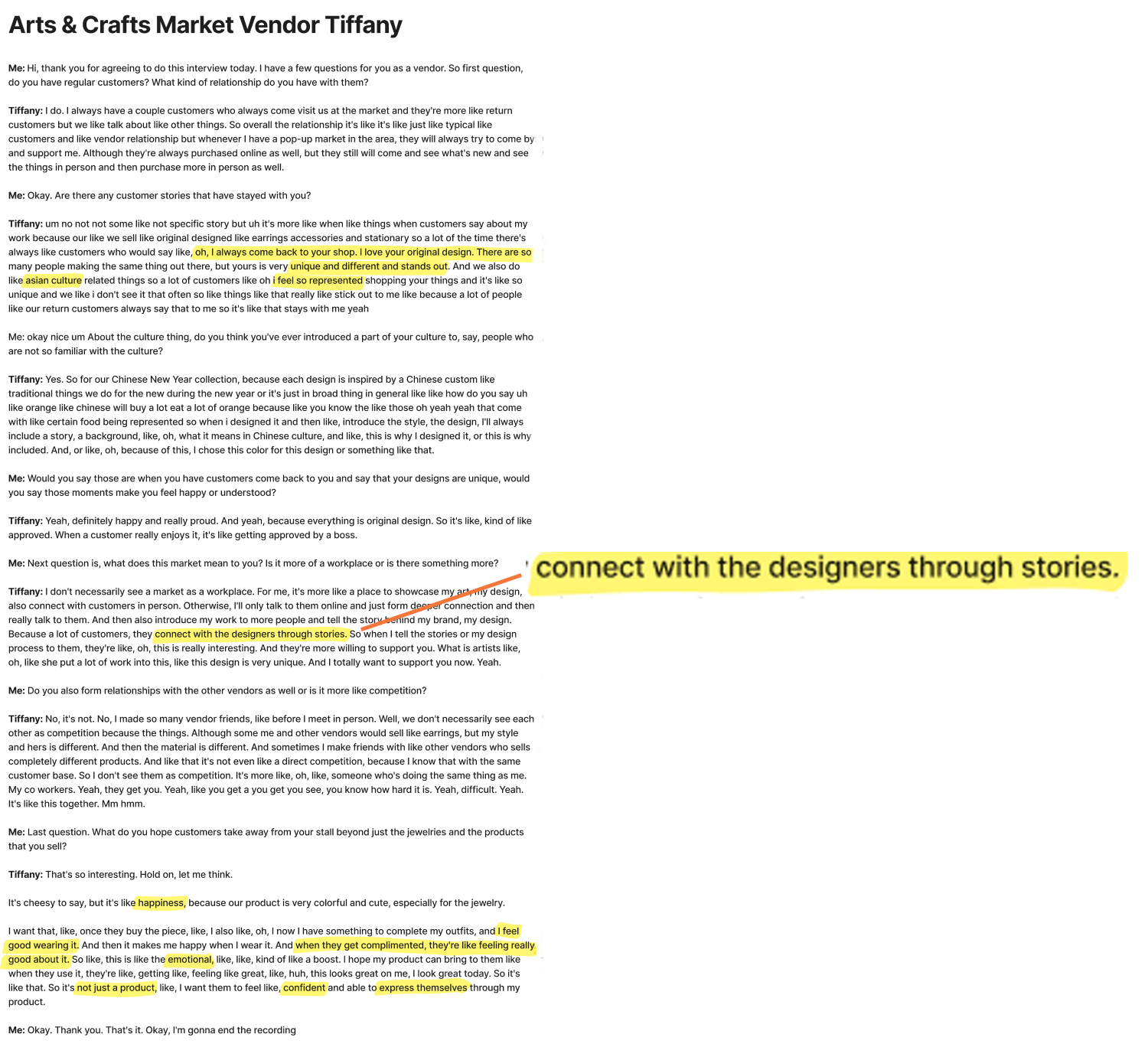
Transcribed interview with Tiffany (Sunnie Creative)
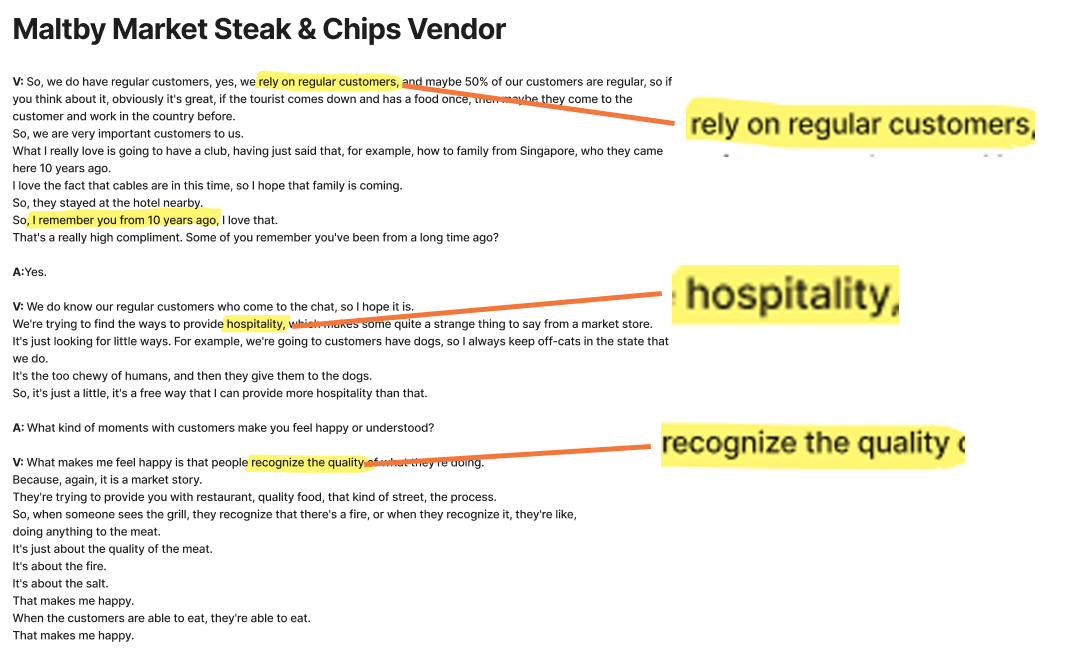
Transcribed interview with owner of Steak & Chips
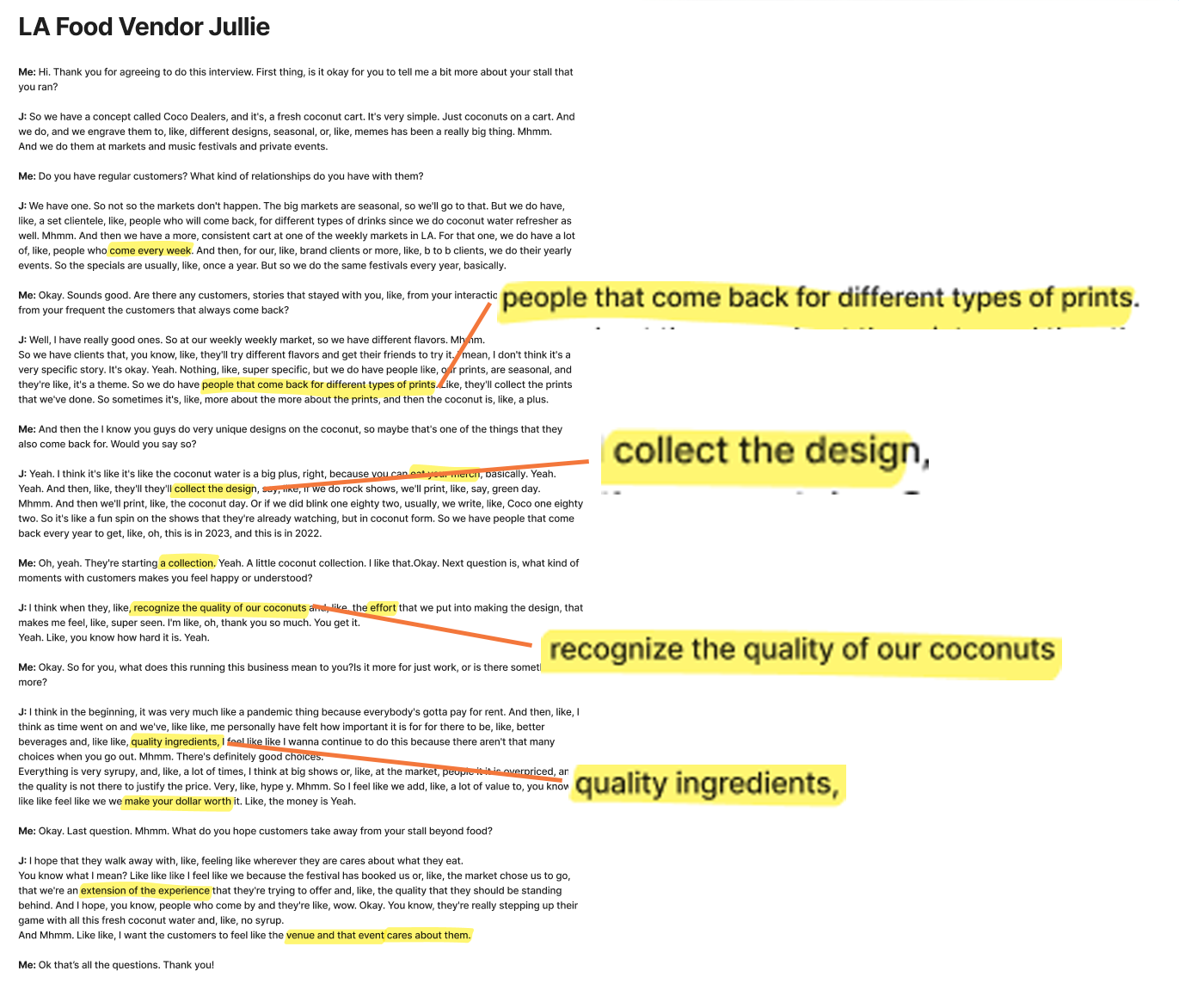
Transcribed interview with Jullie (Cocodealers)
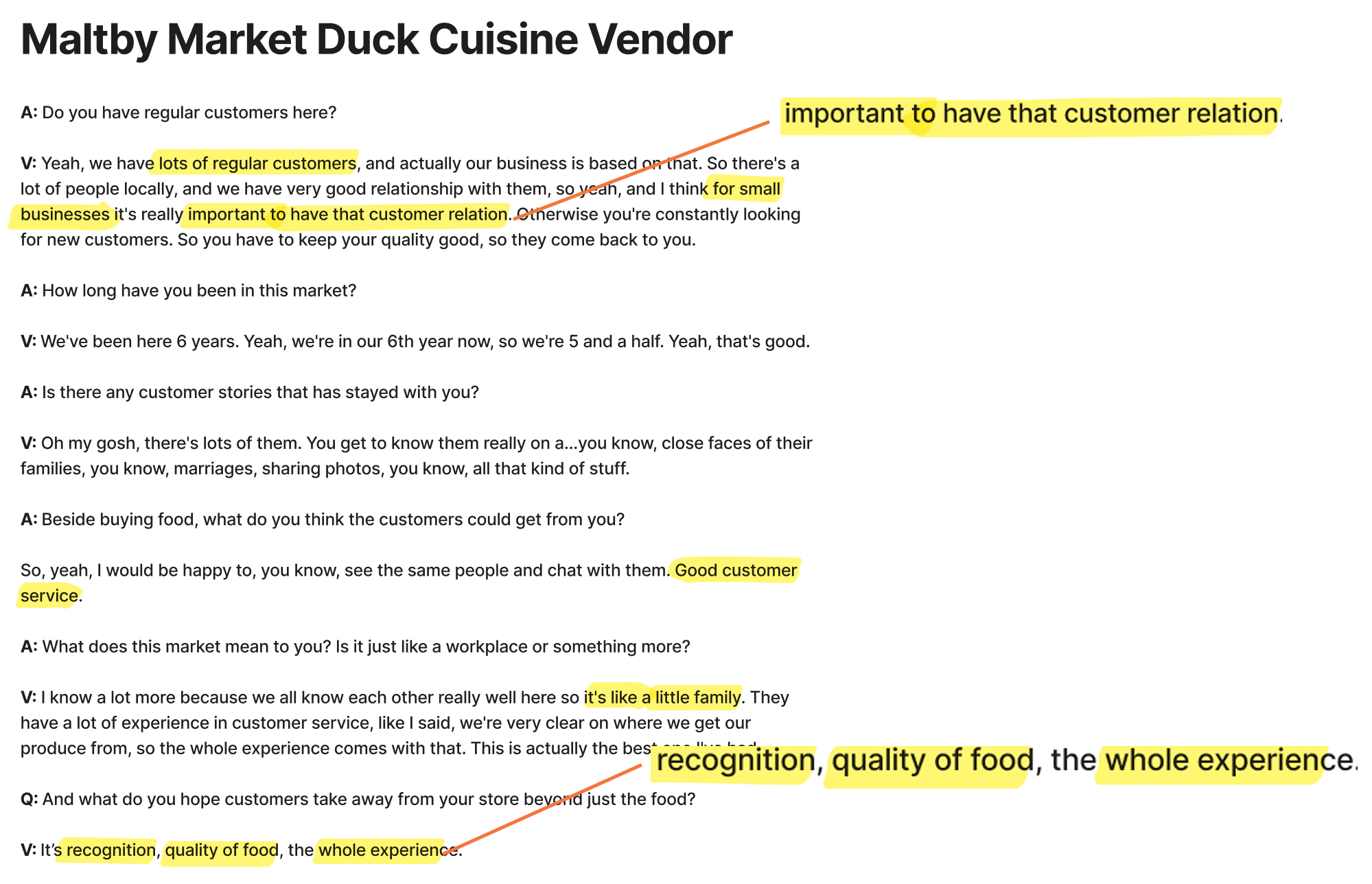
Transcribed interview with owner of Duck Cuisine
Research Takeaways & Concept
Our approach:
Design and Build
Reflections & Takeaways
Team:
Aoqi Yuan
Wuyou Xiang
Lissy Li
Breakup Letters
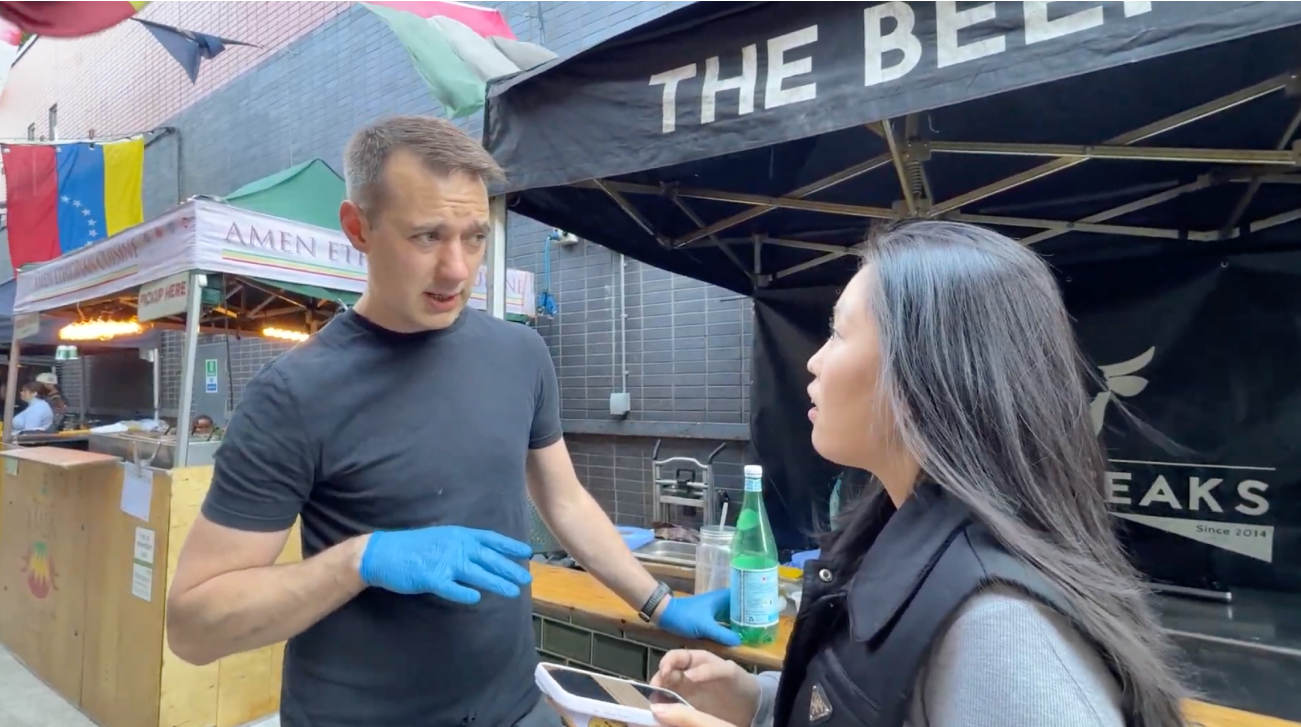
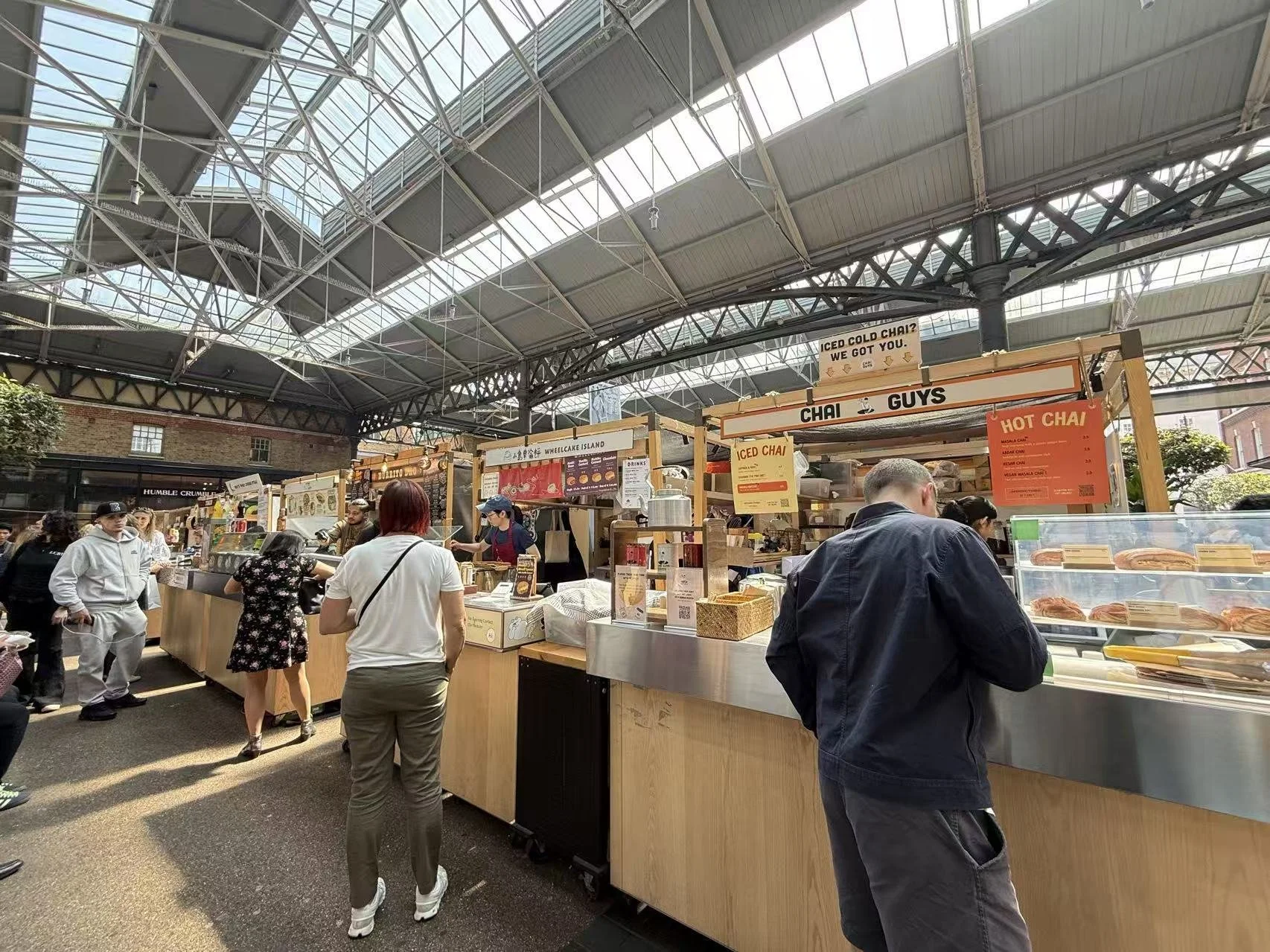
I conducted interviews with market vendors to understand what they value in their interactions with customers.
Across different types of stalls, vendors consistently highlighted the importance of recognition—feeling appreciated when customers acknowledge the quality of their work. These moments made them feel understood and validated.
Additional interviews at Maltby Street Market revealed a strong sense of community among vendors, often described as “like a family.” Many also emphasized hospitality as a key value, aiming to make customers feel welcomed and cared for.
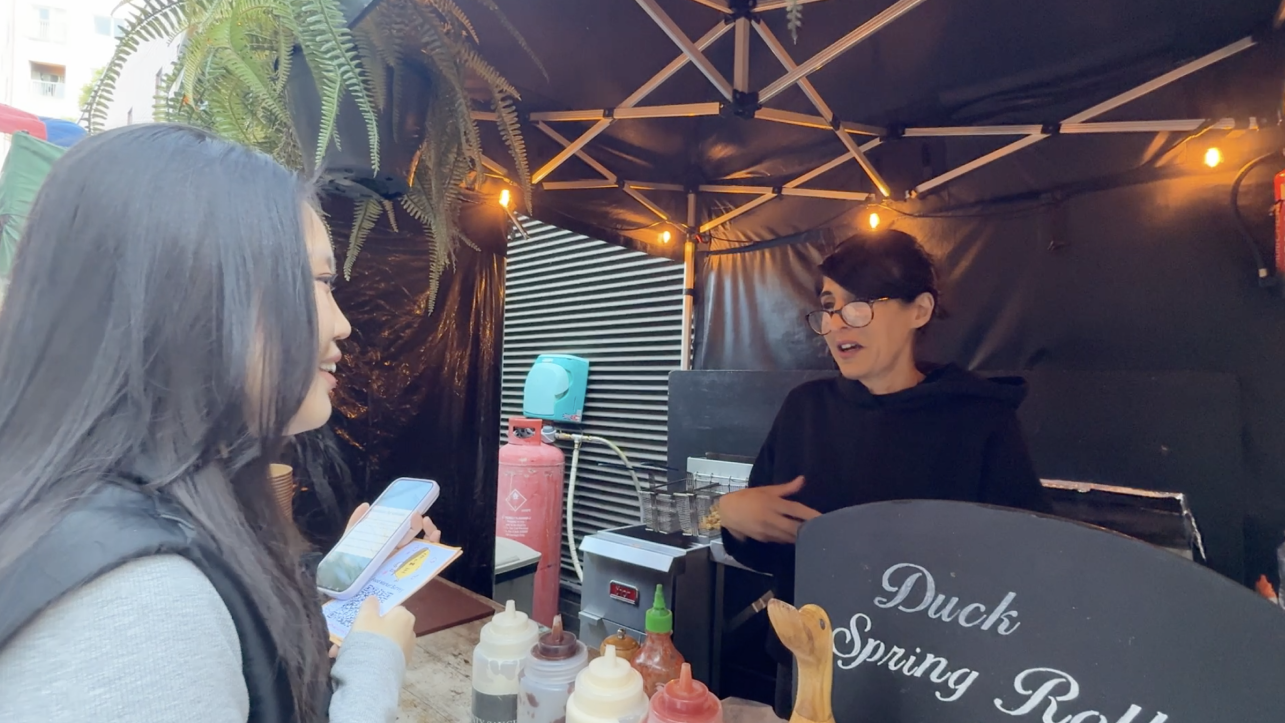
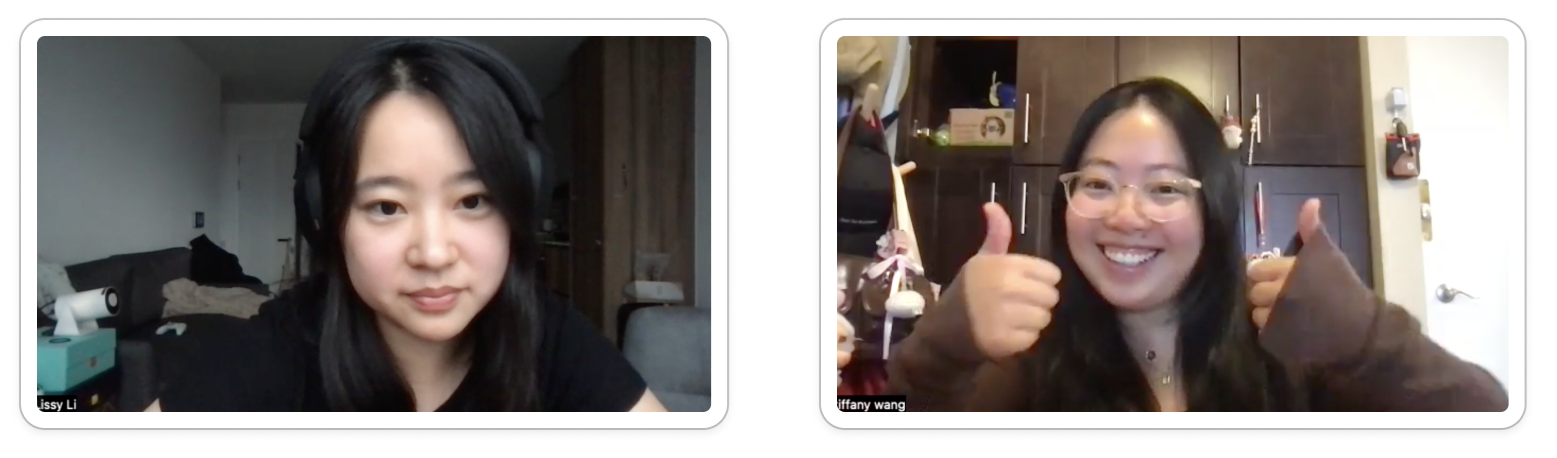
Aoqi and I conducting interviews
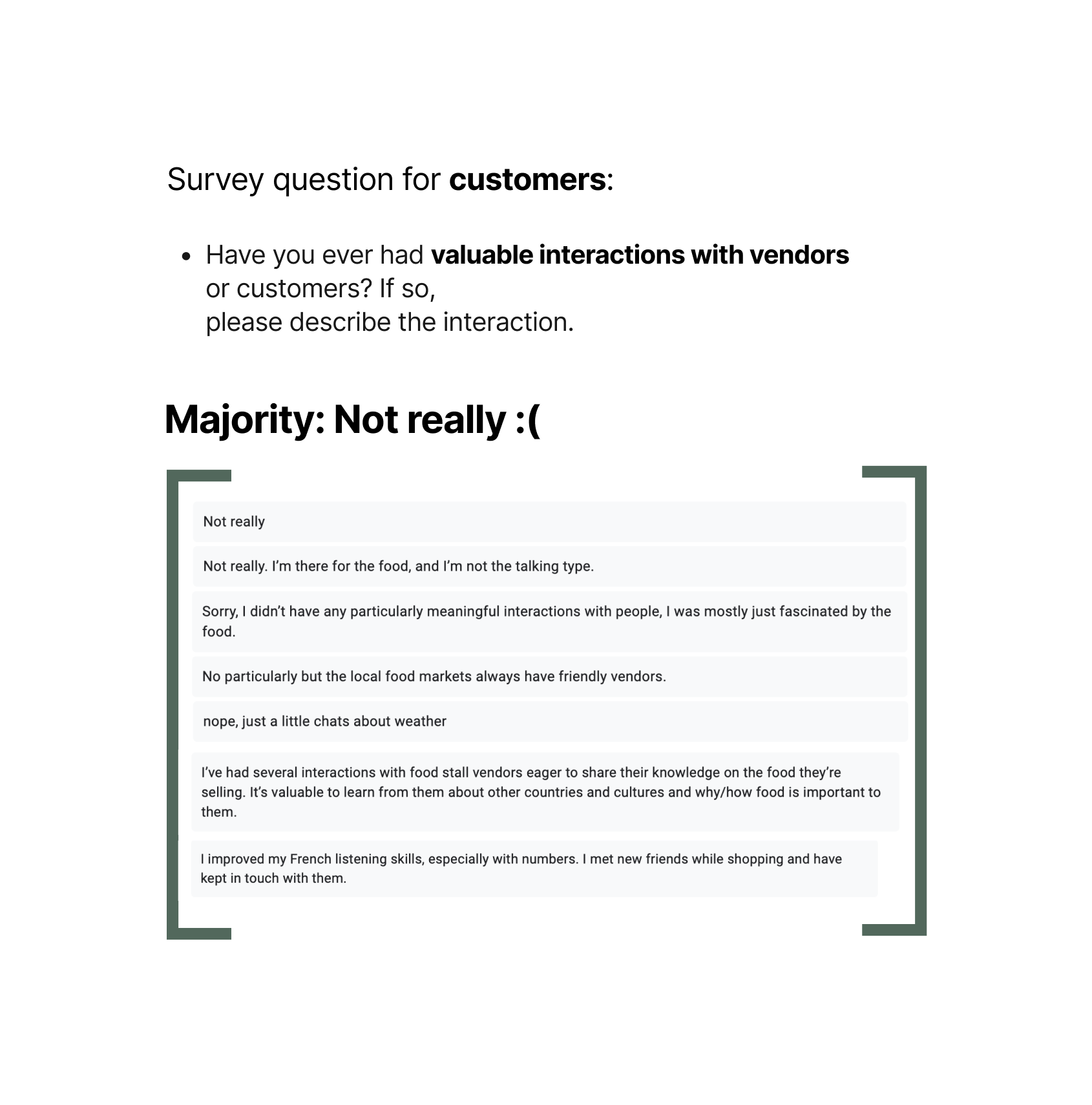
Our research revealed a gap between vendors and customers. While vendors value building relationships and sharing the story behind their food, most customers initially focus only on the product.
Connection typically develops over time, after repeated visits.
This highlights an opportunity to transform these largely transactional interactions into more immediate, engaging exchanges between vendors and customers.
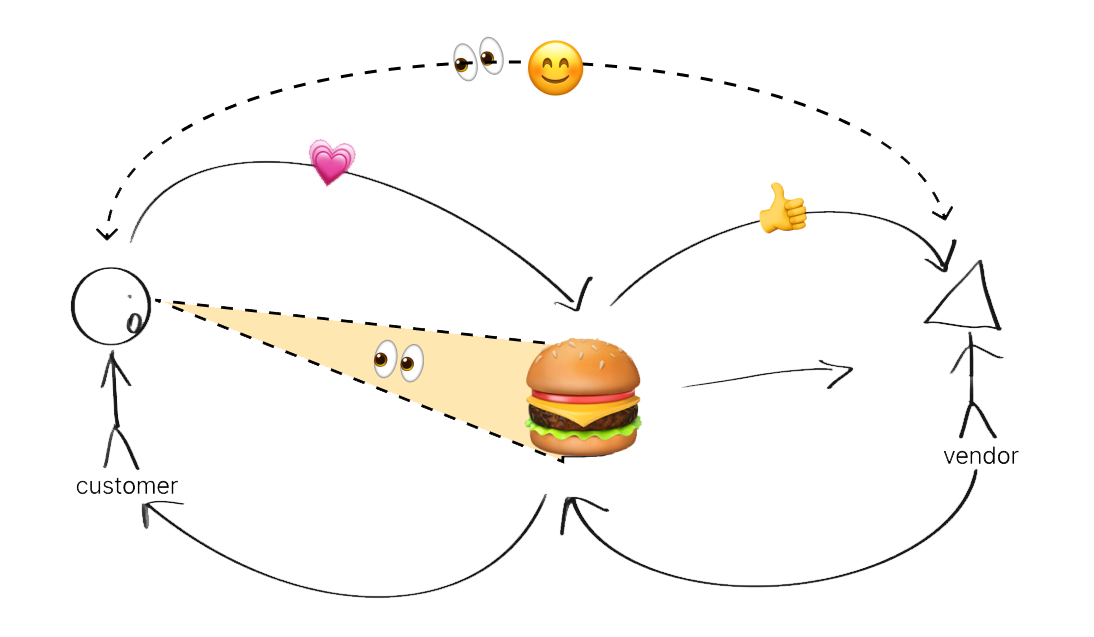
Transform the silent interaction between vendors and customers into a mutually engaging, experiential exchange.
To finalize our concept, we reviewed back to the directed storytelling research results:
Vendors —> Appreciates: recognition, regular customers
Customers —> Appreciates: story behind the food/product, how the food is made
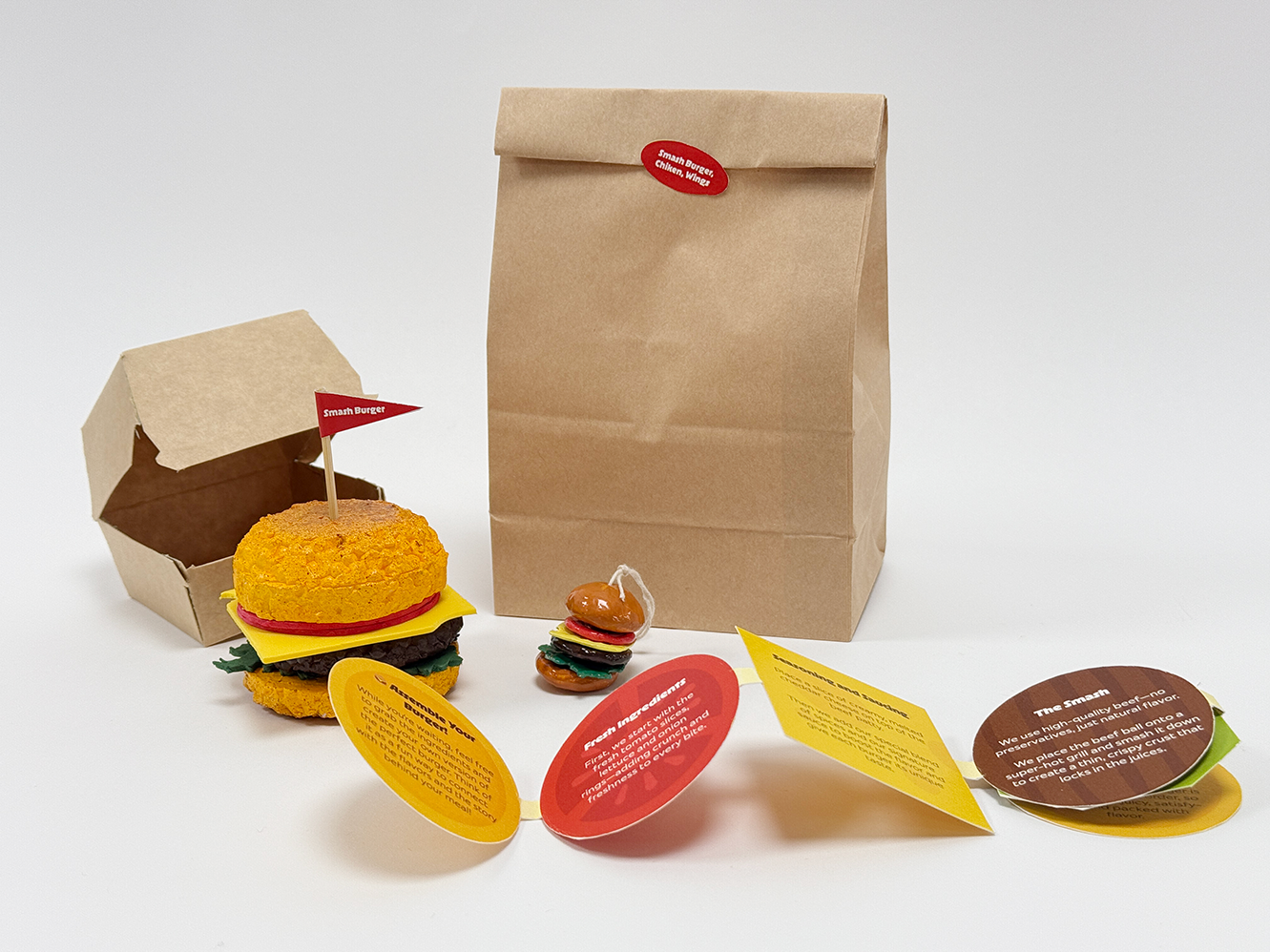
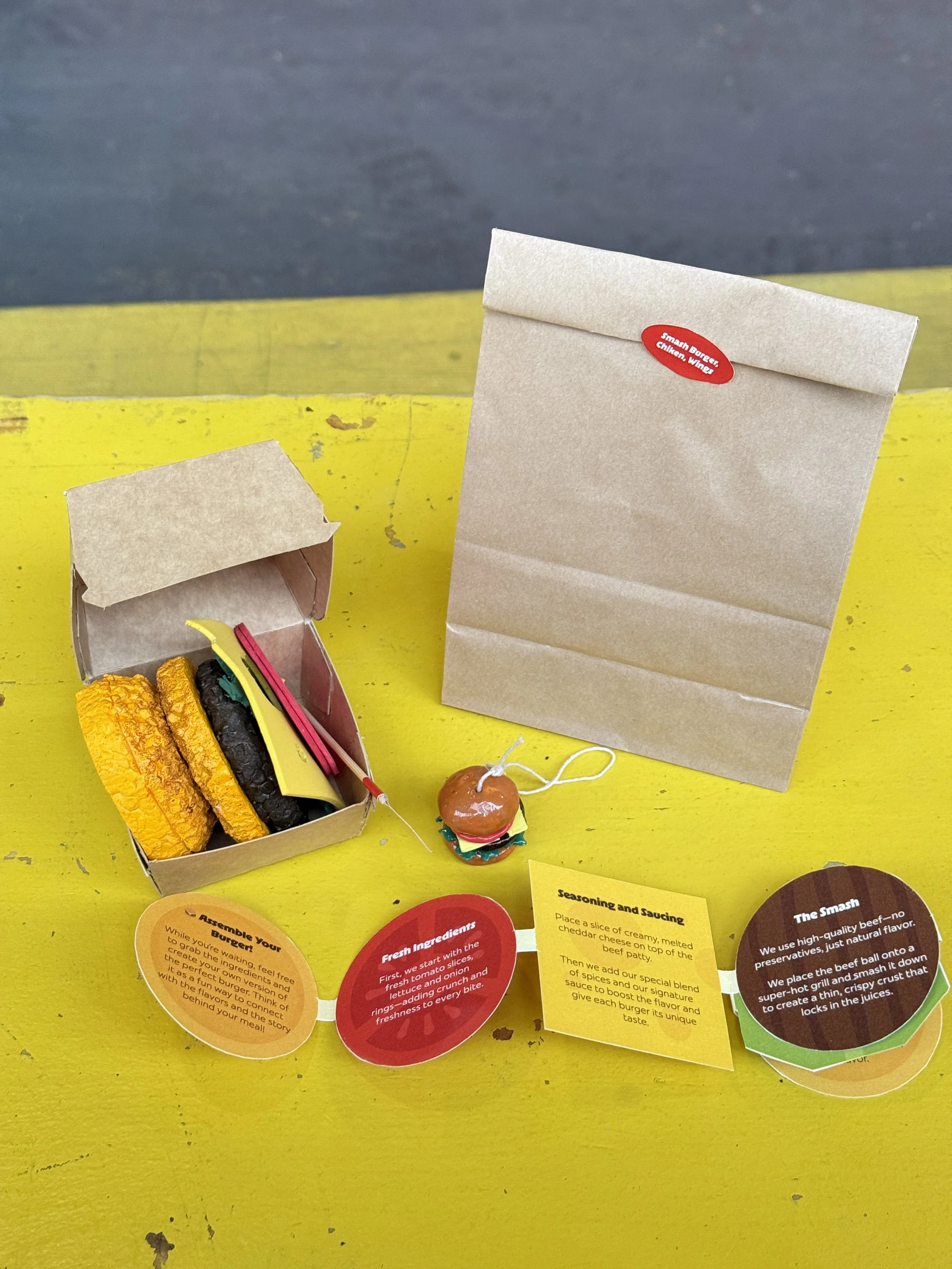
To help with that transaction, we want to create a food story kit where customers experience a bit of the “cooking” themselves while reading about the background and story of the food stall. When their order is ready, they can bring their assembled food item back to the stall. The handmade food items will be given back to the vendors to put on display as shared moments between the vendor and their customers. We hope this interaction will spark conversations and warmth throughout the market.
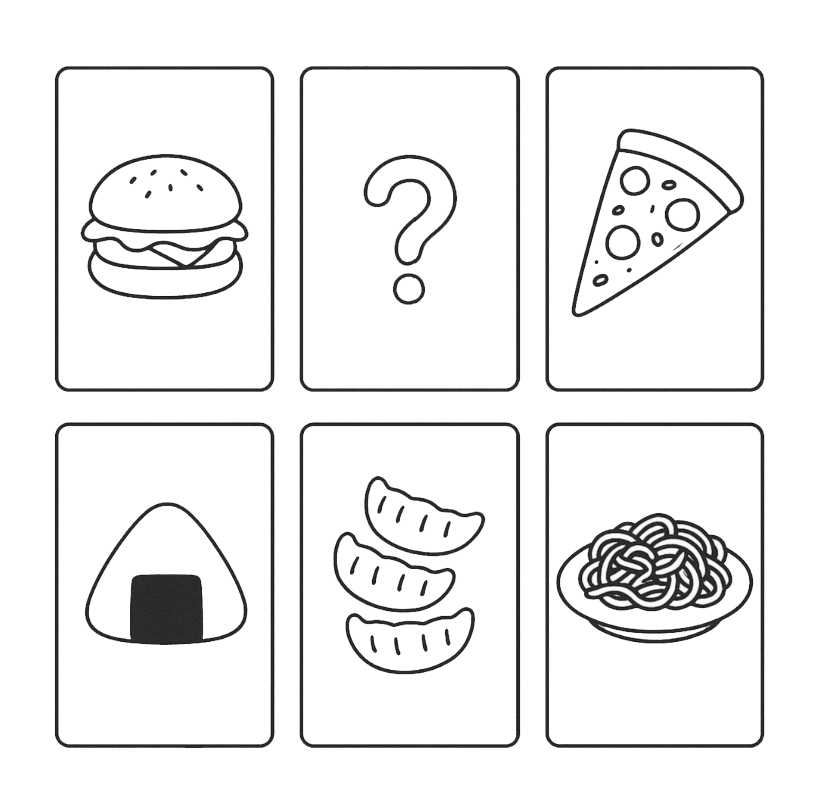
Although this method is designed to be fluid and adaptable to all kinds of food stalls, we will use a burger stall as an example to demonstrate its usability.
To create a burger assembling kit for the customers, there are a few elements we need to consider.
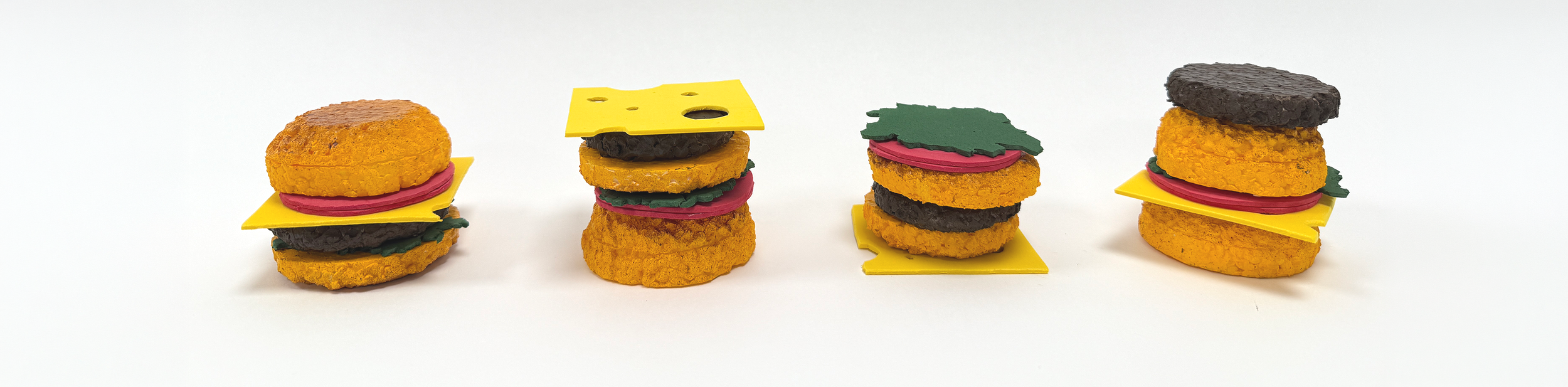
Burger structure
Difficulty level of assembling
Package design
Assembling manual/brand story
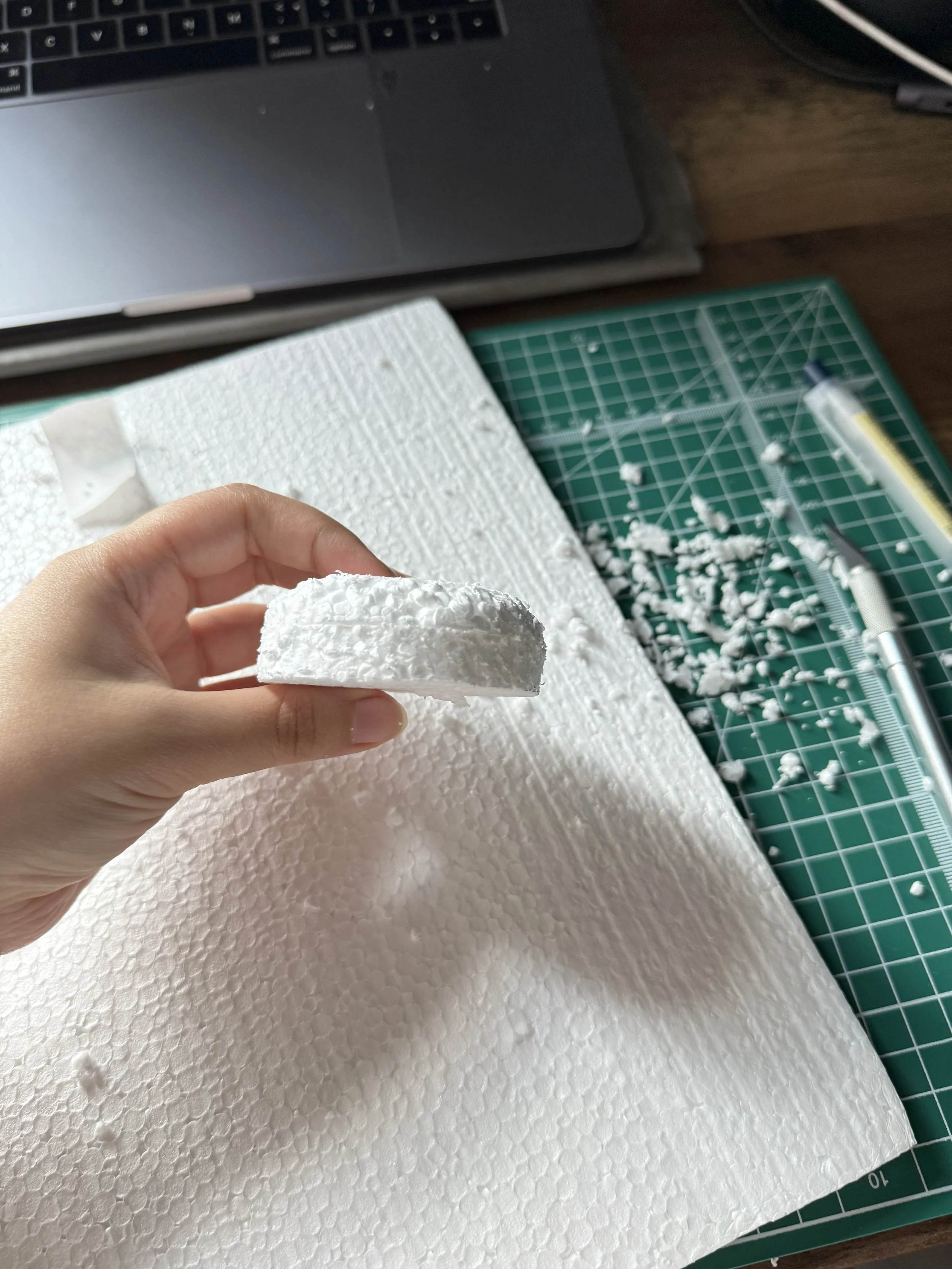
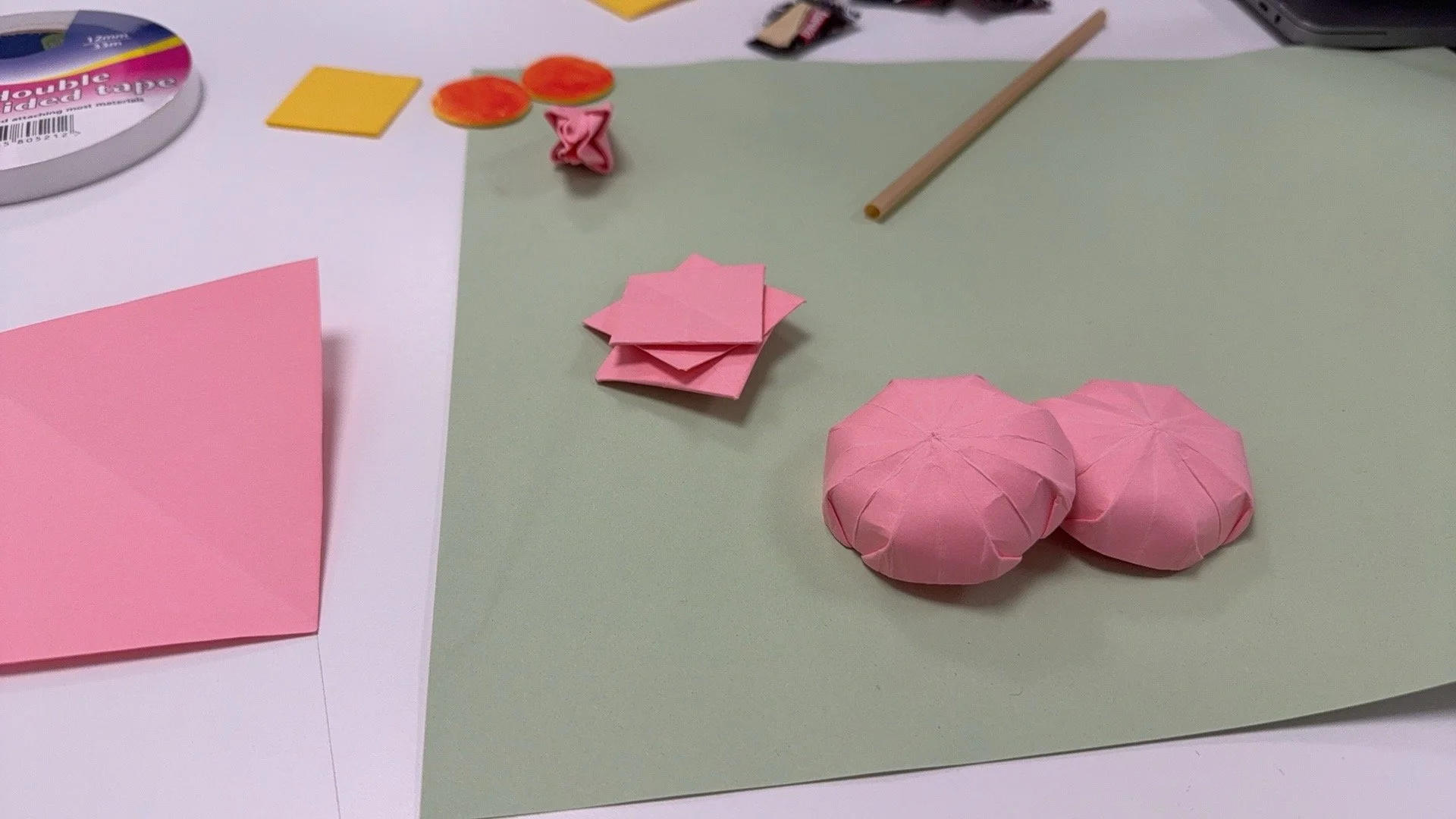
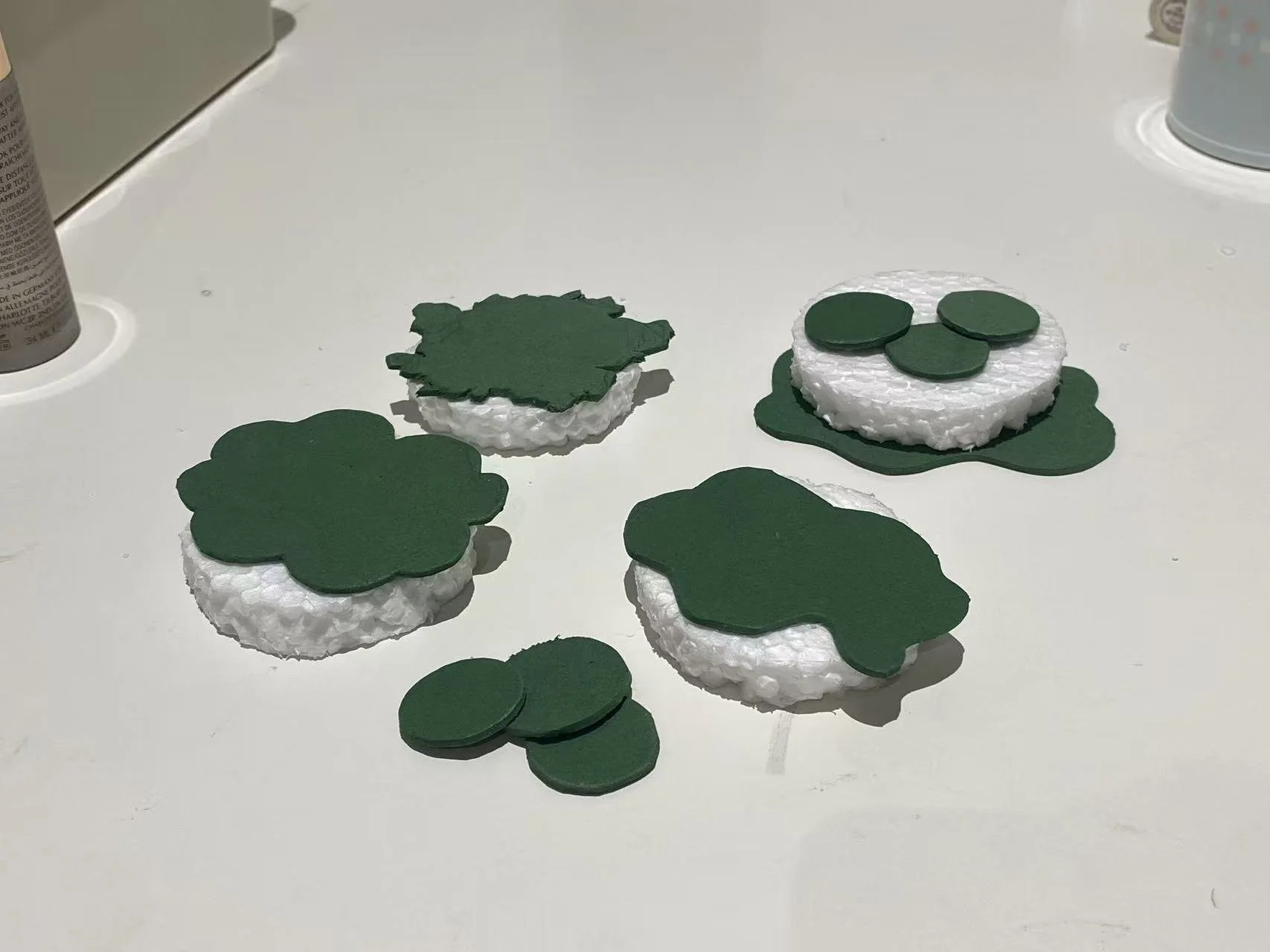
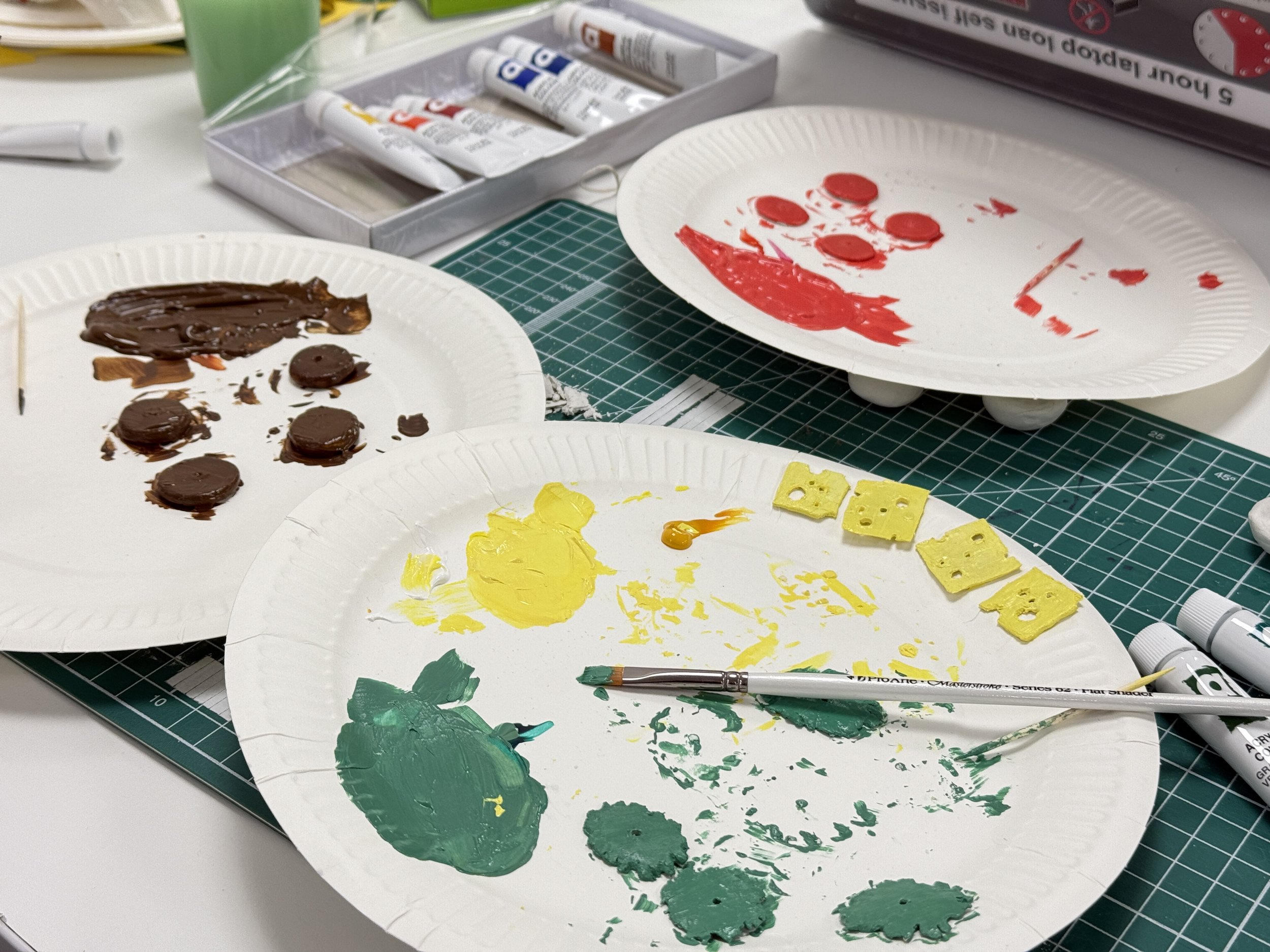
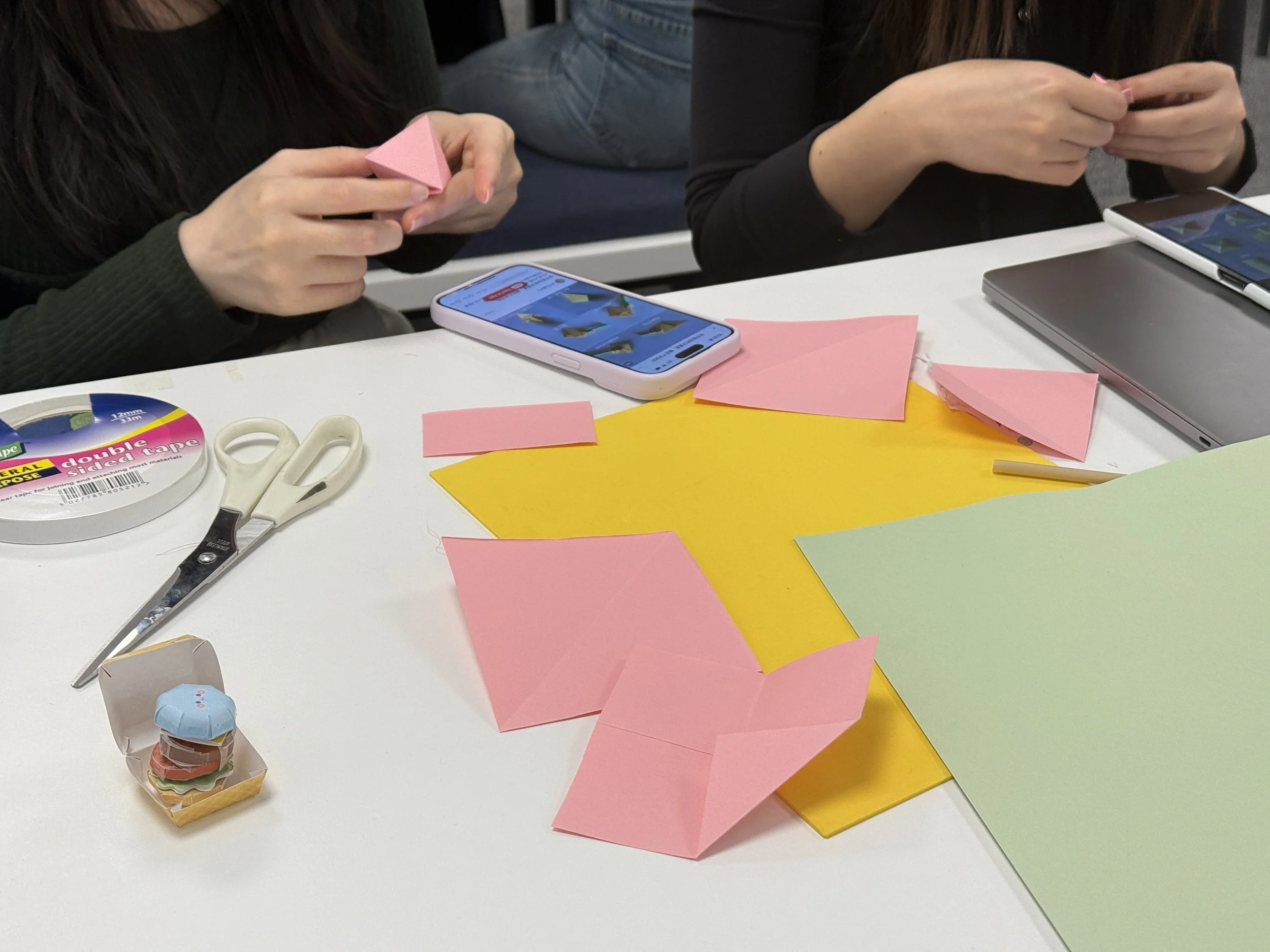
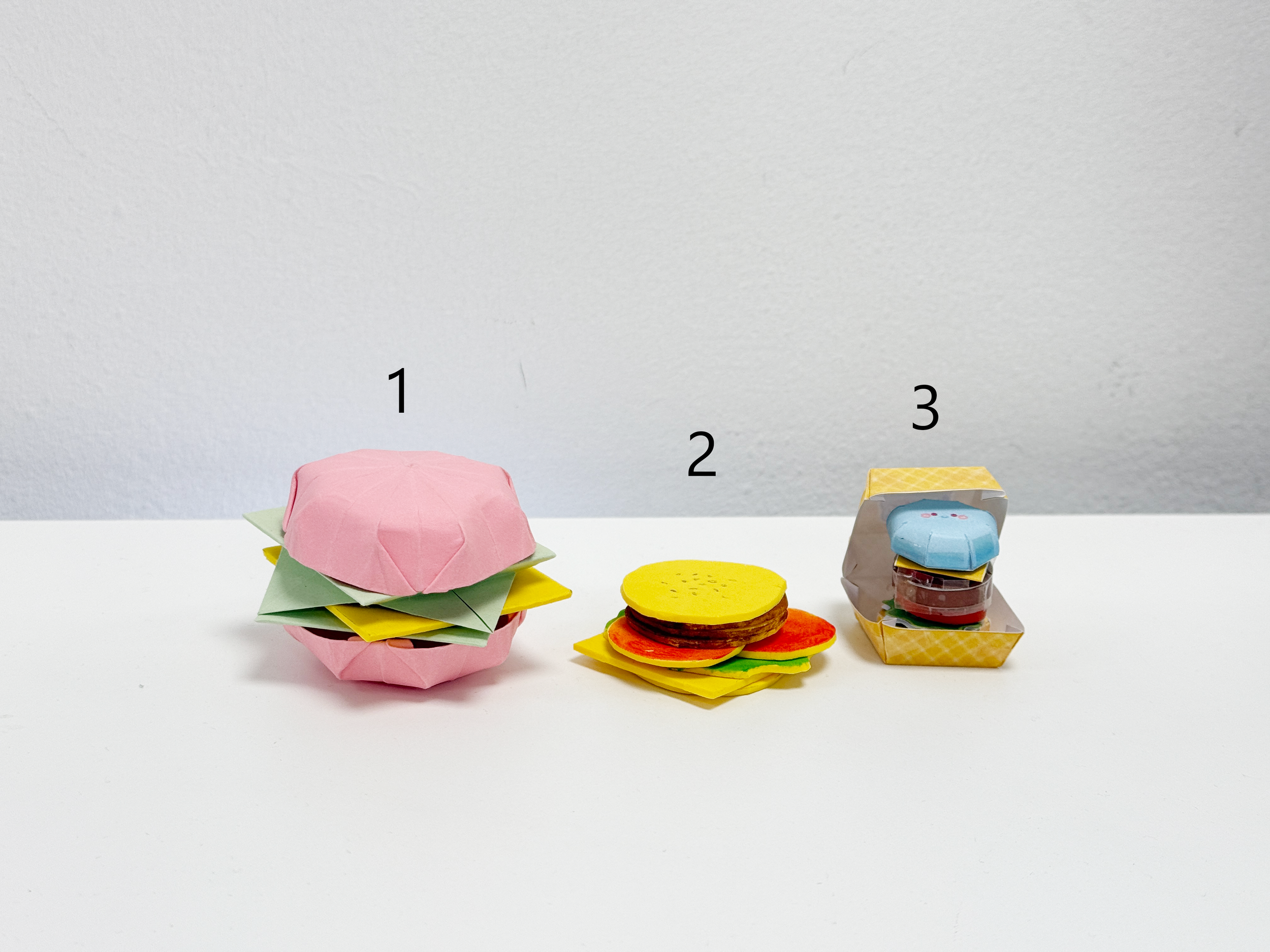
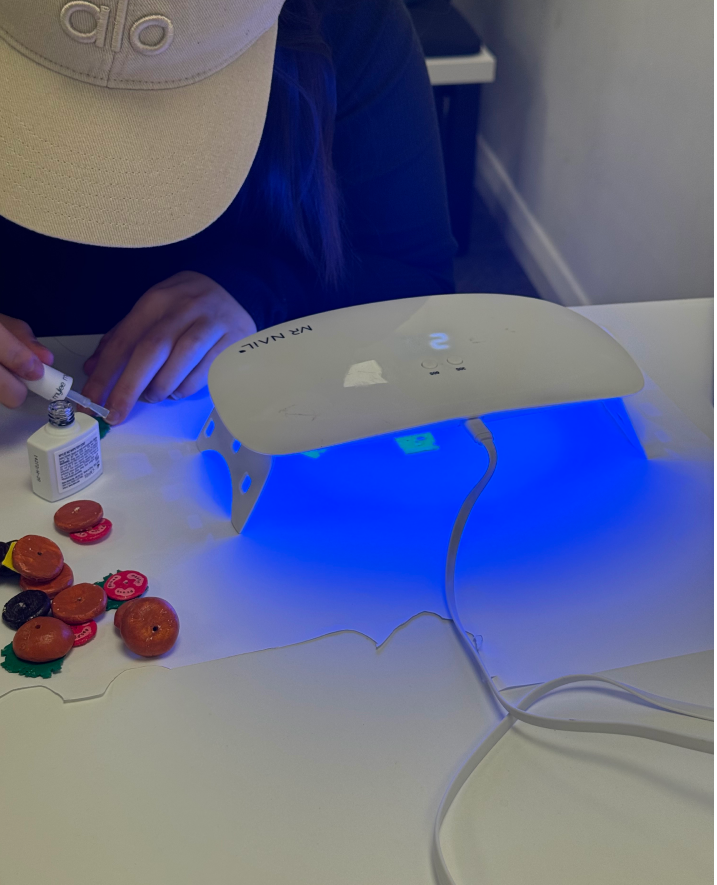
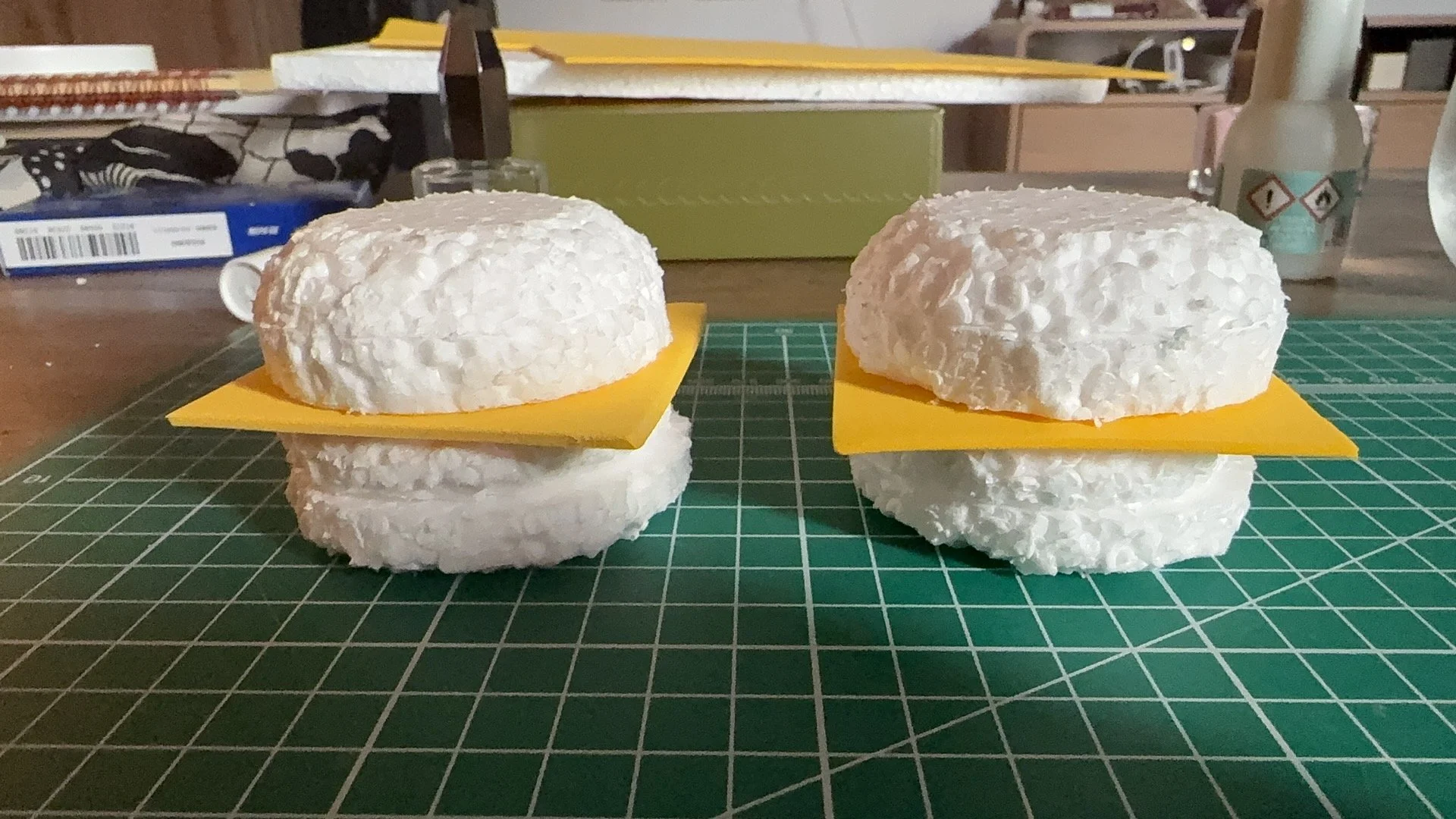
We first tried our hands at making the craft burgers, there were three versions we tried out and two out of three were proven too hard to assemble even with proper instructions. Too many steps were involved and we were concerned about customer’s willingness to assemble something so difficult in a potentially busy market environment. The other one was very simple to assemble but ended up looking very flat and undesirable.
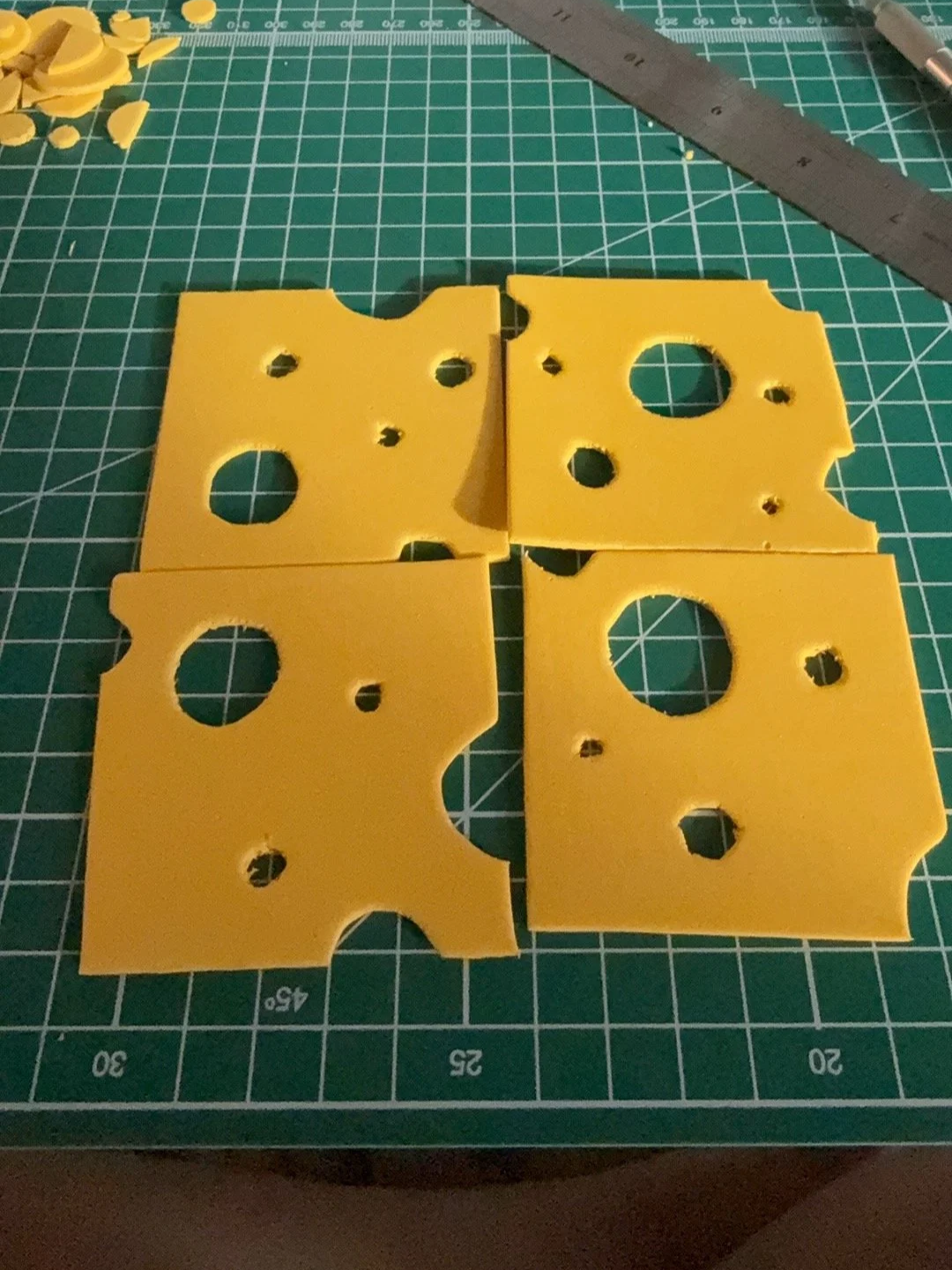
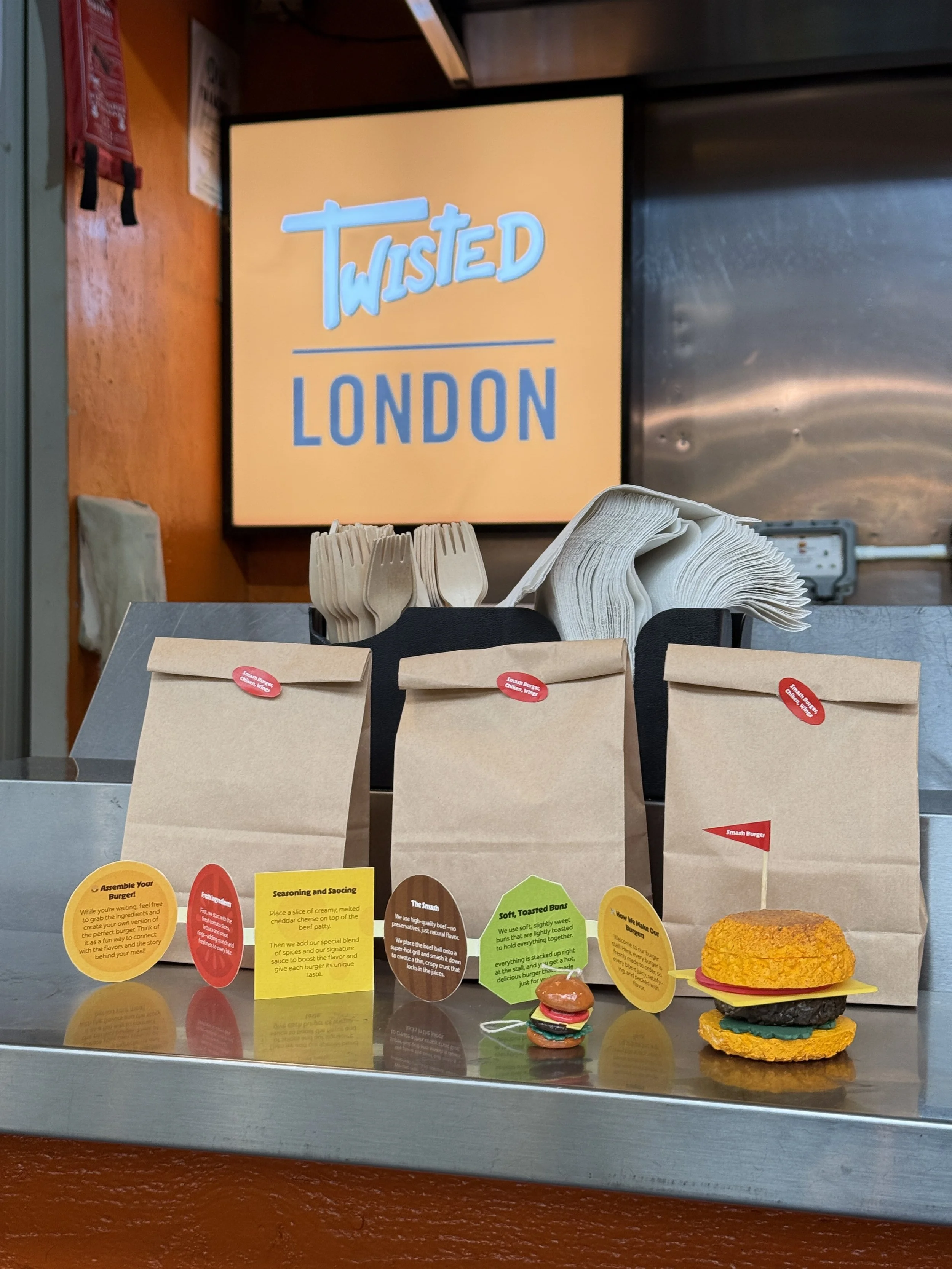
We went to Mercato Metropolitano to test our burger kit. We contacted the Twisted London stall to get permission for filming and running the test before our visit.
During the test, participants followed the usual ordering process. As part of the interaction, the vendor offered them our burger kit. While the vendor cooked the real burger, customers used the kit to assemble a foam version, engaging with the ingredients and the booklet.
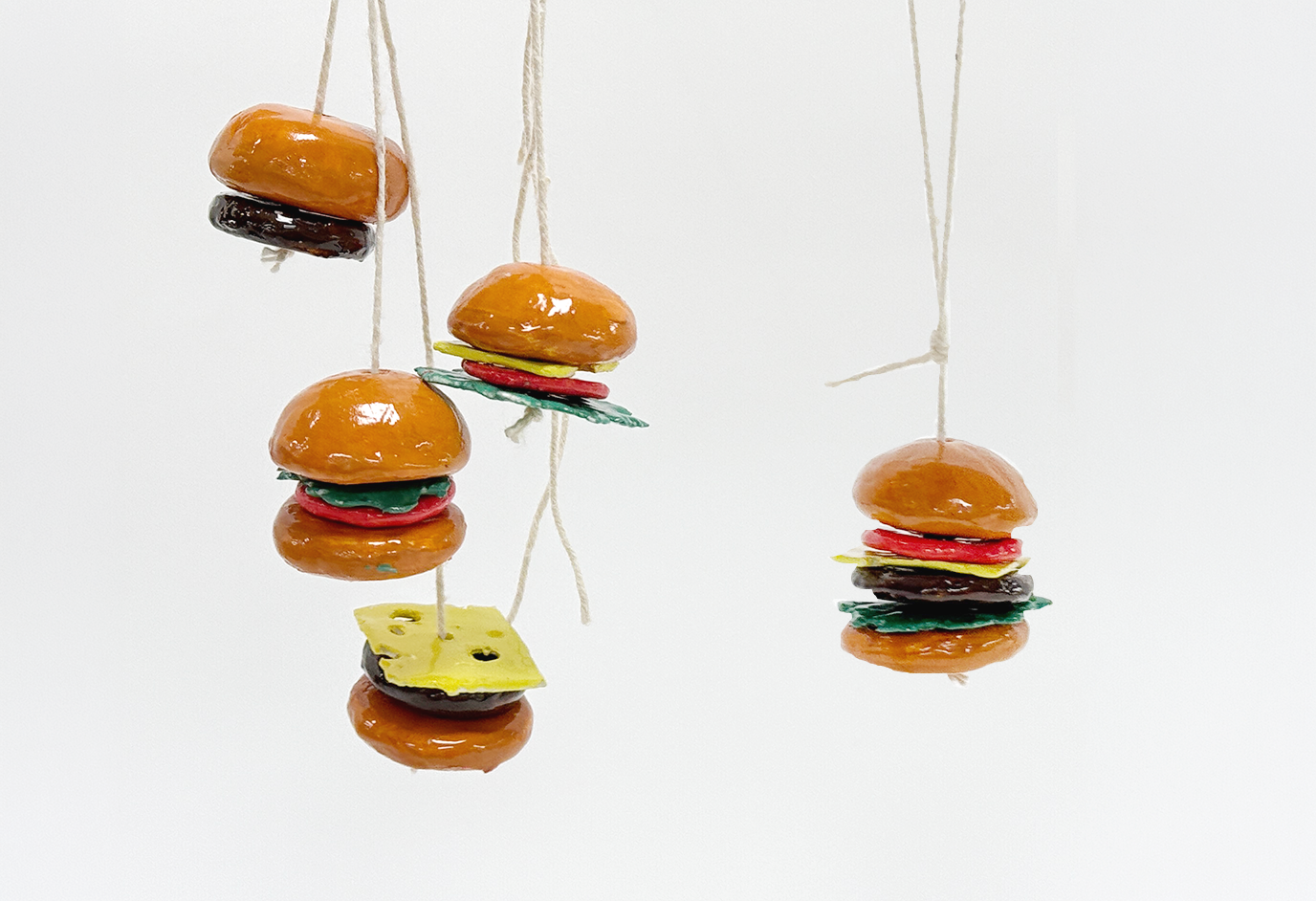
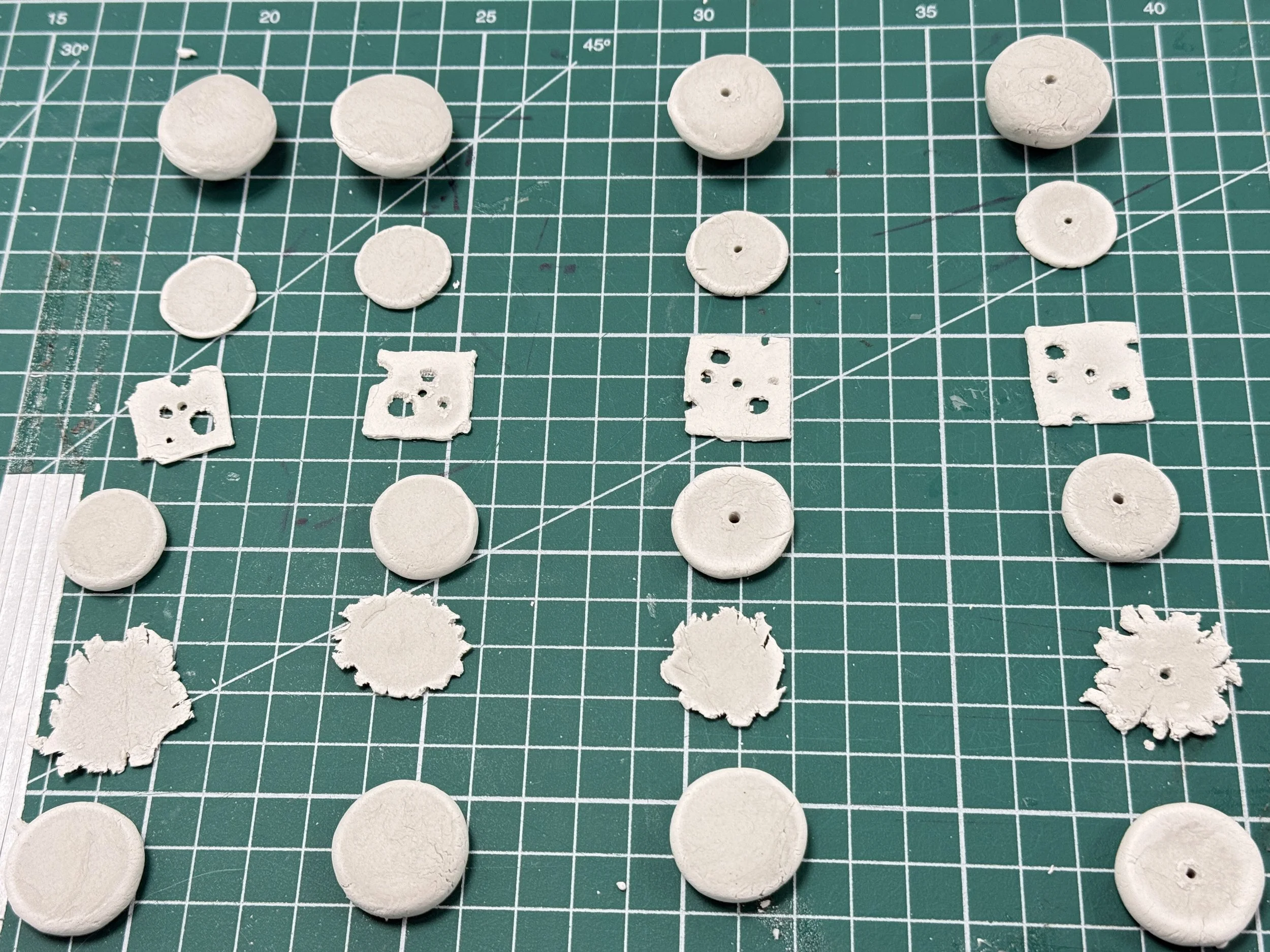
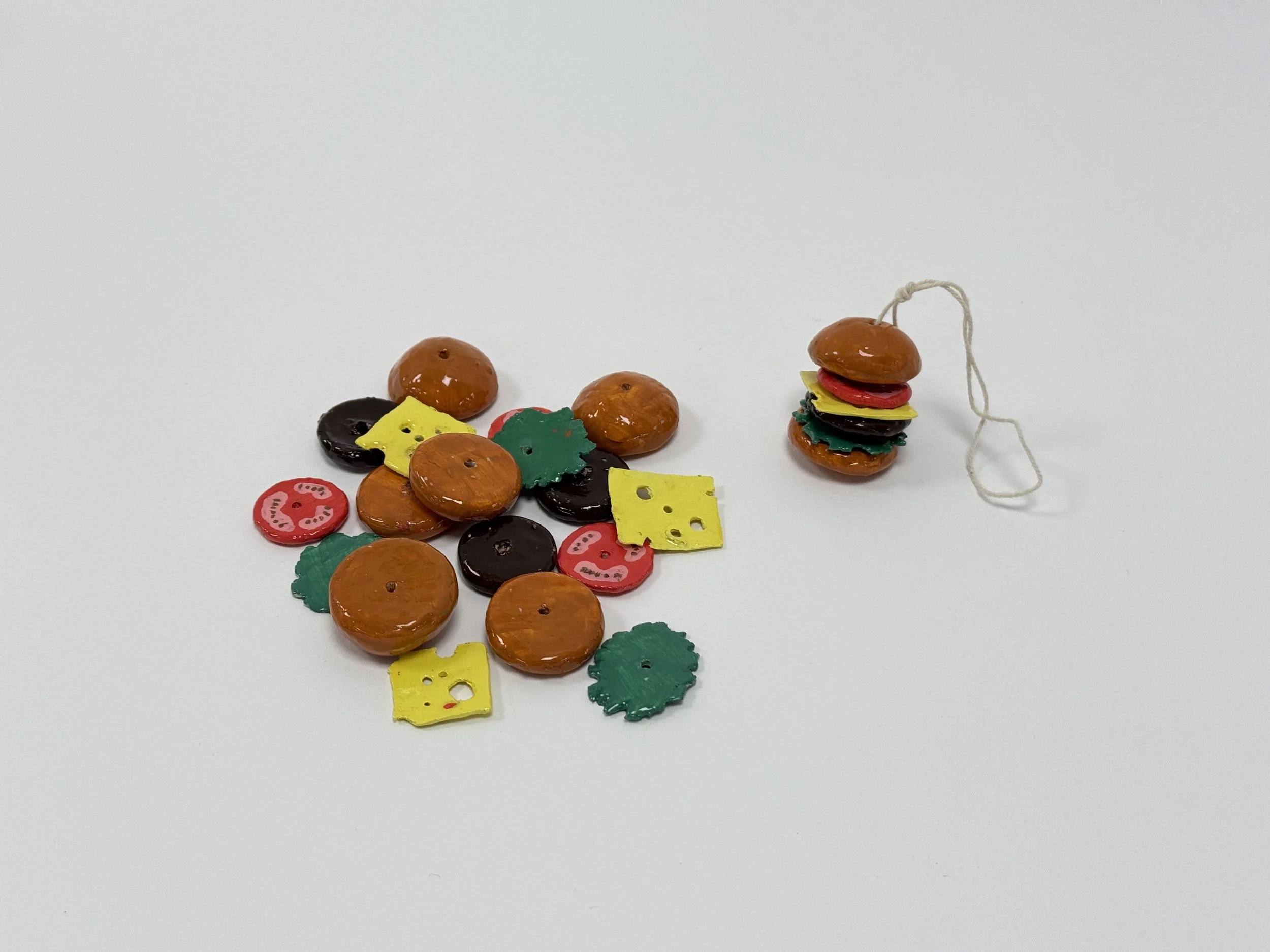
When their buzzer went off, customers returned to the stall to exchange their handmade burger for the real one. They then walked away with their meal and a collectible clay ingredient keychain as a small memento of the experience.
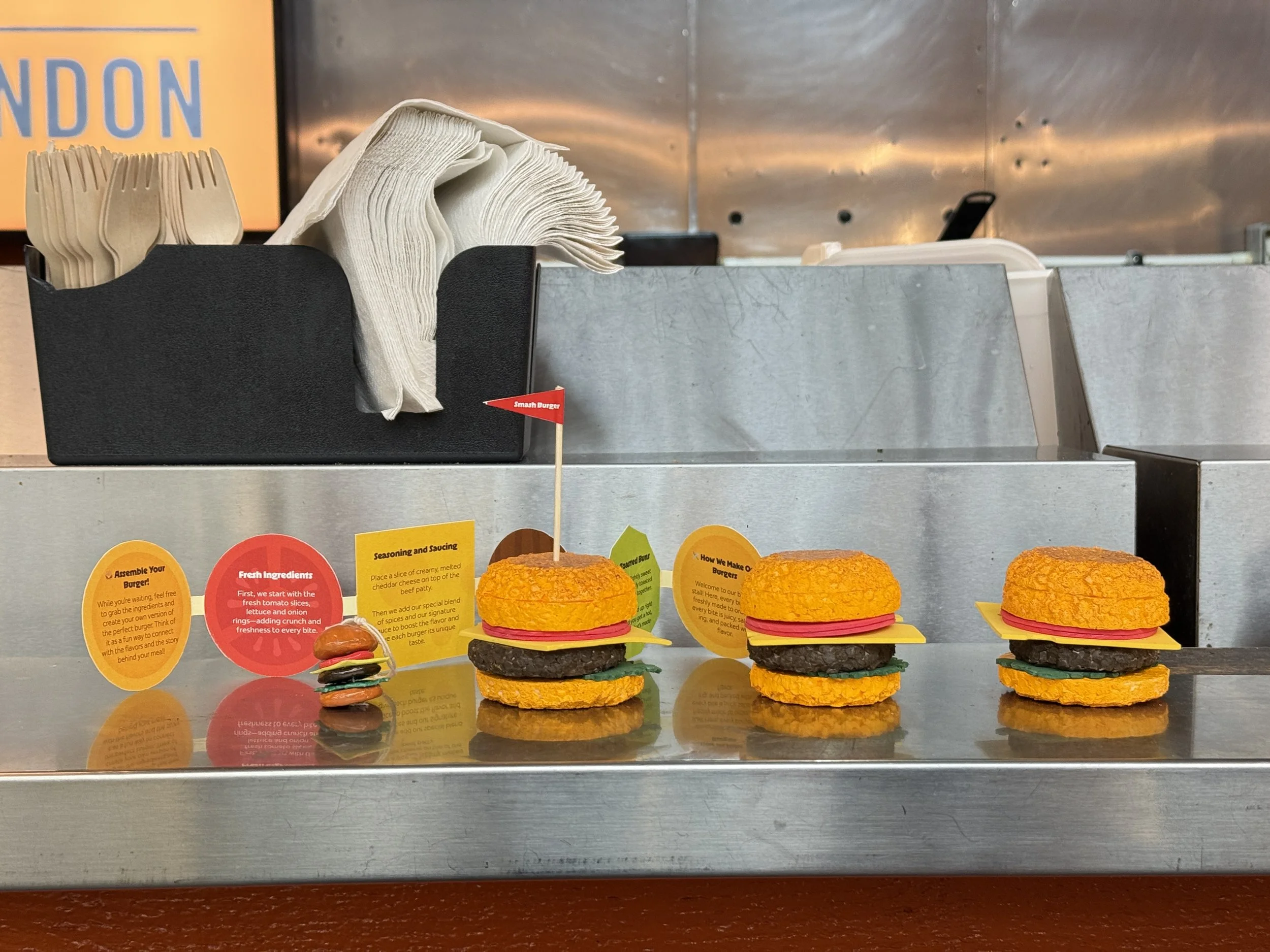
As the final outcome of our project, we tested the kit and gathered feedback from both participants and tutors.
Participants appreciated how the assembling kit made the waiting time feel more unique, engaging and personal. One participant mentioned that she would normally scroll on her phone while waiting, and found the simple craft activity to be a refreshing change of pace. Another said the booklet made the burger feel more special, and even a simple moment of eye contact during the burger exchange created a small but meaningful sense of trust.
Feedback from tutors and external partners was also positive, they enjoyed interacting with the kit. A suggestion was made to organize the booklet content more clearly into sections: one for the stall’s background story, another for the cooking process. Ideally, this content would come from the vendors themselves to reflect what they want to communicate with their customers.
There was also discussion around the kit’s potential as a tool for user feedback. For example, restaurants could observe how customers assemble their burgers as a form of mass customization, possibly inspiring new menu items.
However, improvements can still be made regarding the interpersonal relationship building aspect. Beyond the physical exchange and the memento swap, how might the interaction encourage deeper two-way connection? How can vendors learn more about their customers and vice versa?