
The Project
Tasked to design a local memory preservation and information sharing system inspired by and integrated with a local library collection. We used community memory as a lens to explore how personal stories and shared experiences can be preserved.
Research
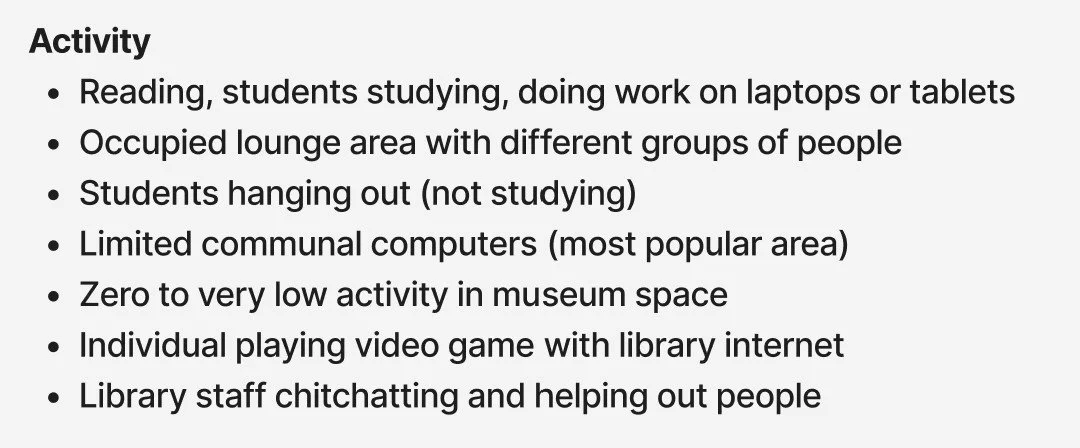
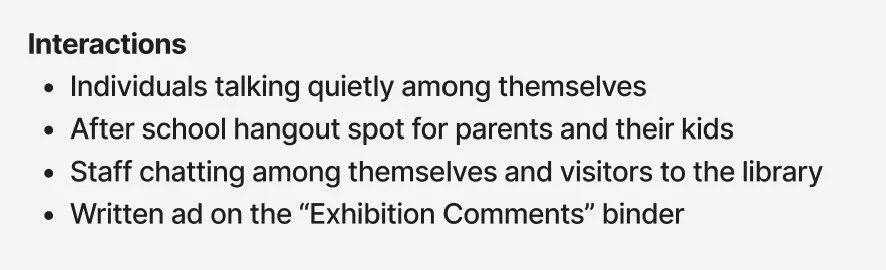
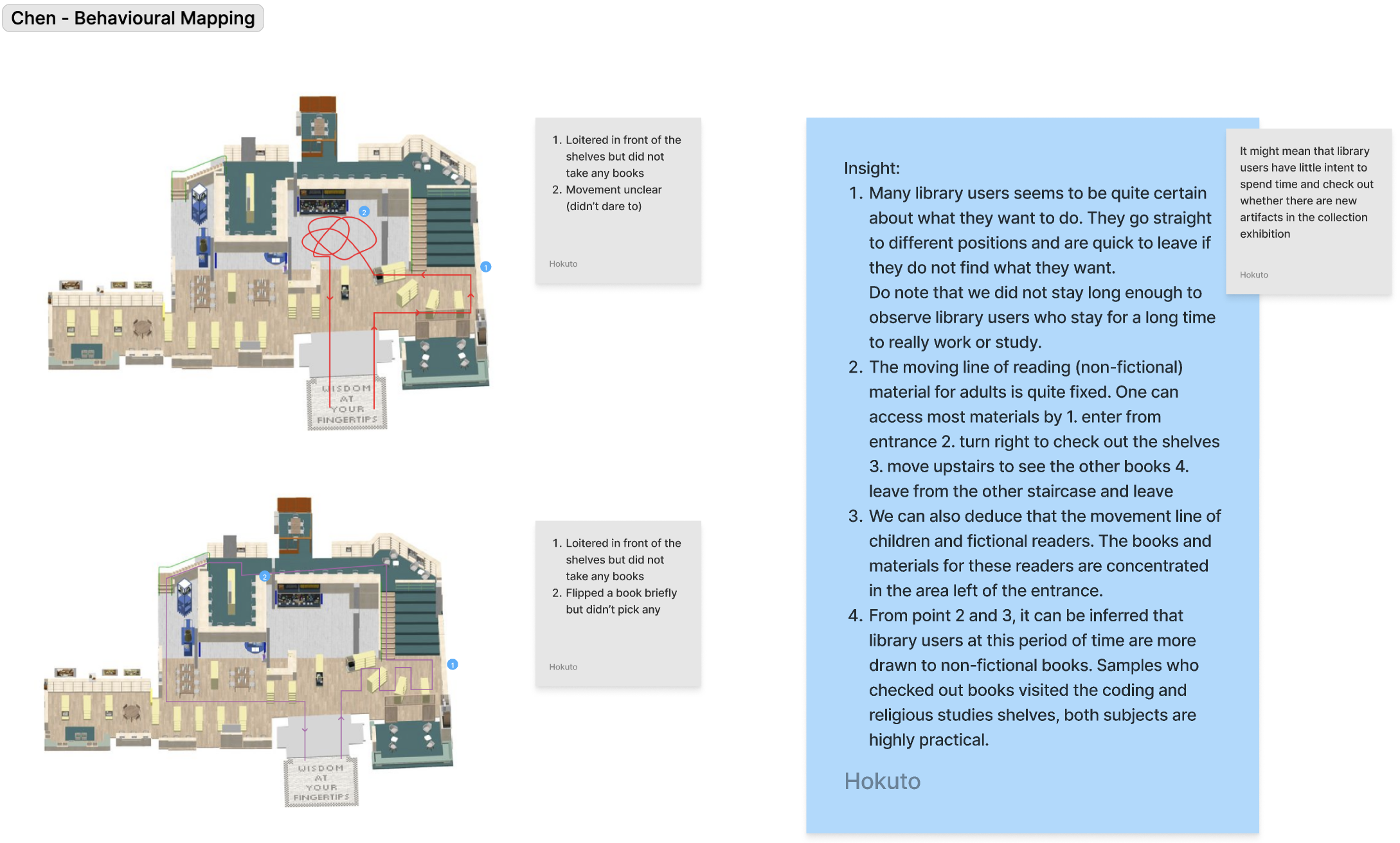
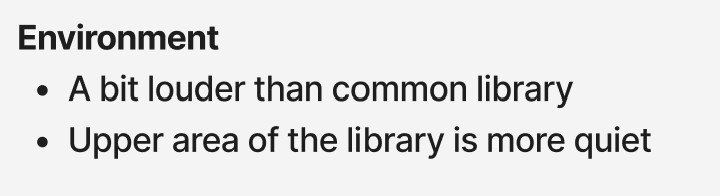
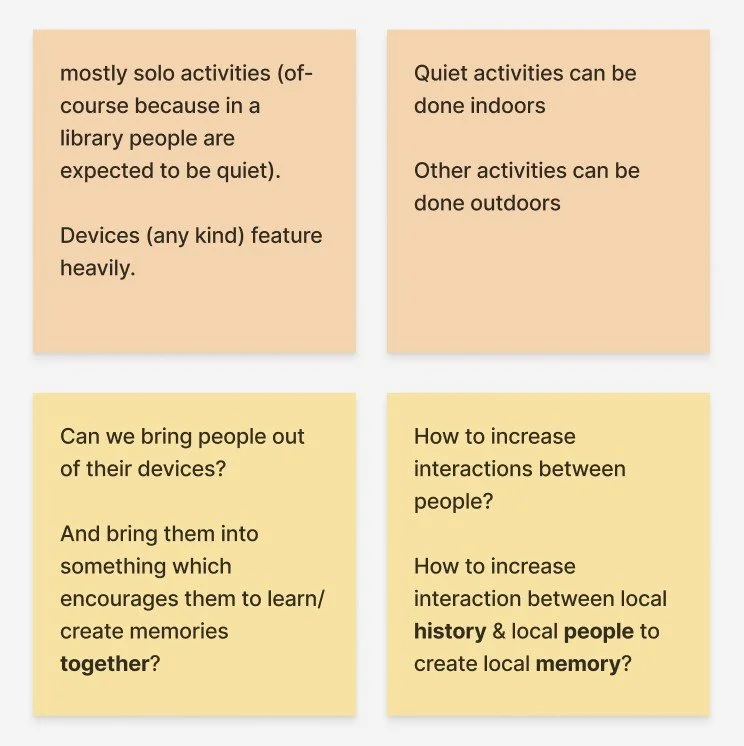
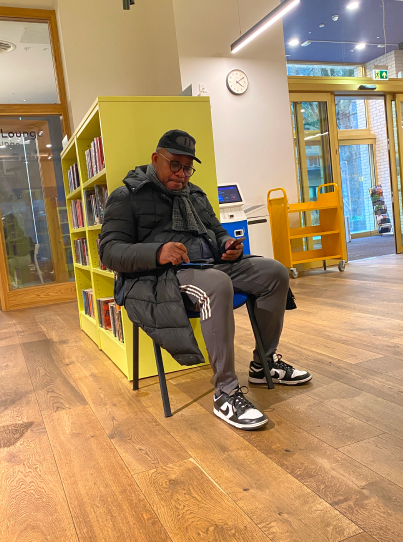
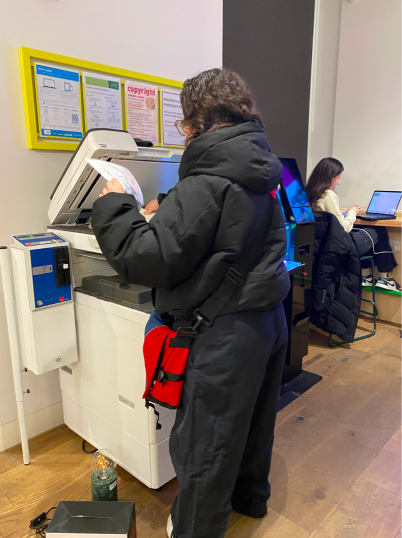
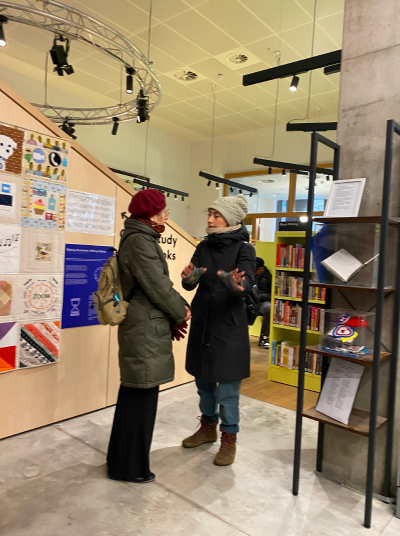
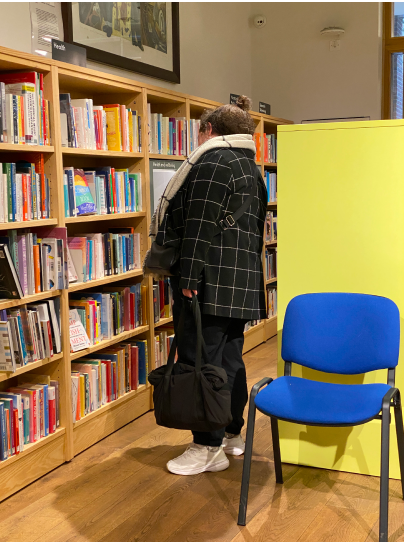
Our research began at the local Southwark Walworth Library. By observing the locals who use the library, we gained insights on how the library is being used, We discovered that most visitors primarily use the library as a workspace rather than for borrowing books or reading—they come here seeking a change of environment for their work.
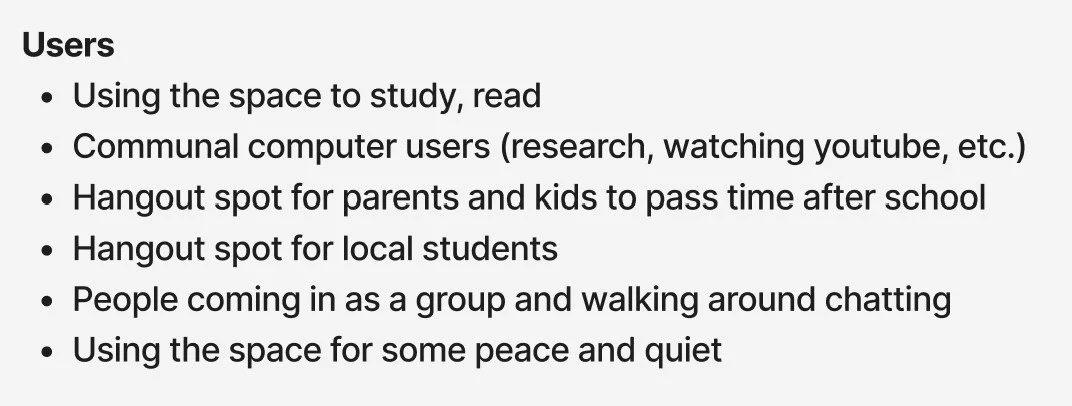
AEIOU Method - AEIOU is an observational framework used in design research to analyse Activities, Environments, Interactions, Objects, and Users.
The Making
The System
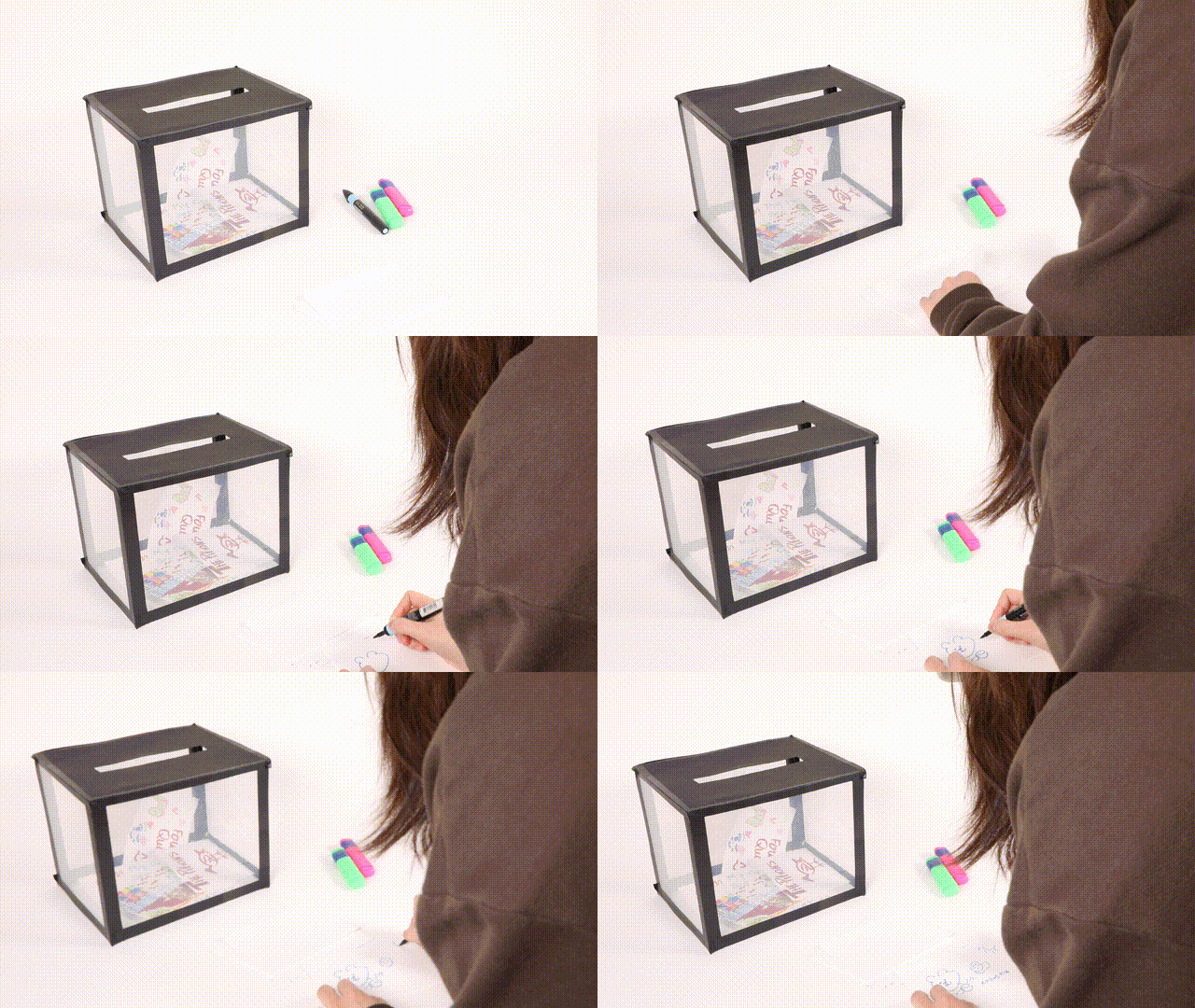
1. Write or draw down a piece of memory.
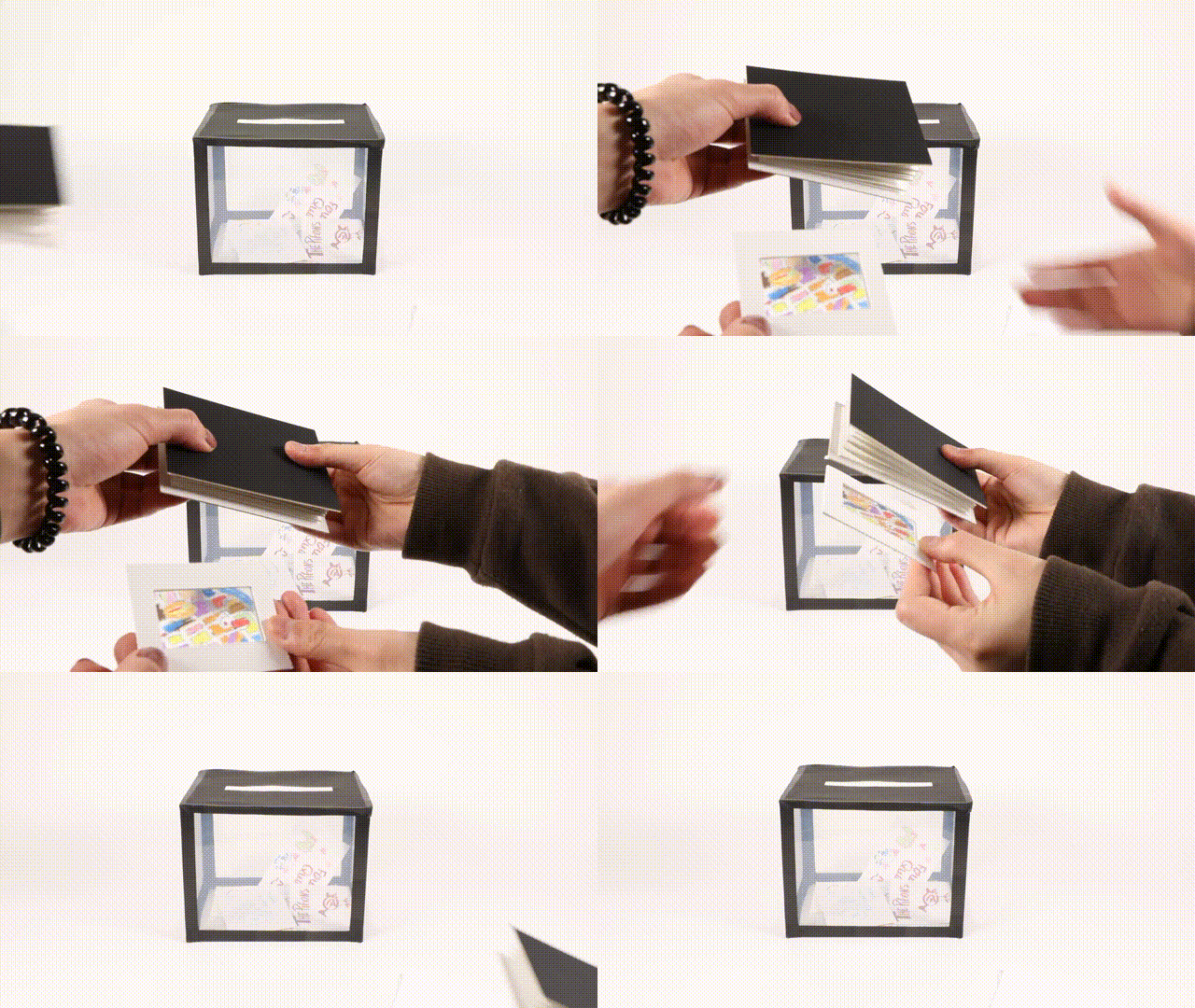
3. Receive a memory film card from last month’s memory collection as well as a collection book.
Concept Ideation
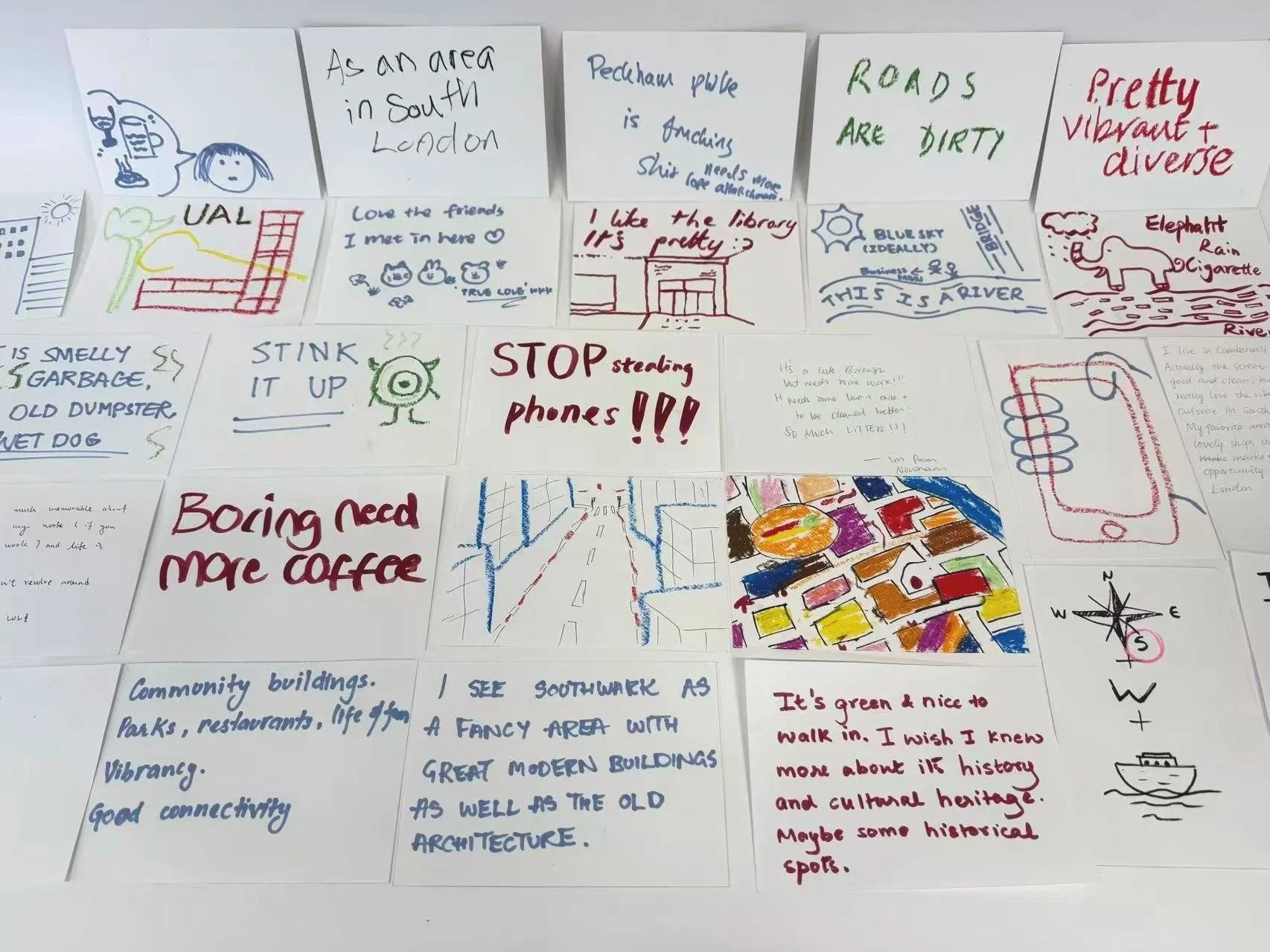
Final community survey responses
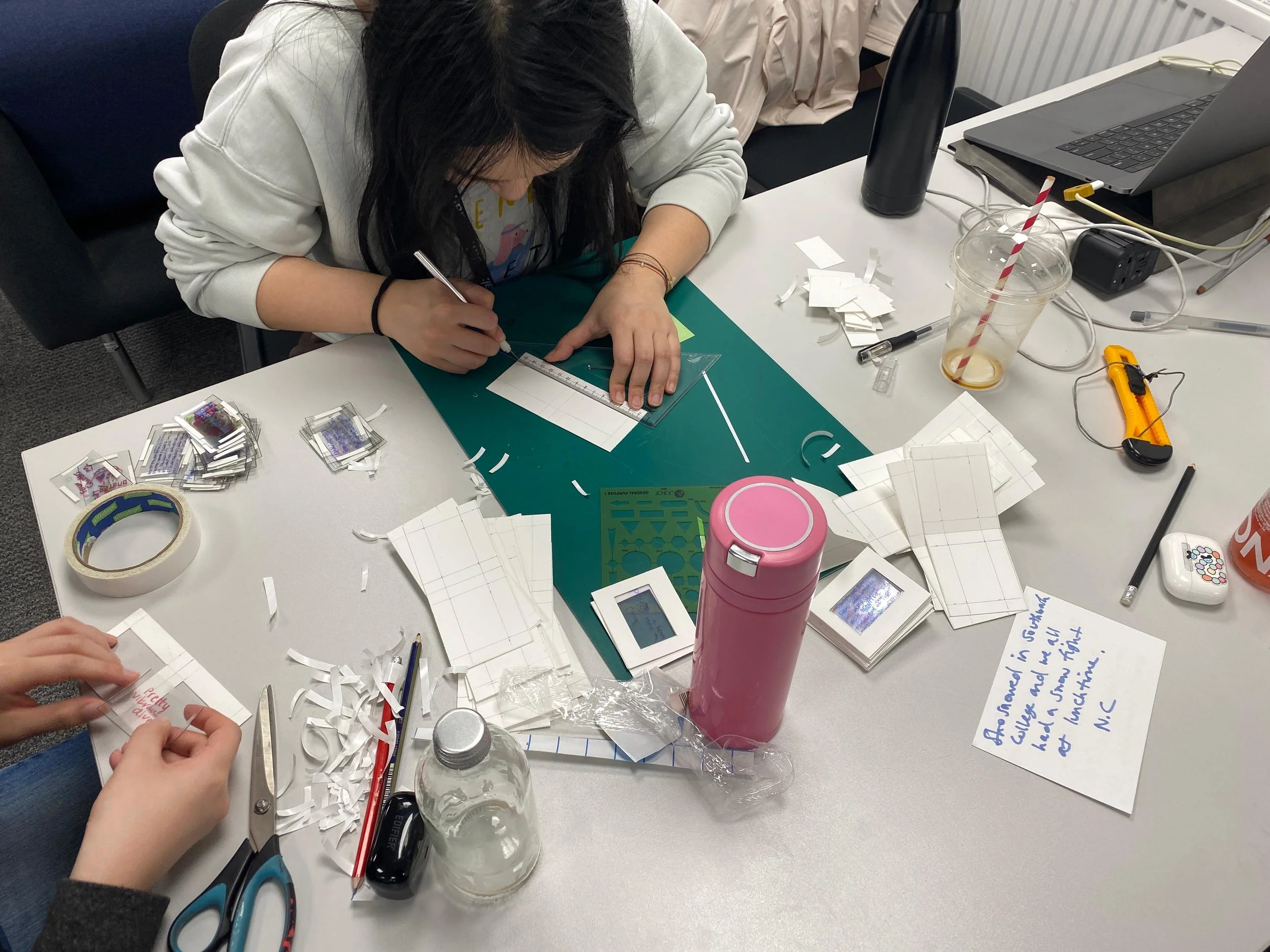
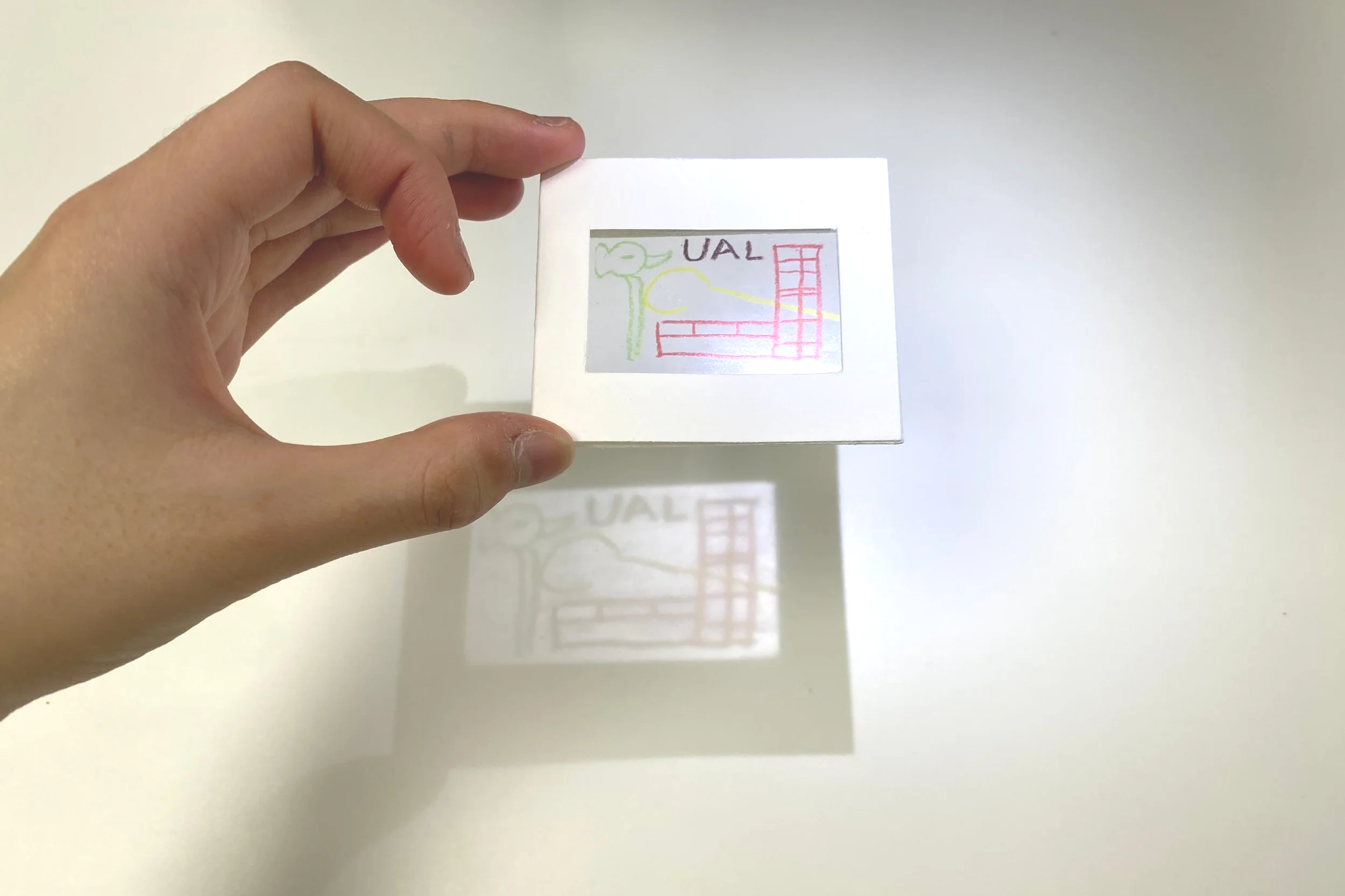
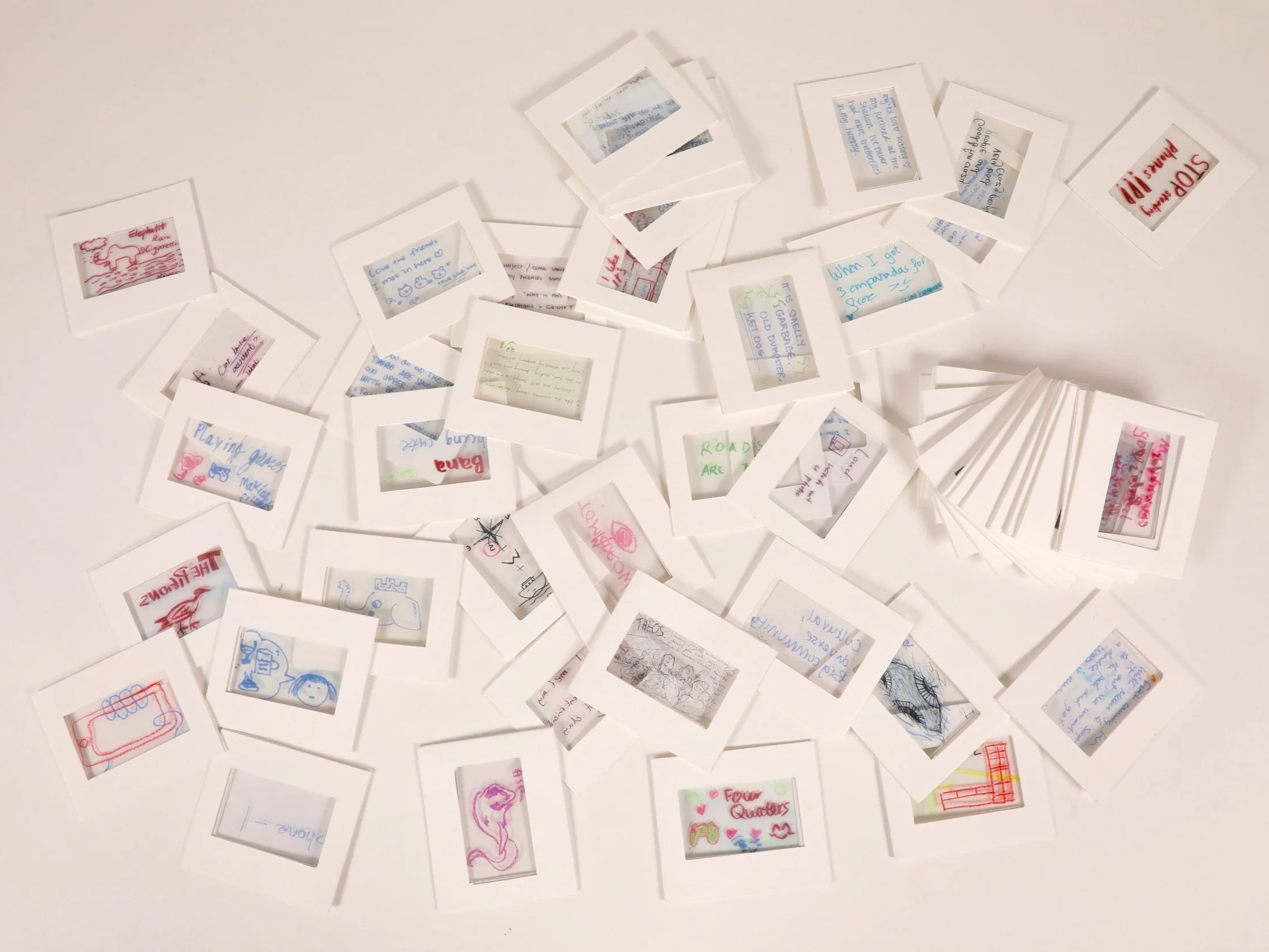
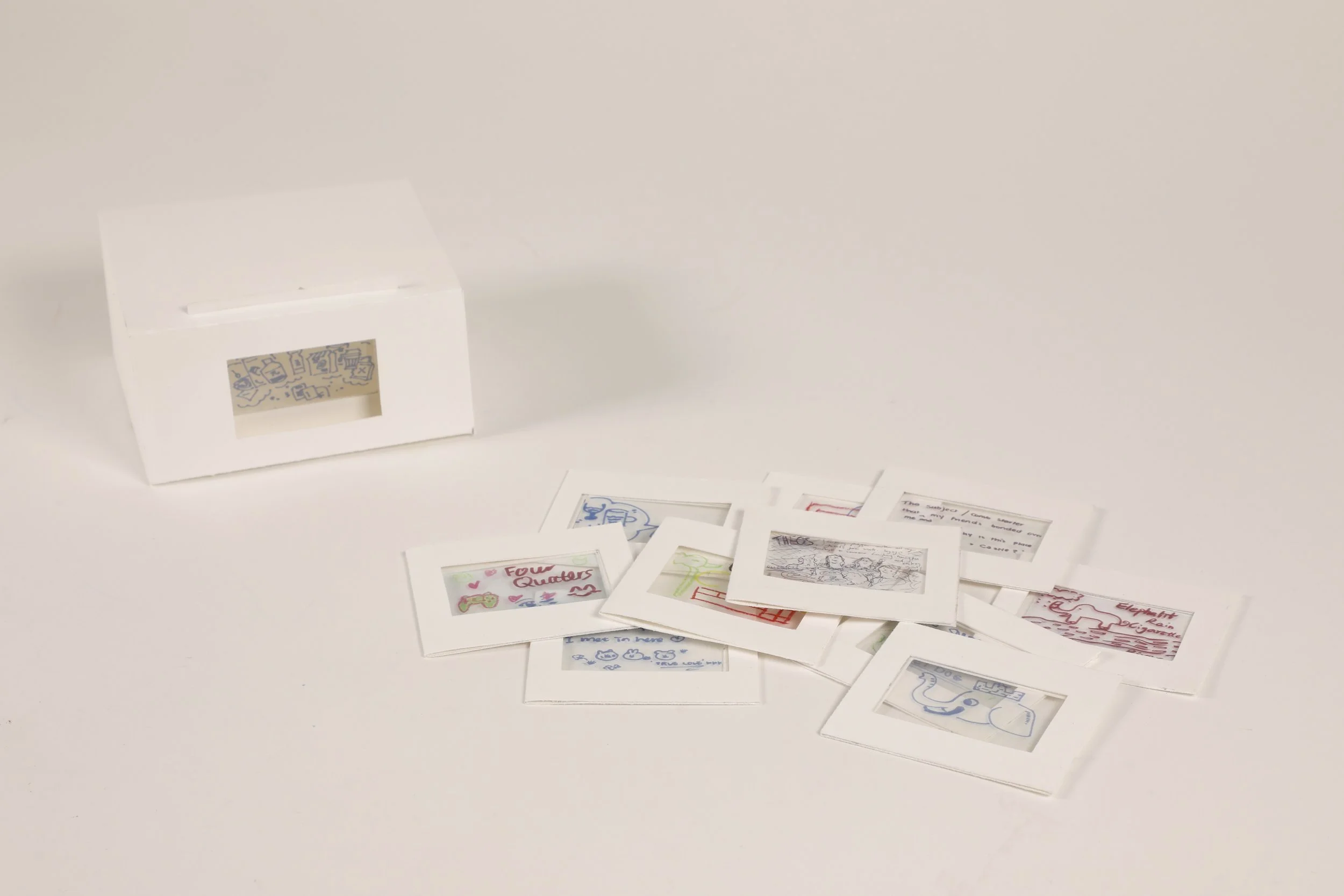
Memory Film Cards
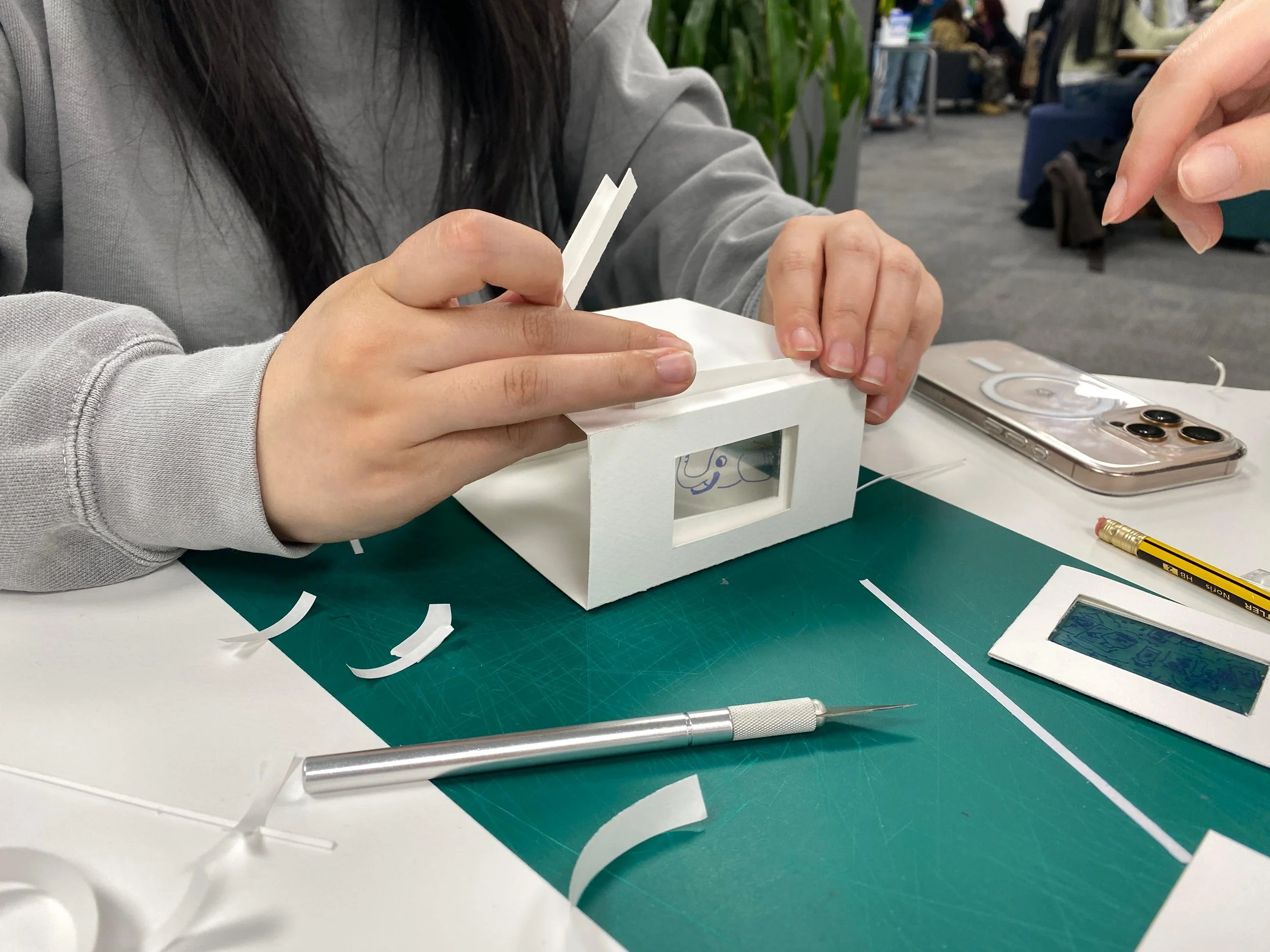
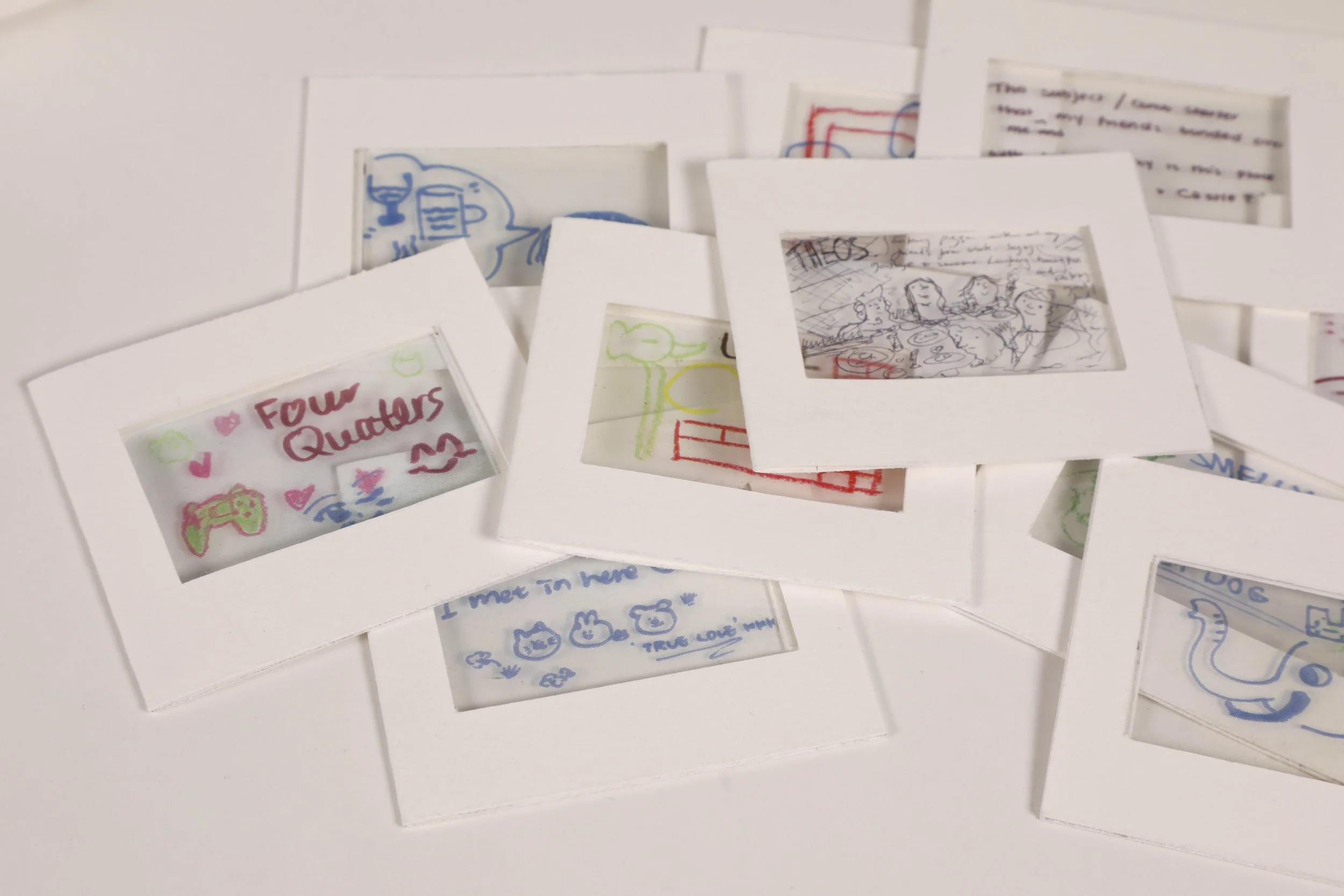
First, we scanned the written memory cards into the computer, then printed them at a smaller scale onto acetate paper and trimmed them.
We chose not to make the memory film cards too large, so they’d be easy to carry around. Each piece of acetate is placed in the centre of a cutout paper frame, which is then folded and secured. Users can shine a light through the film card to project the memory onto a wall—or wherever they feel like.
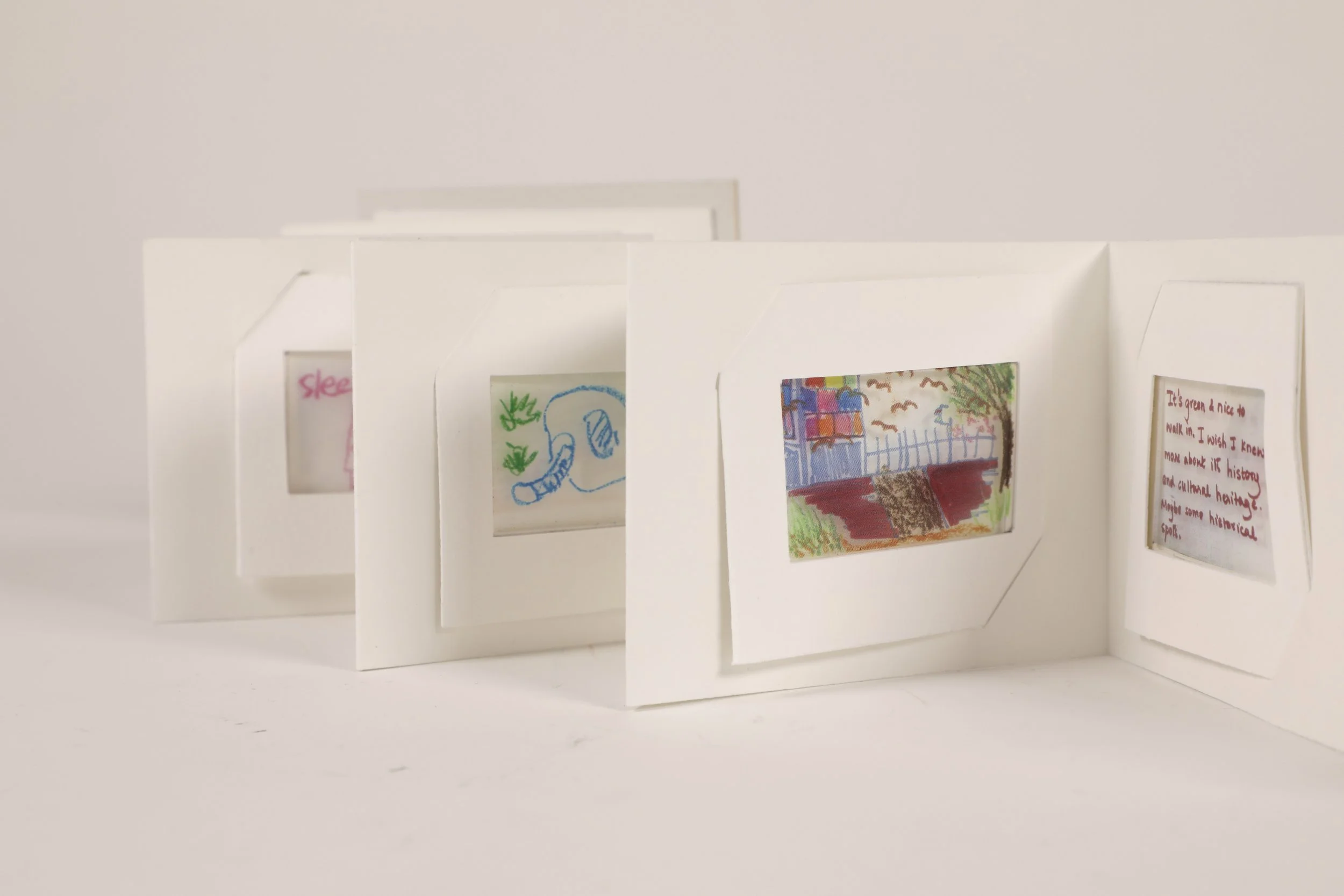
Collection Booklet
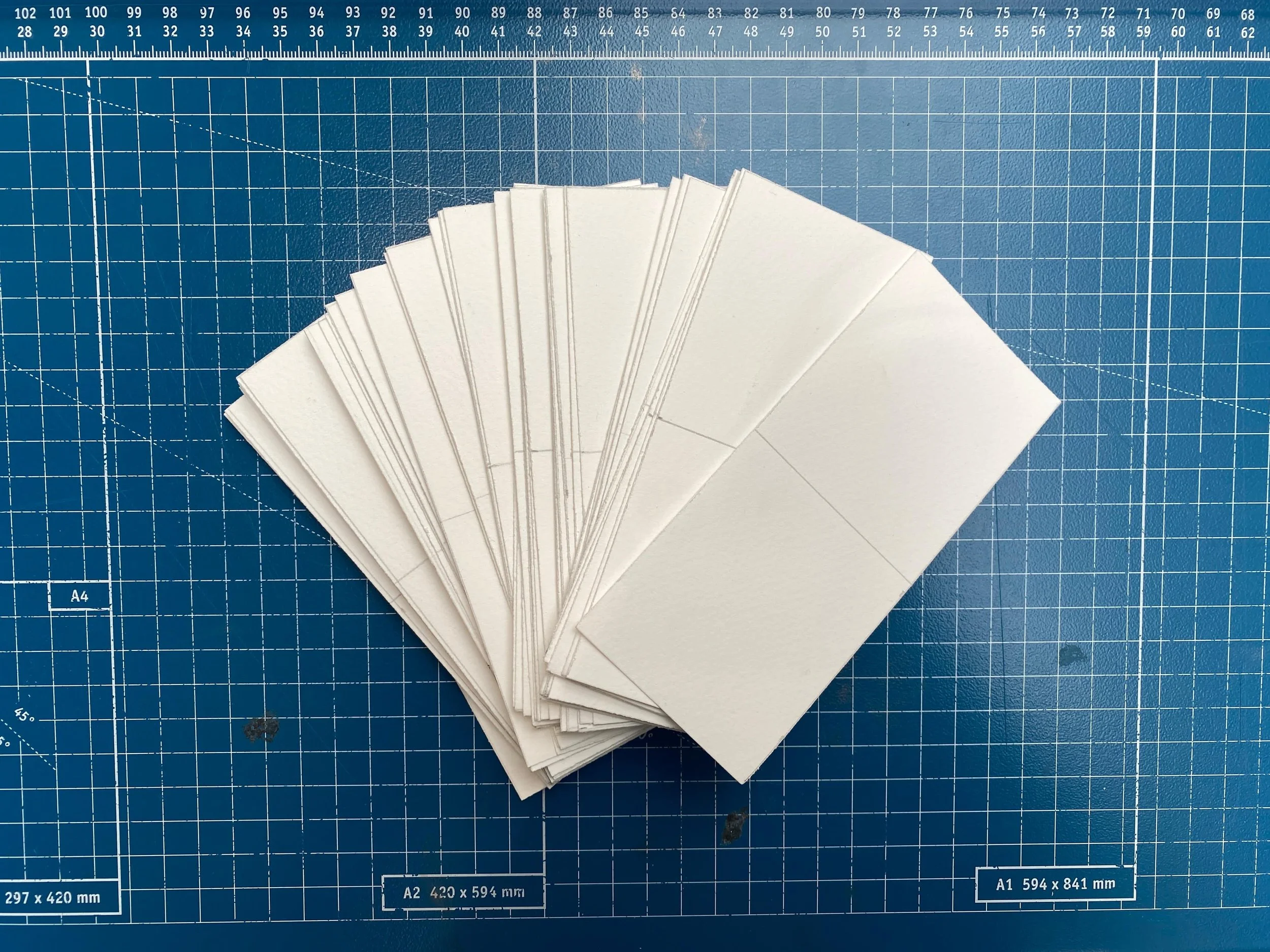
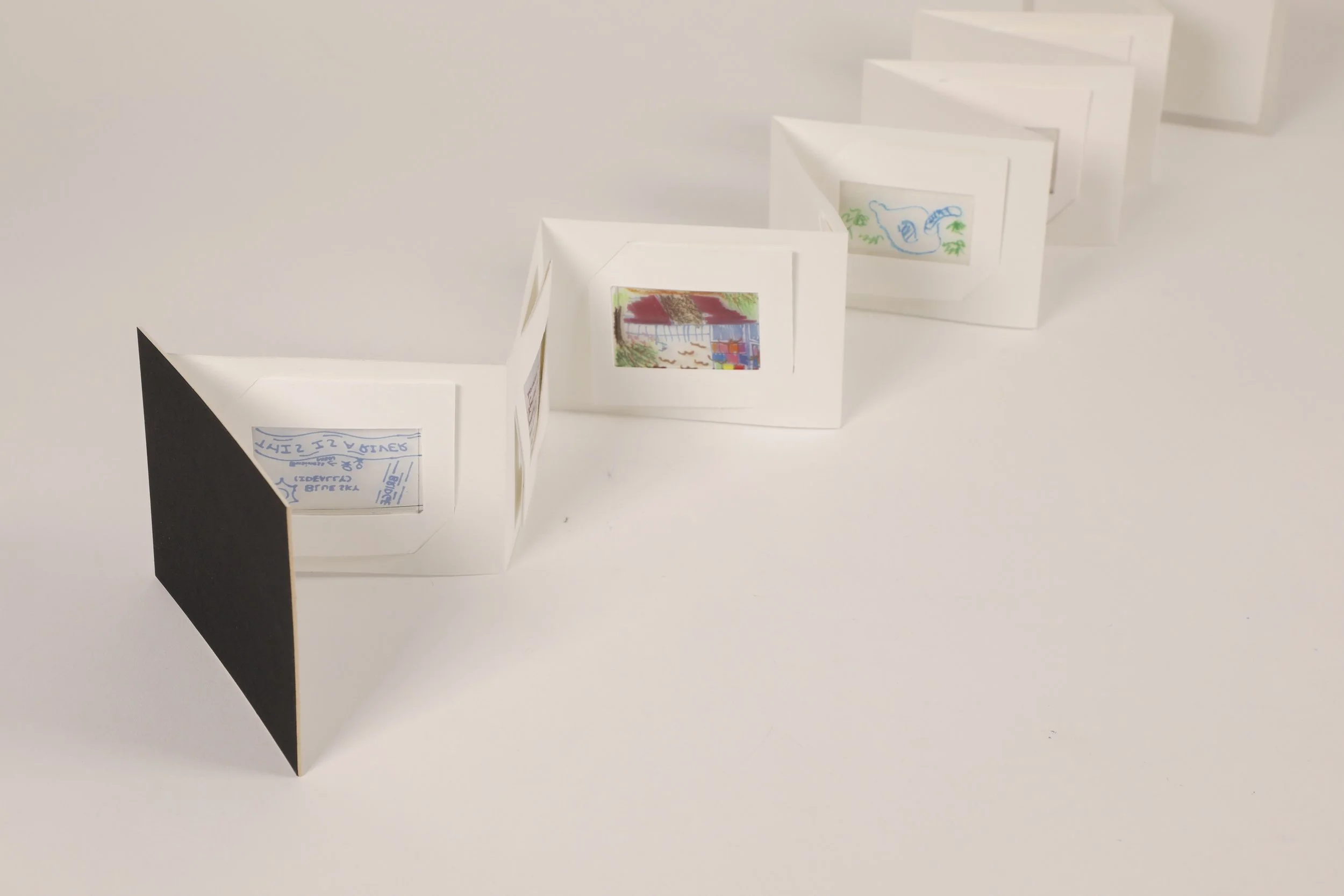
For the booklet, we adapted the accordion-style pages from our WIP show and attached a hard cover on both the front and back so that it could be more structured.
Inside, on the pages, two slits are cut on each page so that the users can store the collected memory film cards.
Viewfinder Toy
We wanted the users to have more ways to interact with the memory film cards so we thought about ways to utilize them. We went back to one of our original inspirations for our project and thought this simple toy could bring out the users inner child and push them to go through the city looking at memory film cards in different environments.
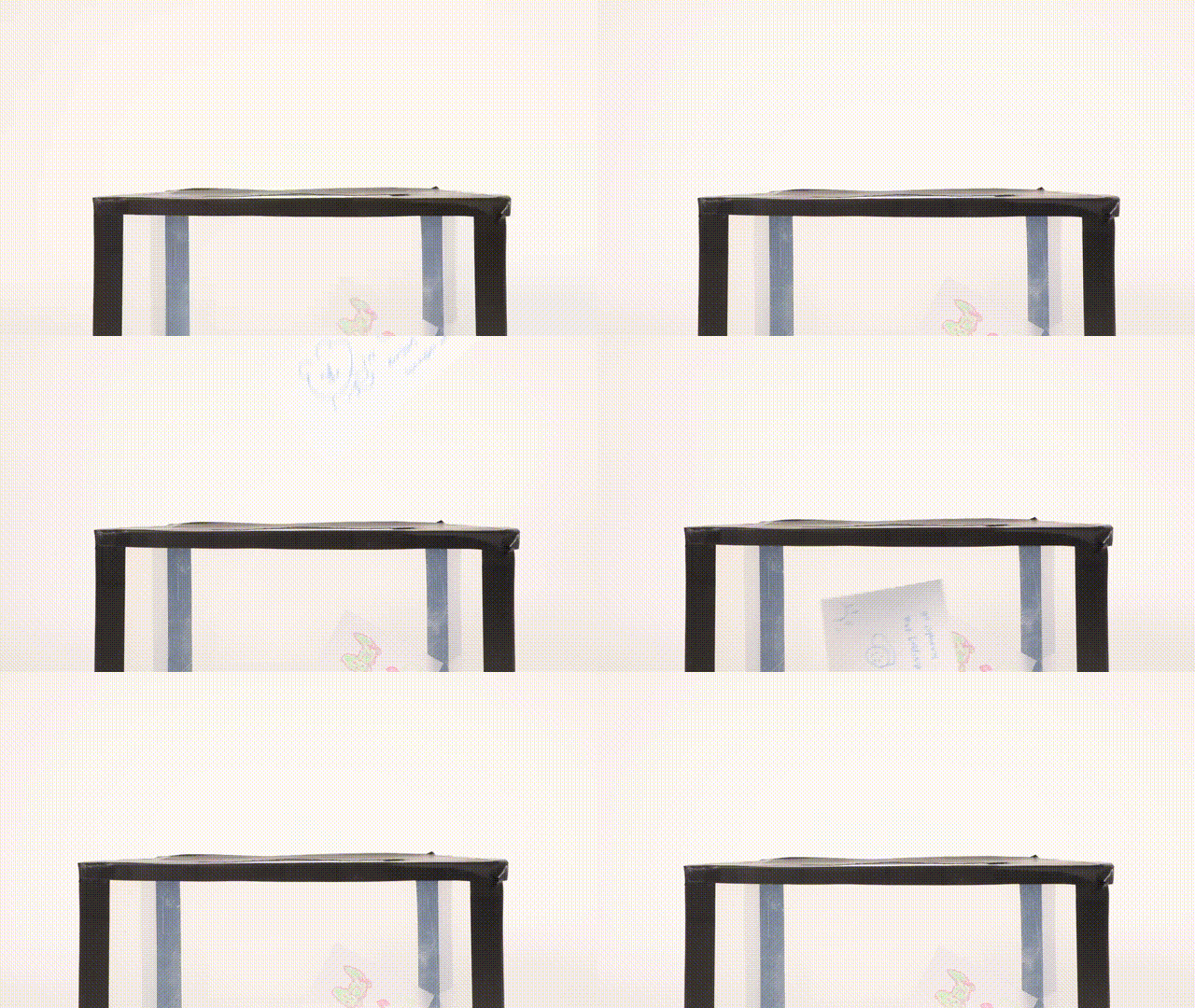
2. Submit the memory into the memory collection box.

4. Put the newly received memory film card into the collection book.
Reflections & Takeaways
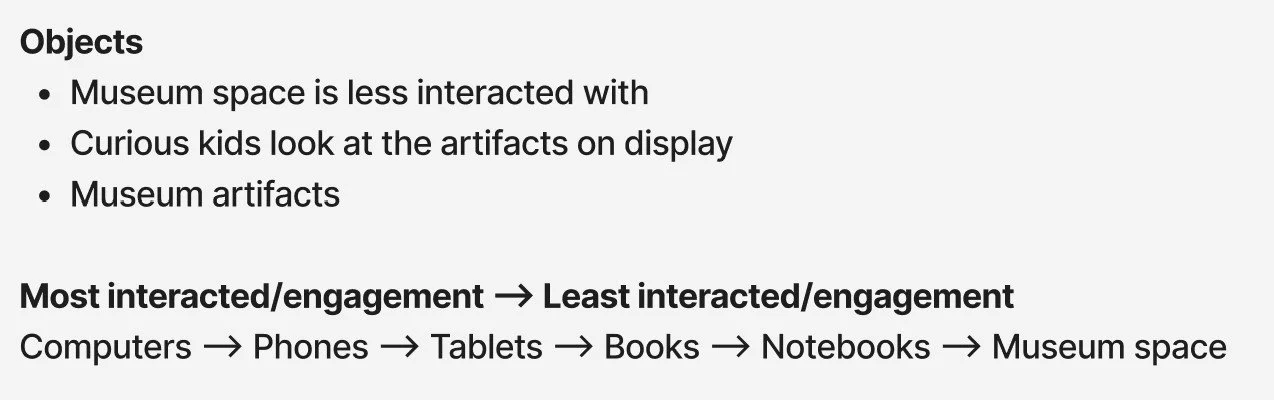
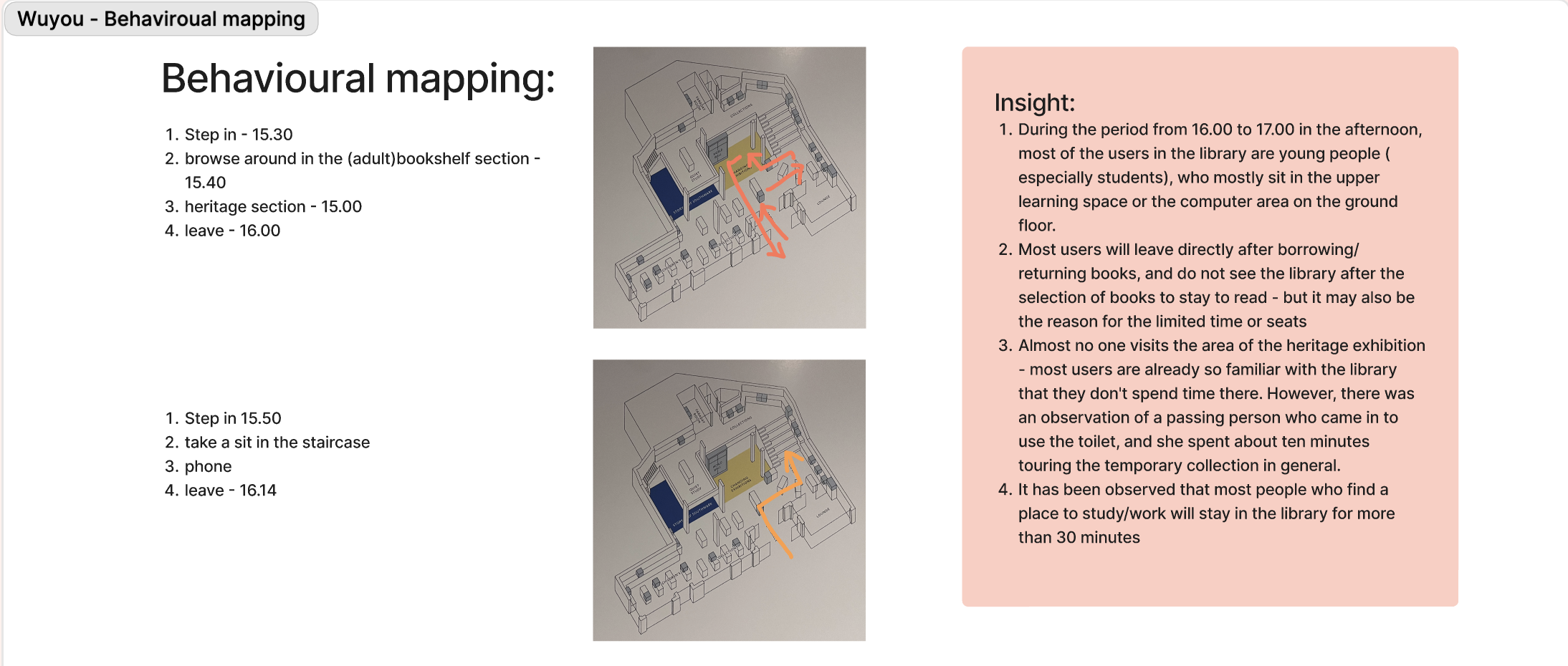
Behavioural Mapping - an observational method used to track how people move and behave within a space, helping identify patterns of use and interaction.
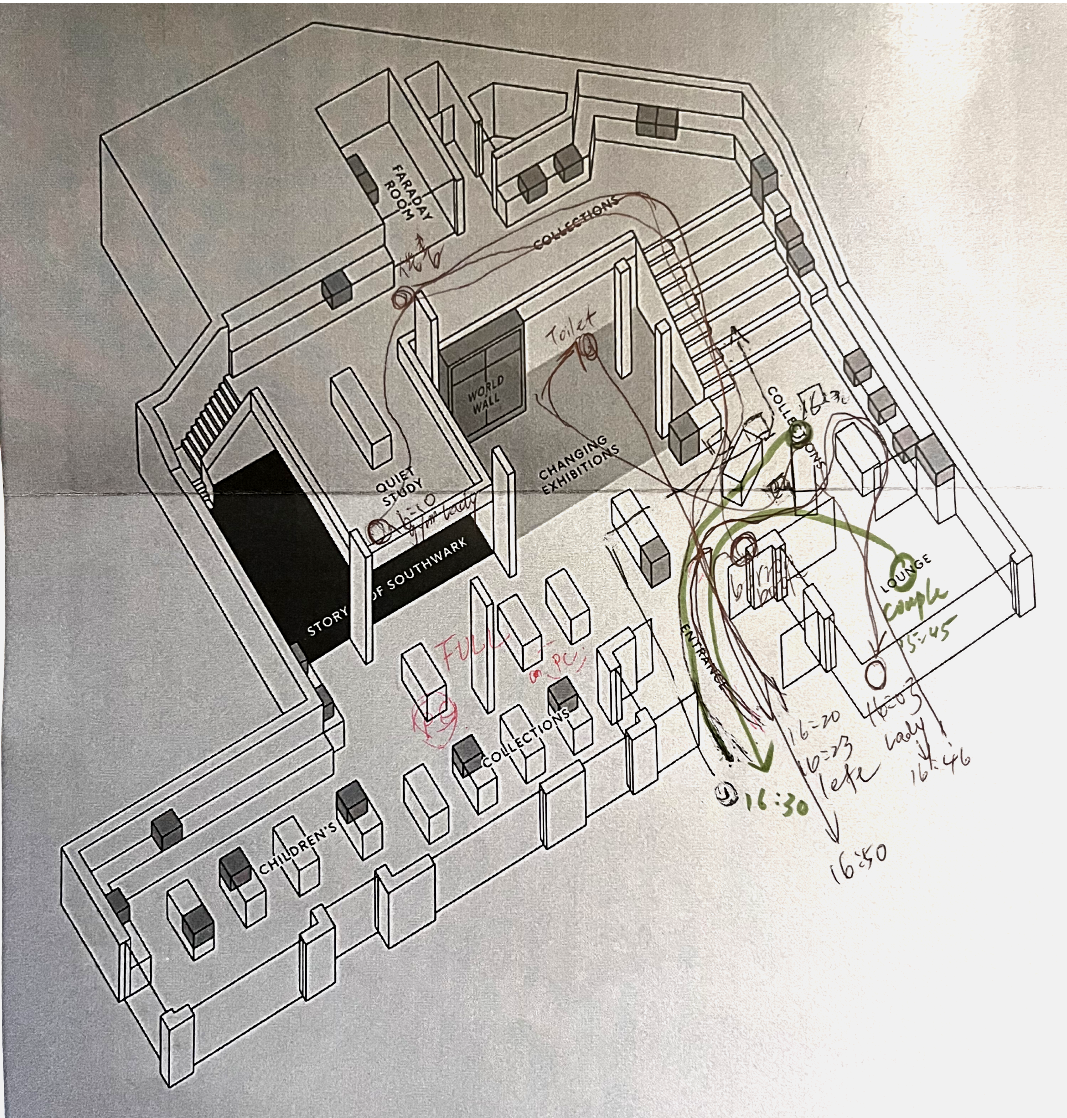
Behavioral mapping research method
Key Inspiration
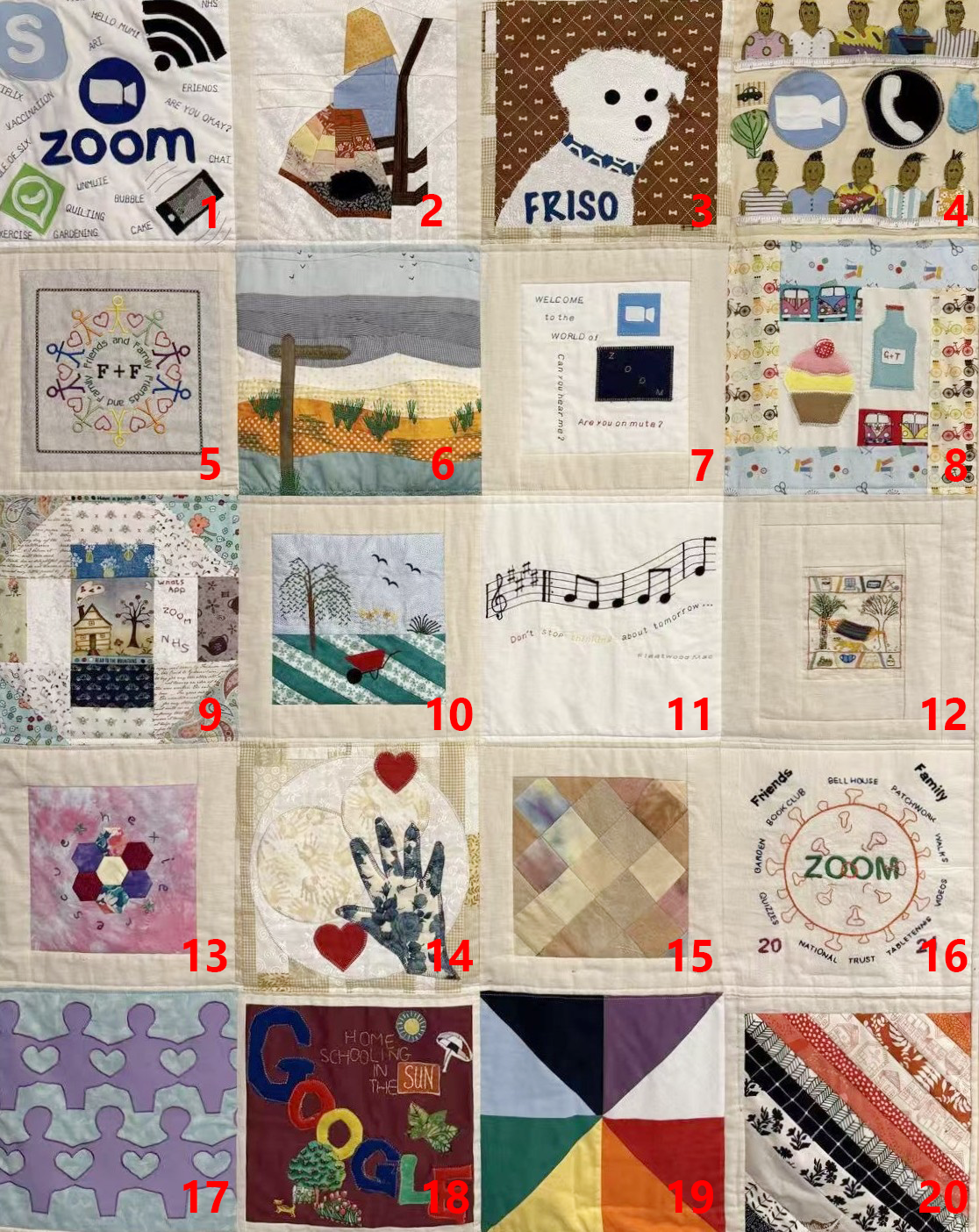
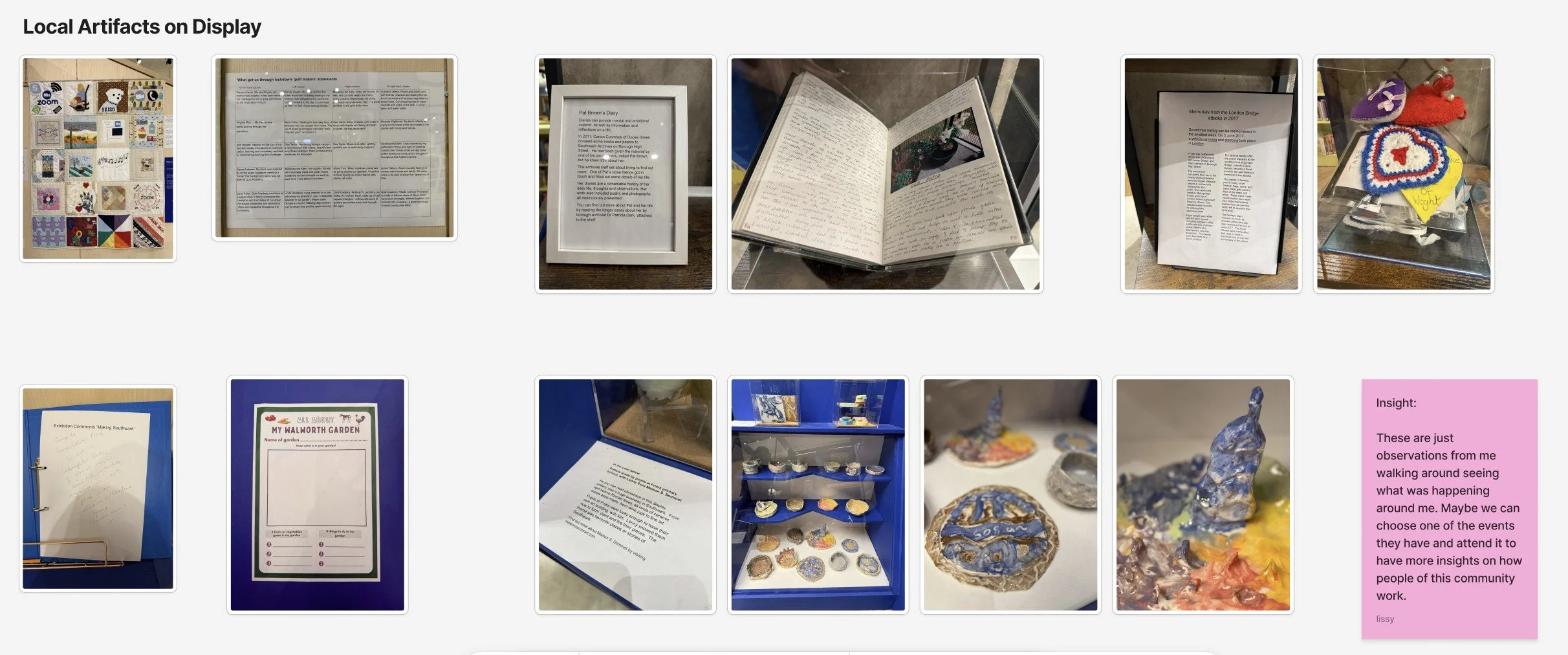
Local community quilt artifact
Community Survey
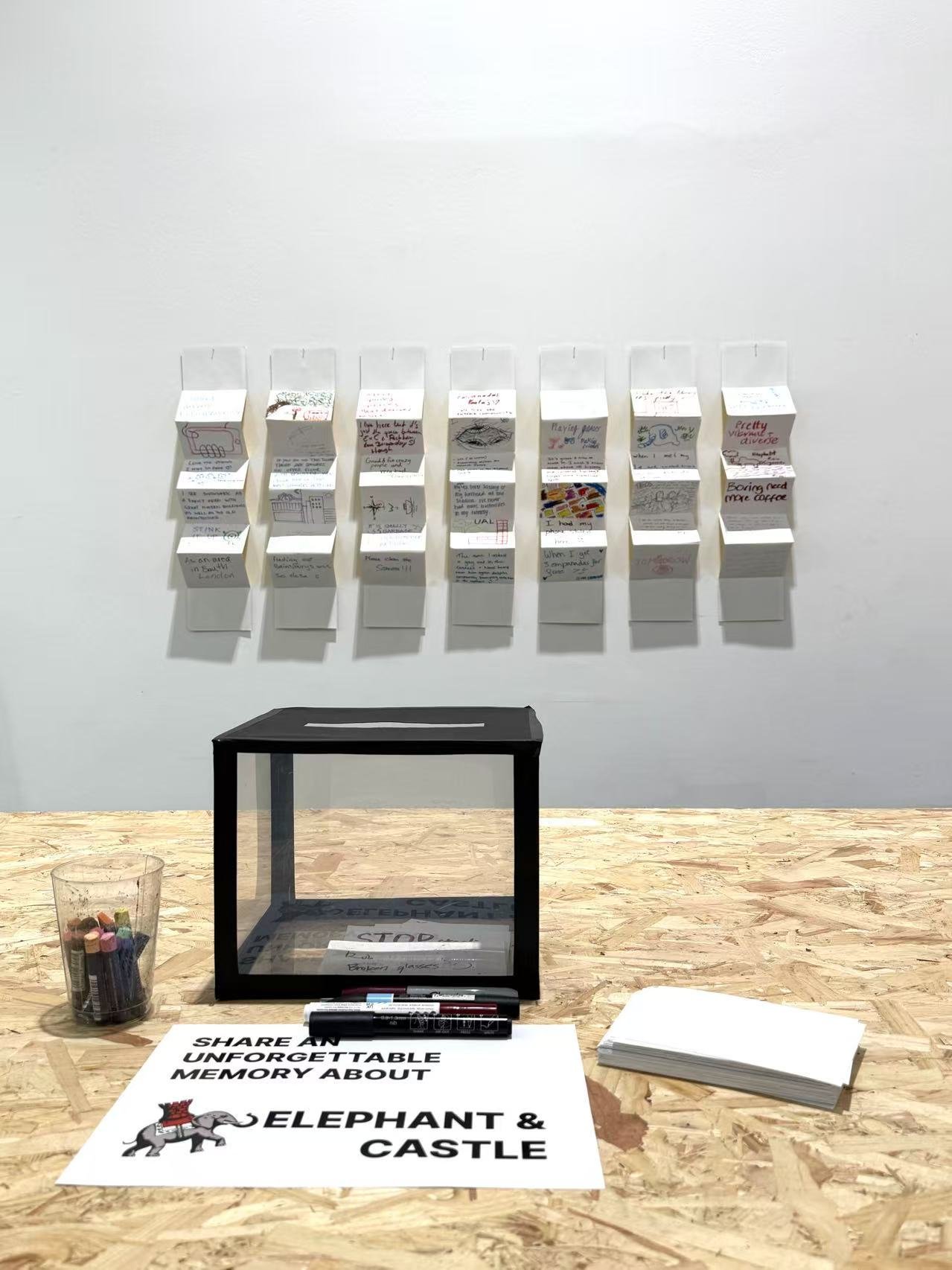
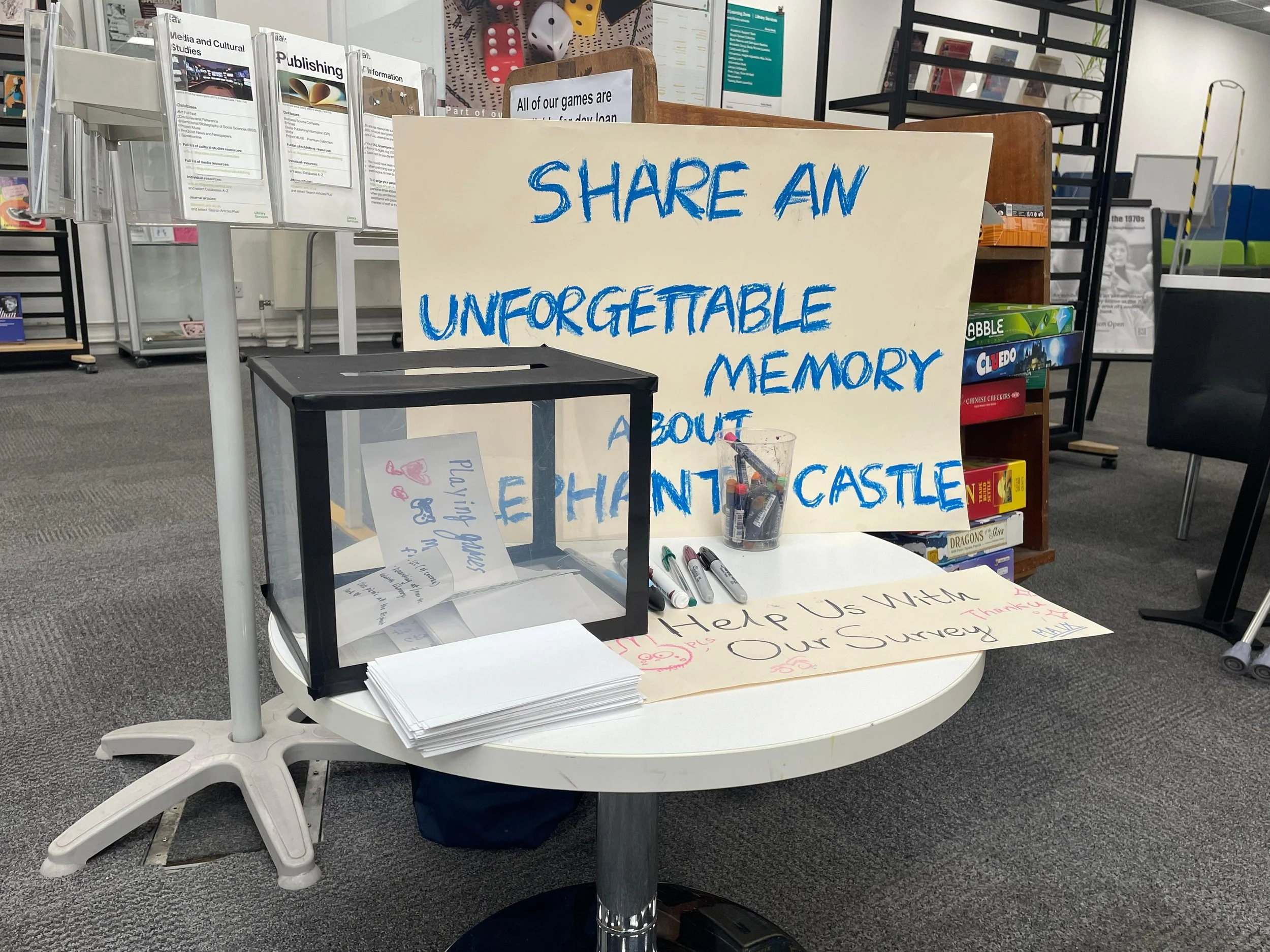
Building on our initial research, we explored low-friction ways to gather community responses. We designed a transparent survey box that made existing contributions visible, encouraging participation. Materials such as paper, pens, and crayons allowed for both written and drawn responses.
Our initial prompt was: “How do you see Southwark?”
Revisiting the “What Got Us Through Lockdown Quilt” from the Southwark community, I reflected on why it stood out. The quilt captures a shared timeframe—COVID-19—where individual experiences are brought together into a collective memory. Although these moments were lived separately, they form a shared narrative the community can look back on together.
Inspired by this, we shifted our focus to memory and introduced a new prompt:
“Share an unforgettable memory of Elephant & Castle.”
Survey Responses Showcase
Team:
Chen Chen
Ellen Chang
Wuyou Xiang
Lissy Li
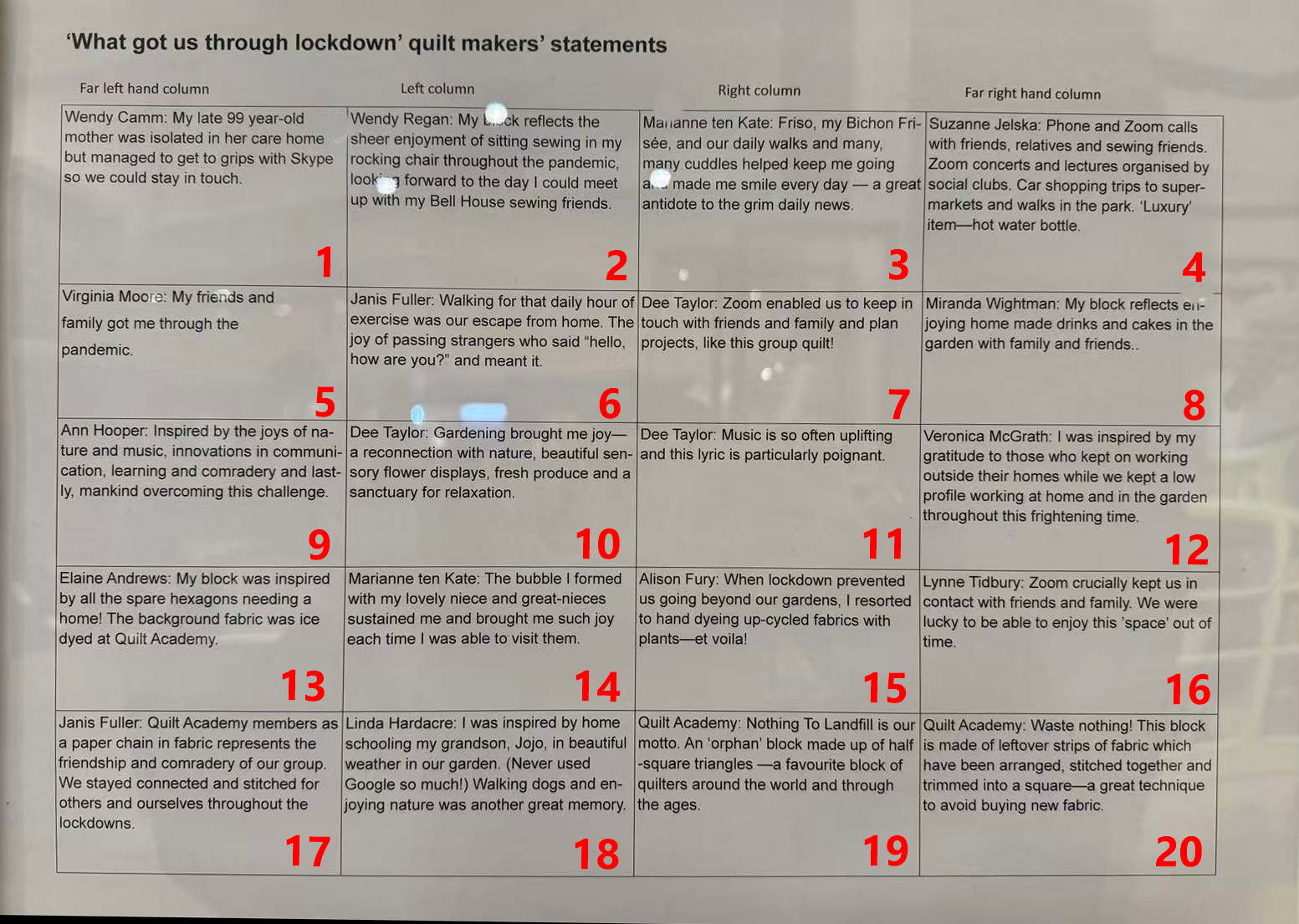
A key inspiration was the “What Got Us Through Lockdown Quilt” from the Southwark community. The quilt brings together individual pieces created by different community members, each sharing personal experiences from lockdown.
To better understand and communicate these stories, I labelled the quilt and the quilt statements, connecting each story with numbers linked to its quilt piece.
Seeing these diverse responses side by side highlights both individuality and collective resilience, creating a strong sense of connection and belonging.
Version 1
Version 2
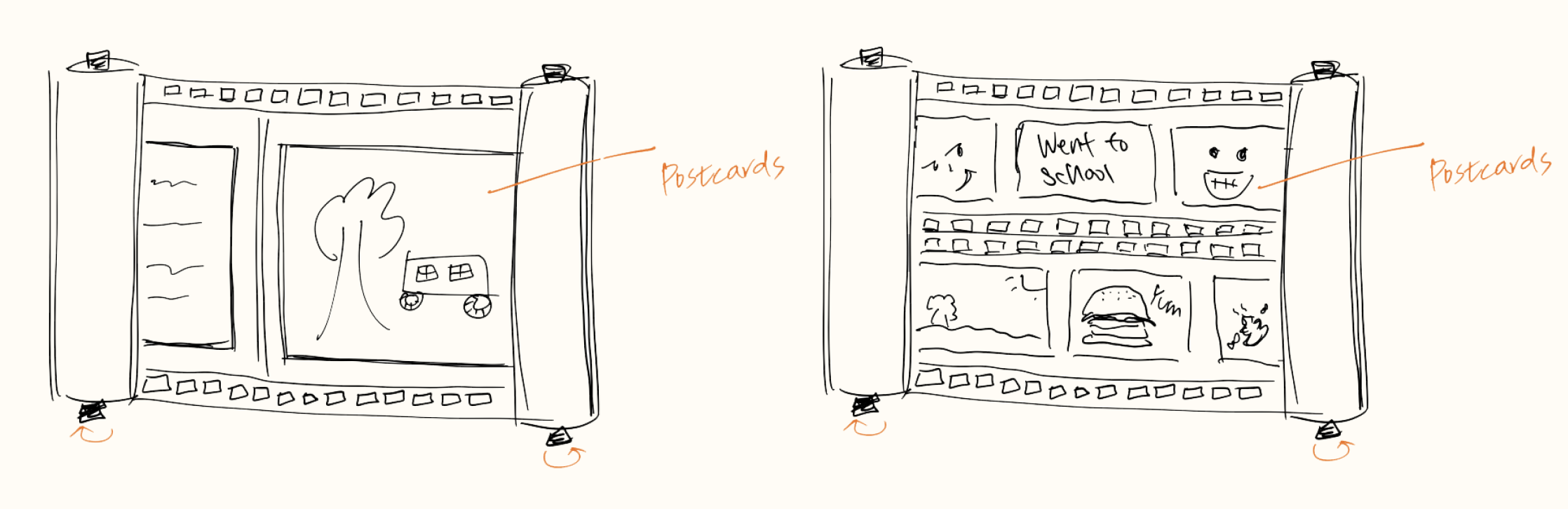
Originally, we envisioned a small installation at the library—a scroll containing the community’s shared memories. This would allow visitors to interact with the installation and browse through the collected inputs. However, we realized a major flaw: once users left the library, they would no longer have access to these memories, limiting the information-sharing aspect we aimed for.
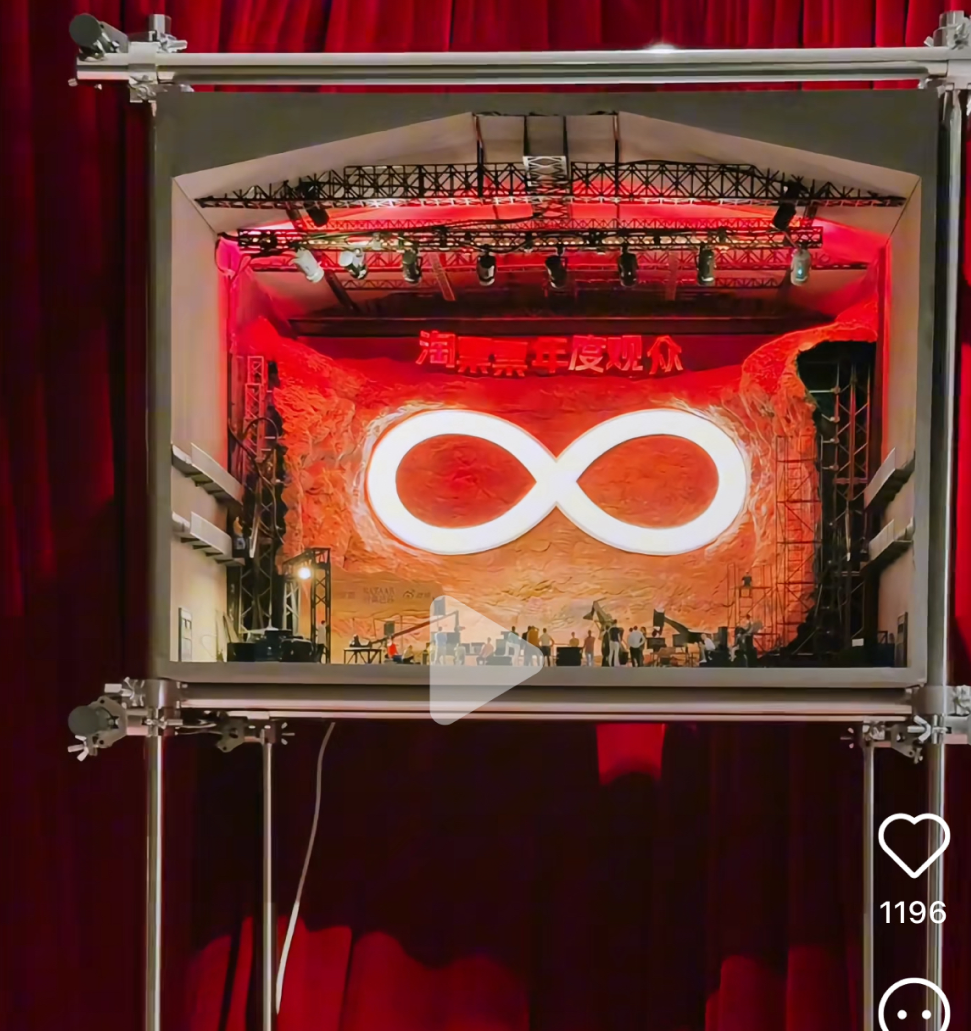
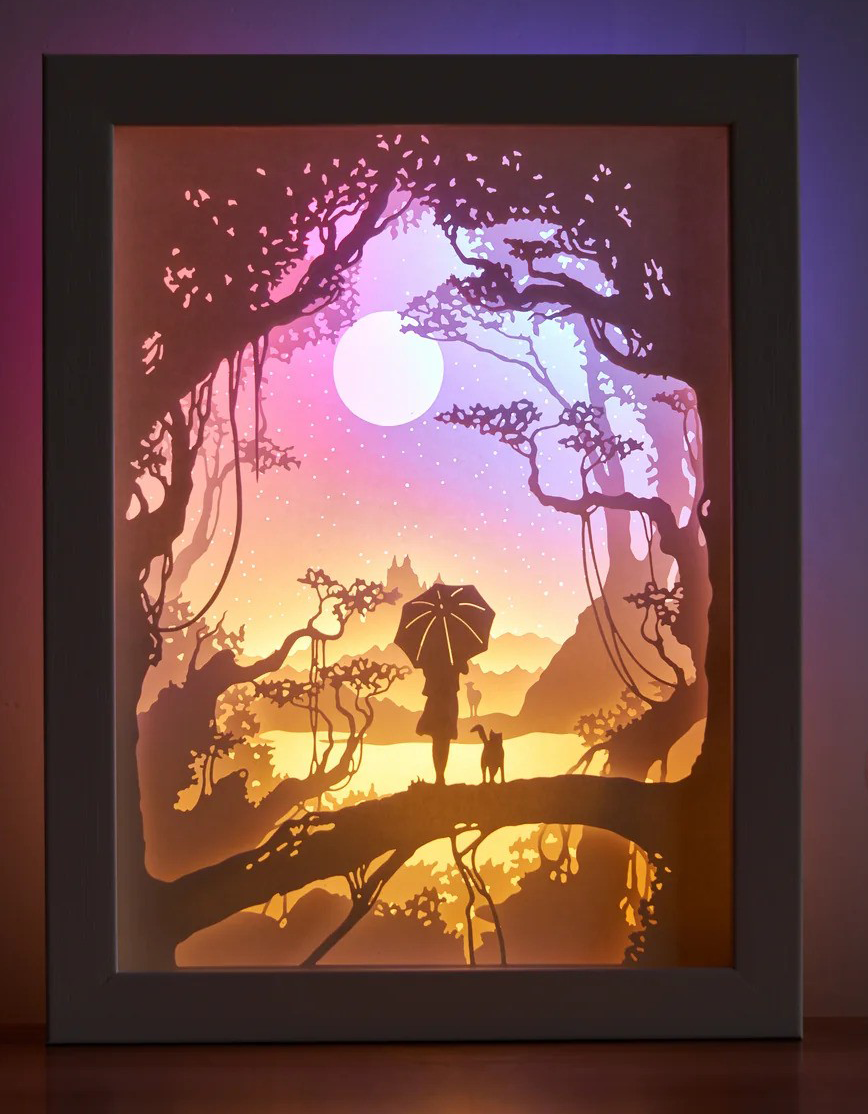
Next, we considered a theatre-like setup that emphasized the location and community where the memories were gathered. This concept took the form of a shadow box art piece, where memories would be displayed as the centrepiece, and users could swap them in and out. However, this approach also fell short in the information sharing aspect. We also had concerns that the form of the shadow box might not resonate with everyone’s perception of Southwark.
Wall interactive installation scroll filled with memories (sketch)
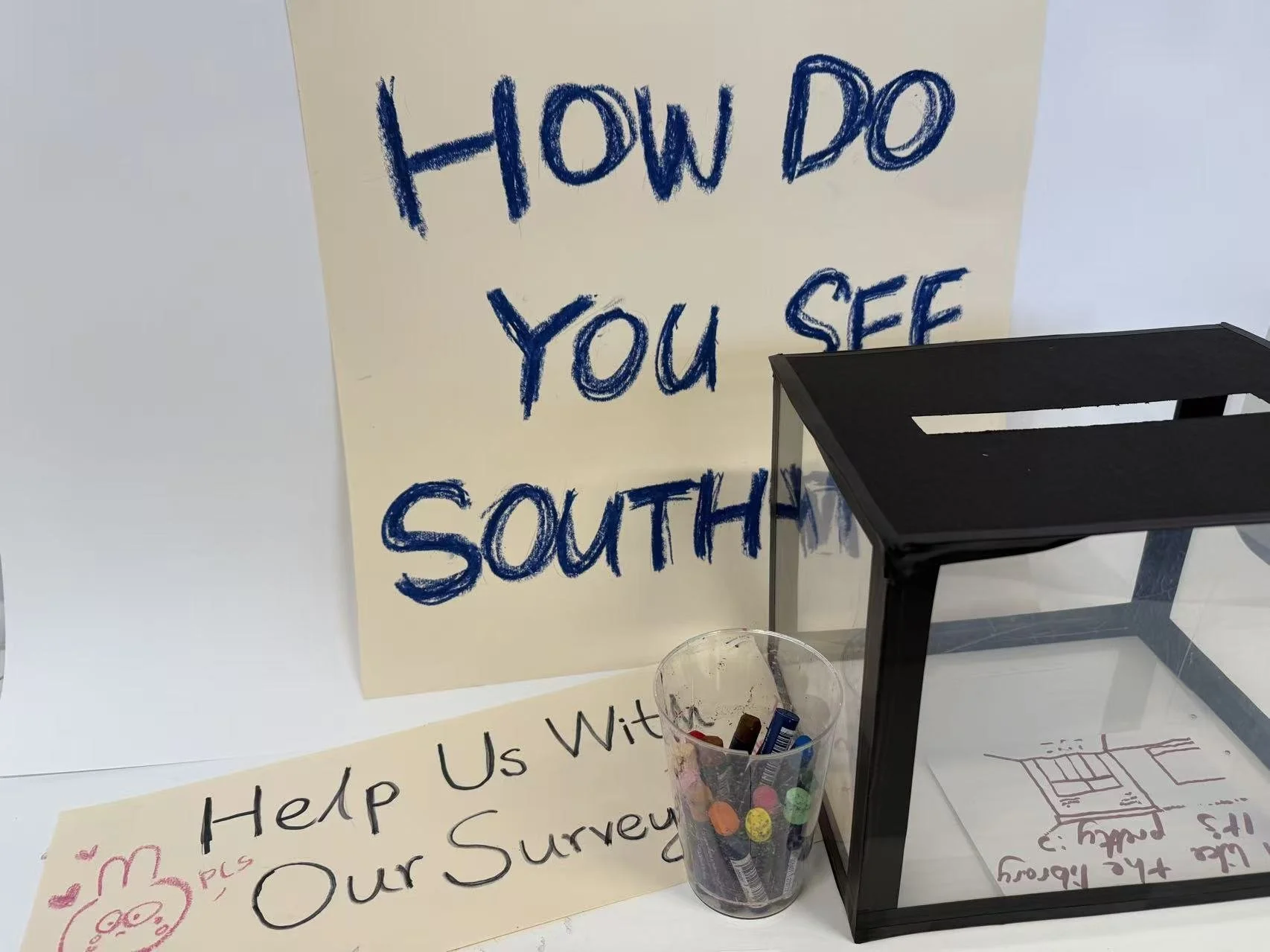
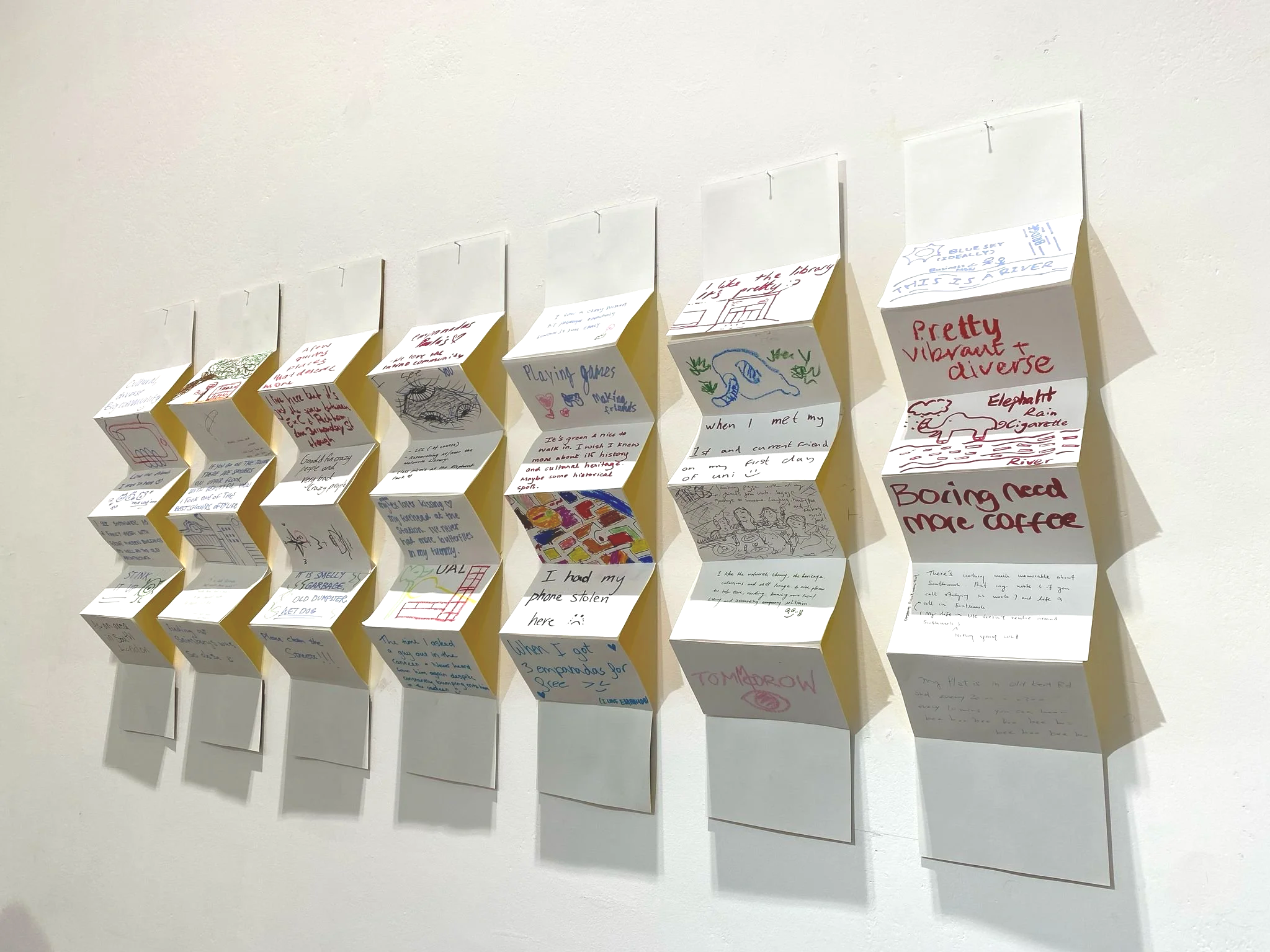
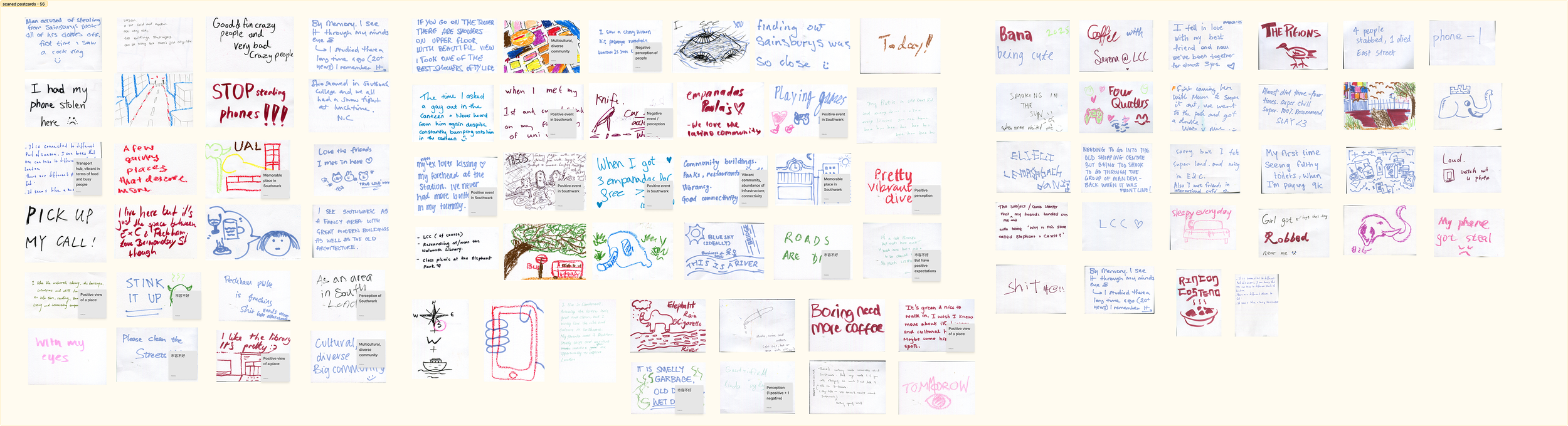
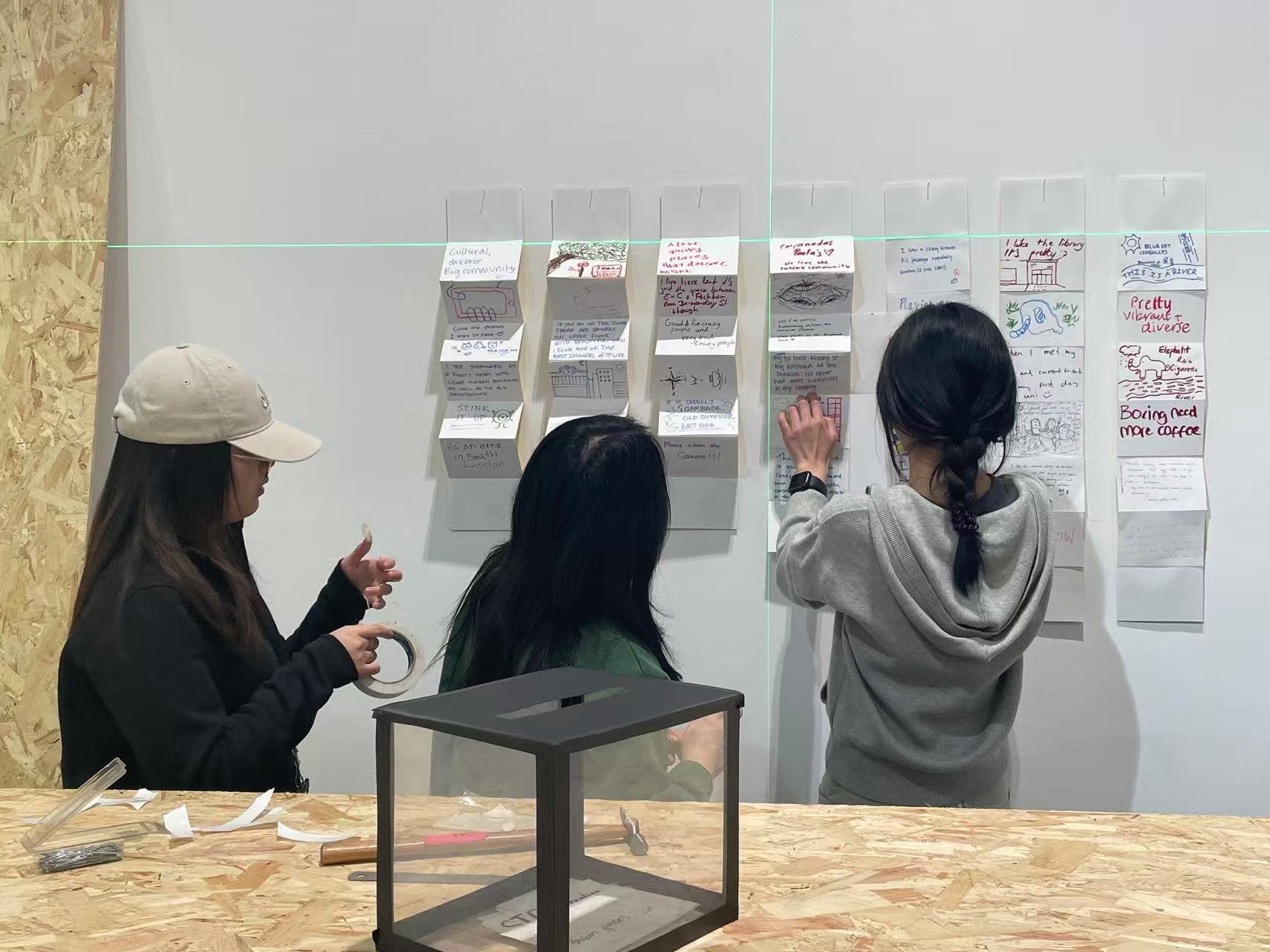
We decided to display the responses we had gathered so far. To encourage more survey participation for our final project, we placed our survey box in front of the collected postcards, creating an interaction where viewers could see the shared memories and hopefully feel inspired to leave behind one of their own.
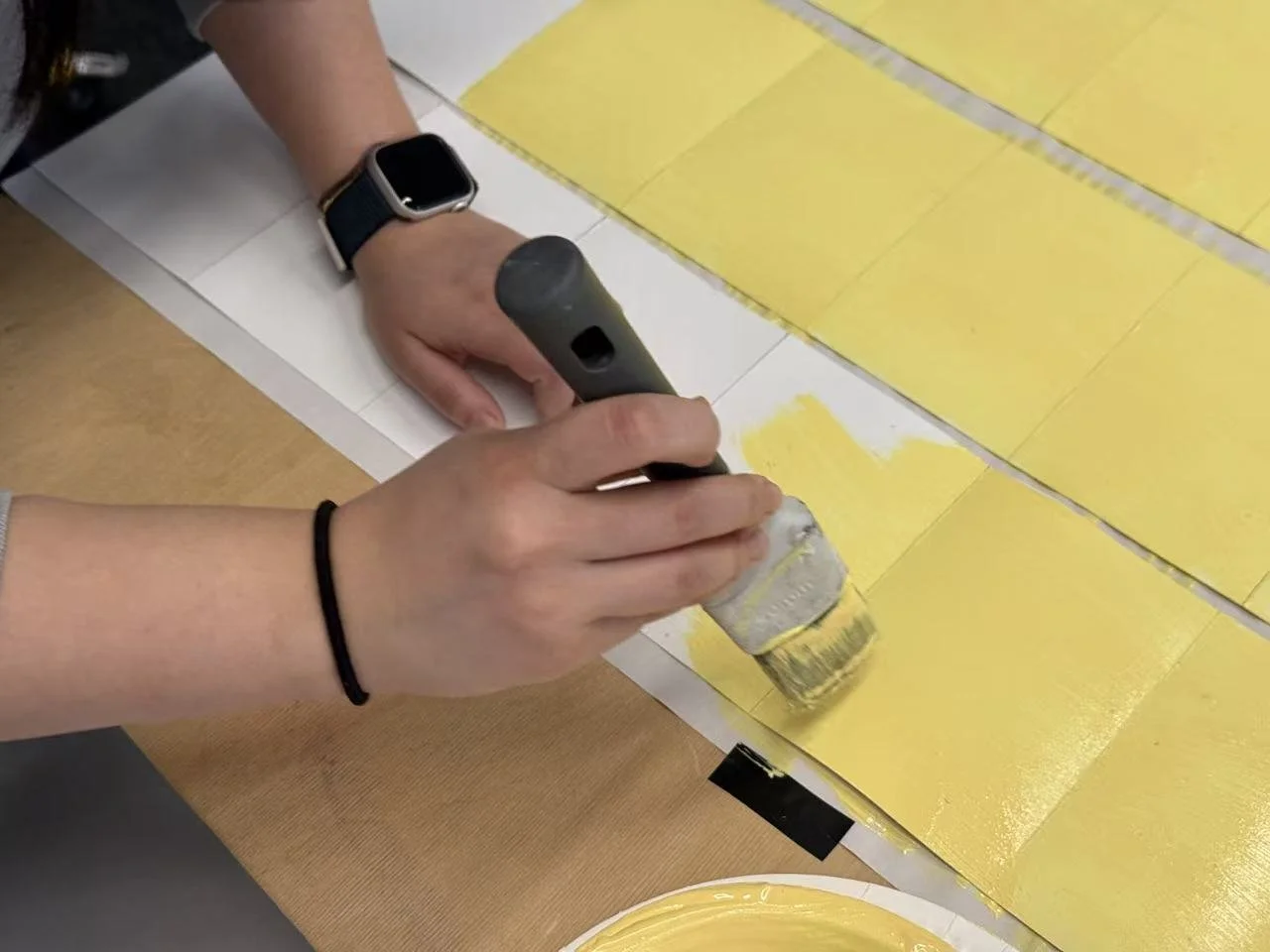
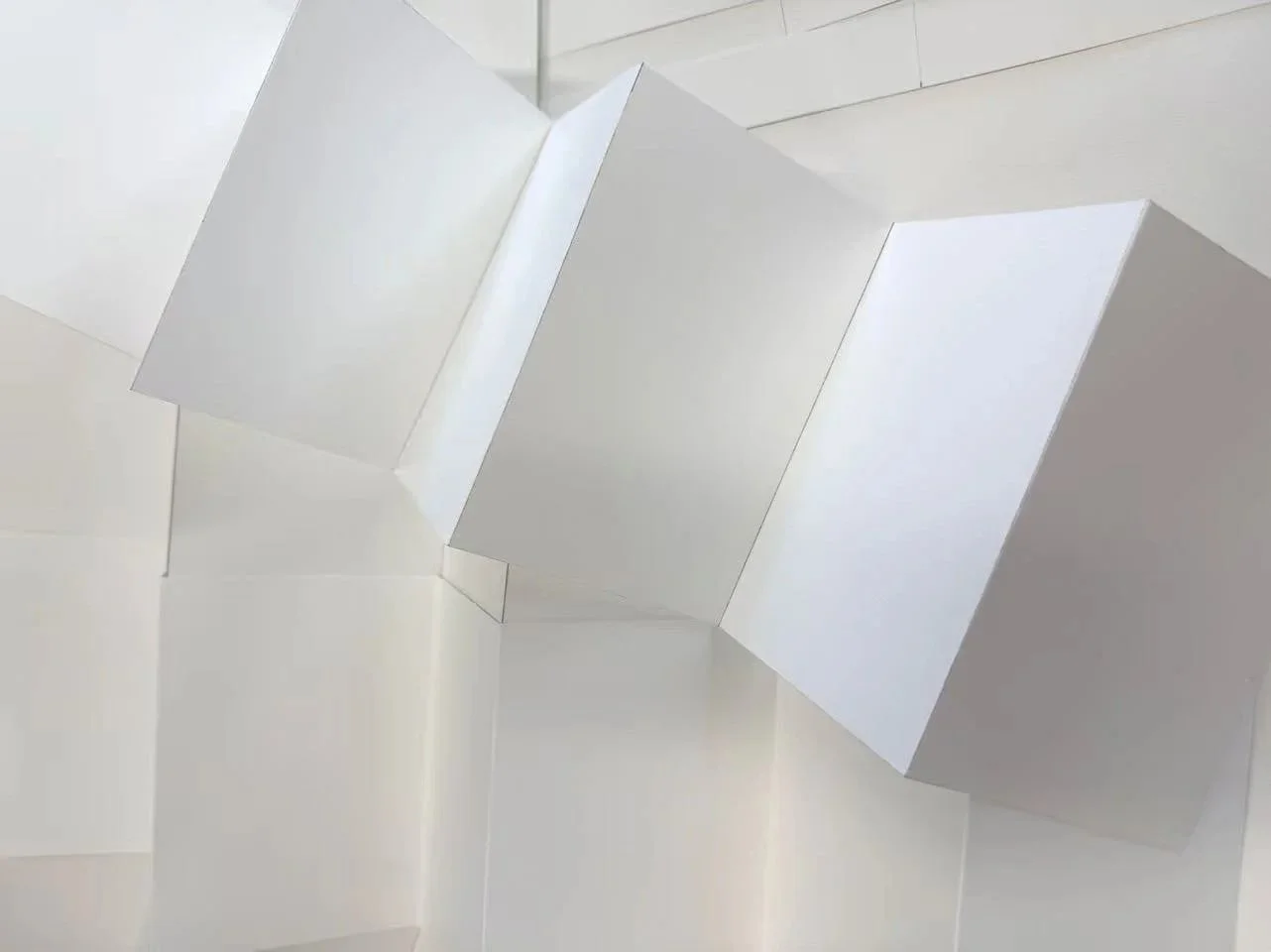
We painted the back of the paper yellow and attached the responses to accordion-folded strips. This design allowed the yellow to reflect onto the white walls, adding a subtle yet engaging visual effect.
After receiving even more memory inputs from people. Our group noticed the joy and engagement we felt each time a new memory note came in. Reading people’s responses made us feel closer to them, even though we didn’t know who they were. It was the idea that someone in this community had that specific experience here, and now we can be a part of it by reading it too. We took notice of our desire to want to keep certain memory entries from people that we thought were pretty or funny.
We then thought about people’s desire to collect things, maybe we can make people want to collect the community’s memories. With those thoughts in mind, we came up with a memory archive system.
The project successfully communicated our ideas clearly through low fidelity prototypes. Viewers were fascinated with the memory cards and played with them without needing much instructions. The project was successful in the sense that viewers were interested in the memory cards and showed interest in collecting them. The idea of archiving the community memories in this way was communicated with the users without confusion and at the same time piqued their interest.
To further develop this project, we were presented with the question of where can these objects live in the world? We received suggestions of maybe projecting the memory cards on buildings or other structures so that it is presented back to the community as a whole. We can also invite the users to decorate their viewfinders and booklets so it becomes more personal. The next steps to consider for this project would be to maybe a change in scale, perhaps larger so that it can hold a larger viewing audience.